If you own a seasonal property, cottage closing in Ontario is one fall job you do not want to leave until the first hard freeze. Properly shutting down your plumbing, water system and mechanical equipment can help protect the cottage while it sits empty through months of freezing temperatures.
For cottage owners across Kawartha Lakes, Lindsay, Peterborough and surrounding cottage country, September and October are the time to start planning.
And this year, there is another reason to book early.
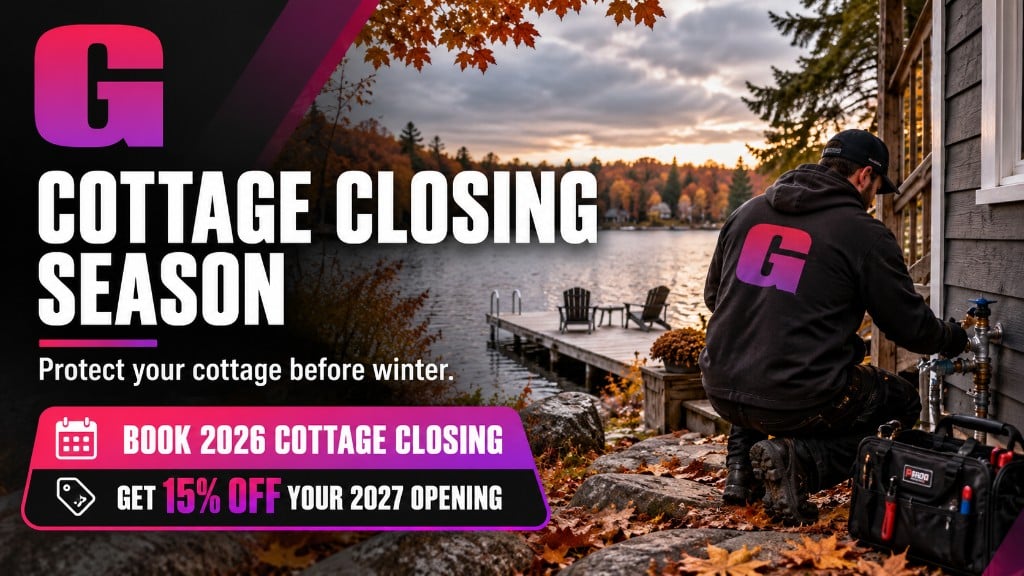
Book your 2026 Cottage Closing with Gravity and receive 15% OFF your 2027 Cottage Opening. Get the cottage closed properly this fall, then save when it is time to get everything running again next spring. Call 705-344-6835 or request a quote.
Book 2026 cottage closing
Call Gravity at 705-344-6835 to book cottage closing across Kawartha Lakes, Lindsay and Peterborough. Book 2026 closing and get 15% off your 2027 opening.
Why Proper Cottage Closing Matters in Ontario
A cottage can go from comfortable fall weather to below-freezing temperatures quickly.
The biggest concern is water.
Any plumbing system that contains water can become vulnerable once the building loses heat and outdoor temperatures fall below freezing. That can include:
- Water supply lines
- Toilets
- Faucets
- Shower valves
- Outdoor taps
- Water heaters
- Pumps
- Pressure tanks
- Filters
- Appliance supply lines
- Drains and traps
- Cottage water systems
The City of Kawartha Lakes recommends that people leaving a property for an extended period shut off the main water valve and drain the water lines. It also recommends draining and shutting off exterior taps and protecting plumbing located near exterior walls, crawl spaces and other cold areas.
A cottage adds another complication: nobody may be there when something goes wrong.
A small problem in October can become a major repair by January if the property sits unattended — the same risk that turns a slow drip into a burst pipe emergency once water freezes and thaws.
When Should You Close Your Cottage for Winter?
There is no single cottage closing date that works for every property.
For many seasonal cottage owners in Ontario, September through October is the main closing period. Your timing depends on:
- How long you plan to use the cottage
- The cottage's heating system
- Your plumbing configuration
- Well or lake-water systems
- How well the building is insulated
- Overnight temperatures
- Road access later in the season
- How frequently somebody will check the property
Do not make the first serious freeze your deadline.
If you already know your final cottage weekend for 2026, it makes sense to book the closing now.
Fall appointment schedules can fill as cottage owners throughout the region start shutting properties down at roughly the same time.
Closing the cottage soon?
Book Gravity before the fall rush. Book your 2026 cottage closing and receive 15% OFF your 2027 cottage opening. Call 705-344-6835.
Cottage Closing Checklist for Ontario
Closing a cottage involves more than turning off the lights and locking the door.
Every property has a different plumbing and mechanical setup, but these are some of the areas that should be considered before a seasonal cottage sits through an Ontario winter.
1. Shut Off the Cottage Water Supply
Start with the source.
Depending on the property, that could involve:
- Municipal water
- A drilled or dug well
- A lake-water intake system
- A seasonal water line
- A pump and pressure system
The right shutdown process depends on how your cottage gets its water.
Turning off one valve does not automatically mean the cottage has been winterized. Water can still remain inside pipes, fixtures, pumps and equipment.
That is why the complete system needs to be considered — especially if you rely on a well system rather than municipal water.
2. Drain the Plumbing Lines
This is one of the biggest parts of cottage winterization.
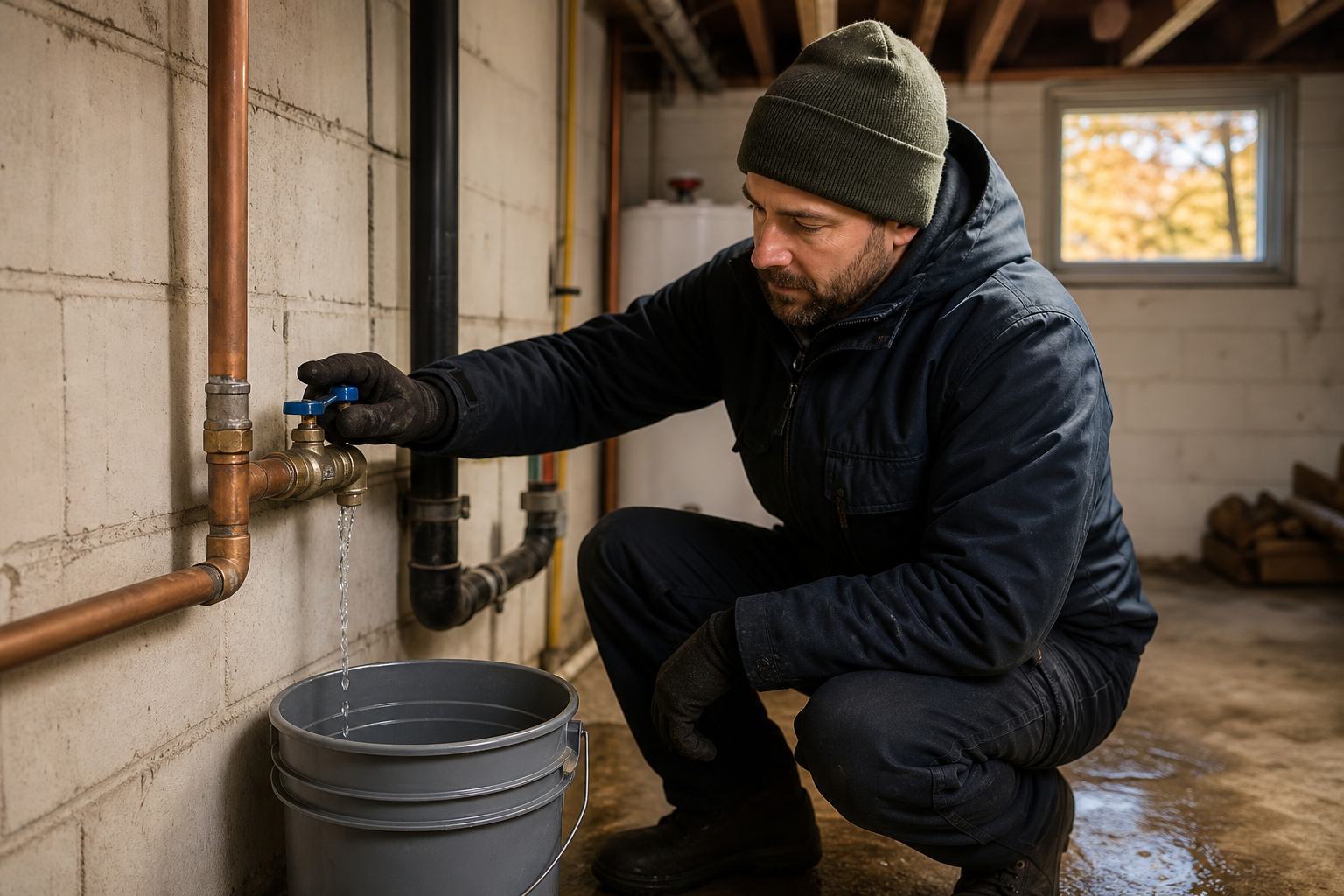
Water needs to be removed from plumbing that could freeze while the property is vacant.
That may include lines running to:
- Kitchen sinks
- Bathroom sinks
- Toilets
- Showers
- Bathtubs
- Laundry equipment
- Dishwashers
- Outdoor faucets
- Utility sinks
- Additional buildings
- Other water-fed equipment
Low spots in a plumbing system can also retain water even after fixtures have been opened.
The configuration matters.
A simple cottage with a small plumbing system may be straightforward. A larger cottage with multiple bathrooms, a finished basement, laundry, outdoor plumbing and additional mechanical equipment requires more planning — the kind of work Gravity handles under residential plumbing.
3. Winterize Toilets and Drains
Turning off the water supply does not remove all the water from a cottage.
Water remains in toilets and plumbing traps.
These areas need to be handled as part of the winterization process.
Do not assume that flushing a toilet once or opening a faucet means the entire system is ready for winter.
4. Disconnect and Drain Outdoor Water Lines
Outdoor plumbing sees some of the coldest conditions on the property.
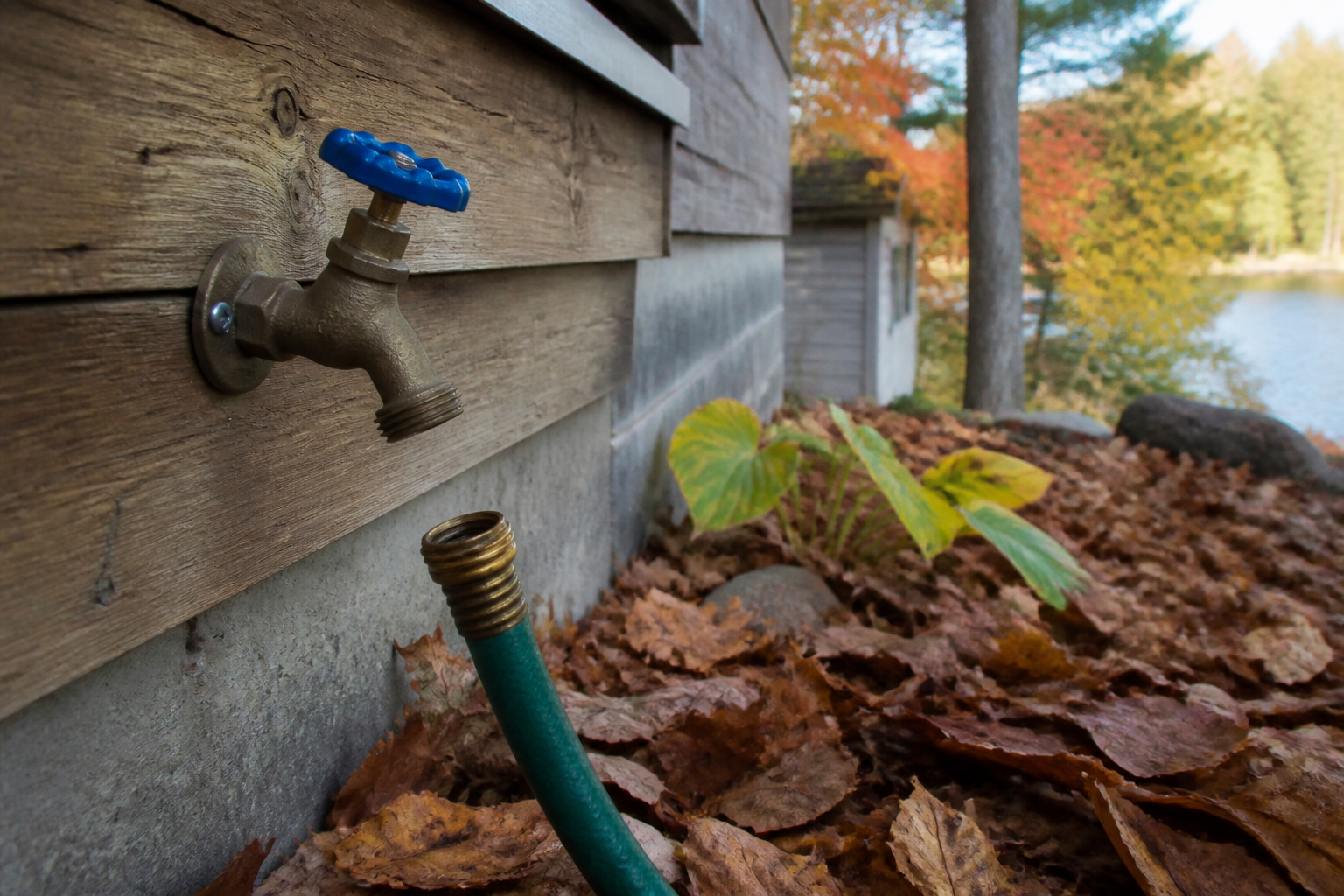
- Garden hoses
- Hose bibs
- Outdoor showers
- Seasonal taps
- Exterior sinks
- Irrigation connections
- Water lines running to other structures
The Insurance Bureau of Canada recommends disconnecting garden hoses and protecting exposed pipes before winter.
Even a small section of water-filled exterior plumbing can create problems once temperatures stay below freezing.
5. Check Your Water Heater
Your water heater also needs consideration when shutting down a seasonal cottage.
The procedure depends on the equipment installed.
Your cottage could have:
- An electric hot water tank
- A propane water heater
- A gas water heater
- A tankless water heater
Do not shut down or drain equipment without knowing the proper procedure for that specific system.
Tankless systems in particular still contain internal plumbing components and may have manufacturer-specific winterization requirements.
Gravity works with both tank and tankless hot water equipment and can look at the cottage as a complete system rather than treating each component separately.
6. Check Pumps, Pressure Tanks and Water Equipment
Many cottages around Kawartha Lakes use plumbing systems that differ from a typical city home.
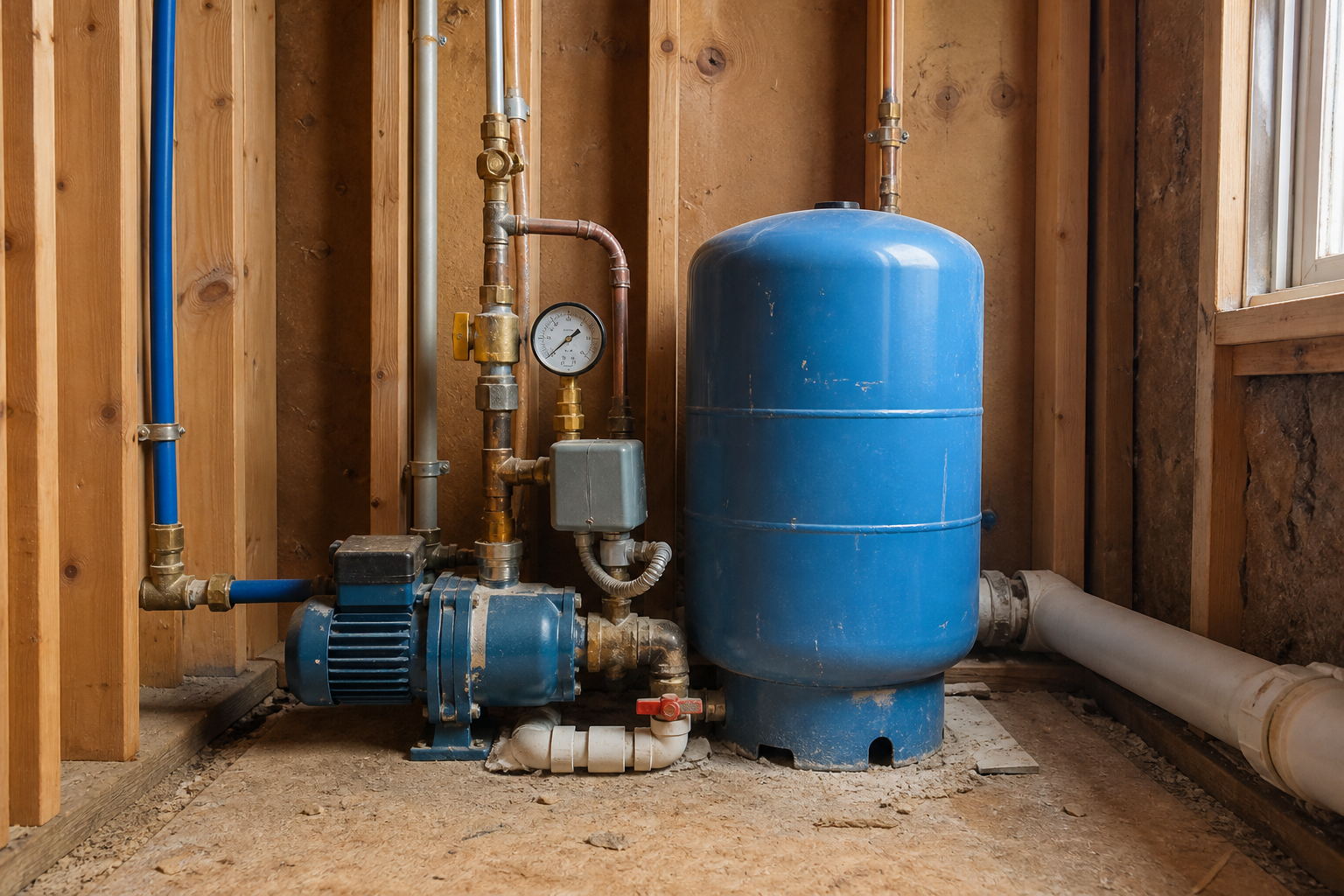
Your property may include:
- A well pump
- Jet pump
- Submersible pump
- Pressure tank
- Water treatment equipment
- Filtration equipment
- UV system
- Softener
- Lake-water system
These components may hold water after the cottage’s main plumbing has been drained.
They need to be considered individually.
This is one of the reasons copying a generic online cottage winterization checklist can create problems. The right closing procedure depends on the actual equipment installed at your property — Gravity’s well systems and water treatment teams see these setups every season.
If your cottage already has low water pressure, unusual pump cycling or treatment issues, deal with them before you lock up for winter.
7. Look for Existing Plumbing Problems Before Closing
Winterizing a cottage is a good time to catch problems you may have ignored during summer.
- Dripping faucets
- Slow leaks
- Corroded fittings
- Loose connections
- Water stains
- Unusual pump cycling
- Low water pressure
- Toilets that keep running
- Damaged exterior faucets
- Aging water heaters
- Exposed plumbing
A minor plumbing issue is much easier to address while the cottage is still accessible and the weather is mild.
Finding it after a freeze is another story.
Found something that does not look right?
Call Gravity before closing the property. Plumbing, HVAC and electrical under one company. Call 705-344-6835 — Gravity answers 24/7.
8. Think About Heating Before You Leave
Not every cottage gets completely shut down for winter.
Some owners maintain heat.
Others fully winterize the plumbing and shut down most systems.
Some use their property periodically throughout the winter.
Your approach changes the closing process.
If your cottage will remain heated, the Insurance Bureau of Canada recommends keeping heating equipment maintained and having the property checked while you are away. It also notes that insurance requirements can differ when a home sits vacant during heating season.
Check your own cottage insurance policy rather than assuming someone else’s requirements apply to your property.
If the cottage stays heated, a pre-season furnace inspection and heating service check can reduce the chance of a mid-winter no-heat call when nobody is around.
9. Check Electrical Equipment
A cottage closing is also a good opportunity to decide which electrical circuits and devices should remain powered.
Depending on the property, you may have:
- Heating equipment
- Sump pumps
- Security systems
- Cameras
- Internet equipment
- Water equipment
- Refrigerators or freezers
- Exterior lighting
- Generator equipment
Do not simply shut off the entire electrical panel without considering equipment that may need power while you are gone — including a sump pump that still protects a basement or crawl space.
Cottages can also face outages, storms, moisture and long periods without anyone on site. Gravity provides residential electrical service alongside plumbing and HVAC, and our cottage electrical upgrades guide covers panel work, pumps, chargers and whole-home surge protection for Kawartha Lakes properties.
If outages are common at your lake, ask whether a home generator belongs in the winter plan for essential loads that stay powered.
10. Make a Plan for Winter Property Checks
Closing day should not be the last time anyone sees the cottage until May.
Your insurance company may have specific requirements for how the property must be maintained or checked while vacant.
The Insurance Bureau of Canada notes that seasonal-property insurers may consider occupancy, maintenance and winterization when setting coverage. It also recommends regular inspections of seasonal properties.
Check your policy and follow the requirements provided by your insurer.
This becomes especially important after:
- Extreme cold
- Heavy snowfall
- Ice storms
- Power outages
- Major wind events
- Rapid freeze-thaw cycles
Can I Winterize My Cottage Myself?
Some cottage owners do.
The better question is: Do you completely understand your cottage’s water system?
If you know the plumbing layout, understand every shutoff, know where water can remain and know how each piece of equipment needs to be handled, you may be comfortable completing parts of the closing yourself.
Problems happen when someone assumes that opening a few faucets and shutting off the pump is enough.
Cottage systems can include hidden branches, low points, pumps, water heaters, filters, appliances and plumbing in unheated areas.
Missing one section can defeat the purpose of doing the rest.
For many owners, professional cottage closing comes down to peace of mind: the property is being shut down by someone who works with plumbing and mechanical systems every day.
What Happens If You Do Not Winterize a Cottage?
The biggest concern is frozen plumbing and resulting water damage.
Frozen water lines can stop water flow and damage pipes or fittings. A failure can become especially serious once temperatures rise or the water supply is restored — including no-water emergencies and active leaks.
The City of Kawartha Lakes specifically warns residents that cold weather can cause frozen water pipes and recommends preventative steps including shutting off and draining water lines at vacant properties.
Other problems can include damage to:
- Faucets
- Toilets
- Pumps
- Water heaters
- Filters
- Outdoor plumbing
- Connected appliances
A cheap shortcut at closing time can become an expensive spring surprise.
Cottage Closing and Cottage Opening Should Be One Plan
Most cottage owners treat closing and opening as separate jobs.
They are really two halves of the same seasonal cycle.
In fall, you shut the water and mechanical systems down.
In spring, you reverse the process.
You restore water service, inspect the system, check for problems and get the cottage ready for another season.
Having the same service company involved makes that process simpler.
They know what was done at closing.
They know how the property is configured.
And you already know who to call when spring arrives.
That is exactly what Gravity's 2026 Cottage Closing Promotion is designed to do.
Book Your 2026 Cottage Closing and Save 15% Next Spring
Do not wait for the first freeze to start thinking about your cottage plumbing.
Book your 2026 Cottage Closing with Gravity and receive 15% OFF your 2027 Cottage Opening. This fall: get the cottage properly closed and winterized. Next spring: bring Gravity back to open the cottage and save 15%.
Need service? Call Gravity.
Call Gravity at 705-344-6835 to book cottage closing or request a quote. Always available. Always answers the phone.
Cottage Closing in Kawartha Lakes, Peterborough and Surrounding Areas
Gravity provides plumbing, HVAC and electrical services throughout Kawartha Lakes, Lindsay, Peterborough and surrounding Ontario communities. The team answers the phone 24/7 and handles residential and seasonal-property service across the region.
For cottage owners, that means you have one number to call when you need help with plumbing, heating, electrical equipment or an unexpected problem at the property.
No chasing multiple contractors.
No wondering who handles which system.
Call Gravity and get the problem handled.
Cottage Closing FAQ
What does cottage closing mean?
Cottage closing is the process of preparing a seasonal cottage to sit unused through winter. It can include shutting off the water supply, draining plumbing, winterizing fixtures and equipment, checking heating and electrical systems and preparing the property for freezing temperatures.
When should I winterize my cottage in Ontario?
Most seasonal cottage owners should plan their closing before sustained freezing temperatures arrive. September and October are common closing months in cottage country, but your timing depends on how long you use the property and how its plumbing and heating systems operate.
Do I need to drain the cottage plumbing?
If the cottage will sit unheated through winter, water left in vulnerable plumbing can freeze. Kawartha Lakes recommends that owners leaving a property for an extended period shut off the water supply and drain the lines.
Should I turn off the heat at my cottage?
It depends on how the cottage is used and winterized. Some seasonal cottages are fully shut down. Others maintain heat throughout winter. Speak with your HVAC professional and insurance provider before deciding how your specific property should be handled.
Can Gravity close my cottage for winter?
Gravity provides plumbing, HVAC and electrical service across Kawartha Lakes, Lindsay, Peterborough and surrounding areas. Contact Gravity to discuss your cottage setup and book your 2026 cottage closing.
Is there a cottage closing promotion for 2026?
Yes. Book your 2026 Cottage Closing with Gravity and receive 15% OFF your 2027 Cottage Opening. Call 705-344-6835 or request a quote to book.
Why book my 2027 cottage opening at the same time?
It keeps the same company involved across both sides of cottage season and gives Gravity familiarity with the property's plumbing and mechanical setup. With the current promotion, booking your 2026 cottage closing also gets you 15% off your 2027 cottage opening.
Get Your Cottage Closing Booked Before the Cold Arrives
You have enough to deal with at the end of cottage season.
Patio furniture gets stored.
Docks and outdoor equipment need attention.
Do not leave the plumbing until the final hour.
Book your 2026 Cottage Closing with Gravity now and receive 15% OFF your 2027 Cottage Opening.
Get the property ready for winter now. Get Gravity back in the spring. Save on the opening.
Book cottage closing
Call 705-344-6835. Always Available. Always Answers The Phone. Always Reliable.
Ready for next steps?
Book service, ask about financing, or browse protection plans — we are always available.