A whole-home surge protector can help protect appliances, HVAC equipment, electronics and other electrical devices from damaging voltage spikes travelling through your home's electrical system.
And today's house has a lot more electronics connected to it than a television and desktop computer.
Your furnace has electronics.
Your air conditioner or heat pump has control boards.
Your refrigerator has electronics.
So can your washer, dryer, range, dishwasher, smart thermostat, EV charger, generator equipment, Wi-Fi system and dozens of smaller devices.
A basic plug-in surge strip only protects the equipment connected directly to it.
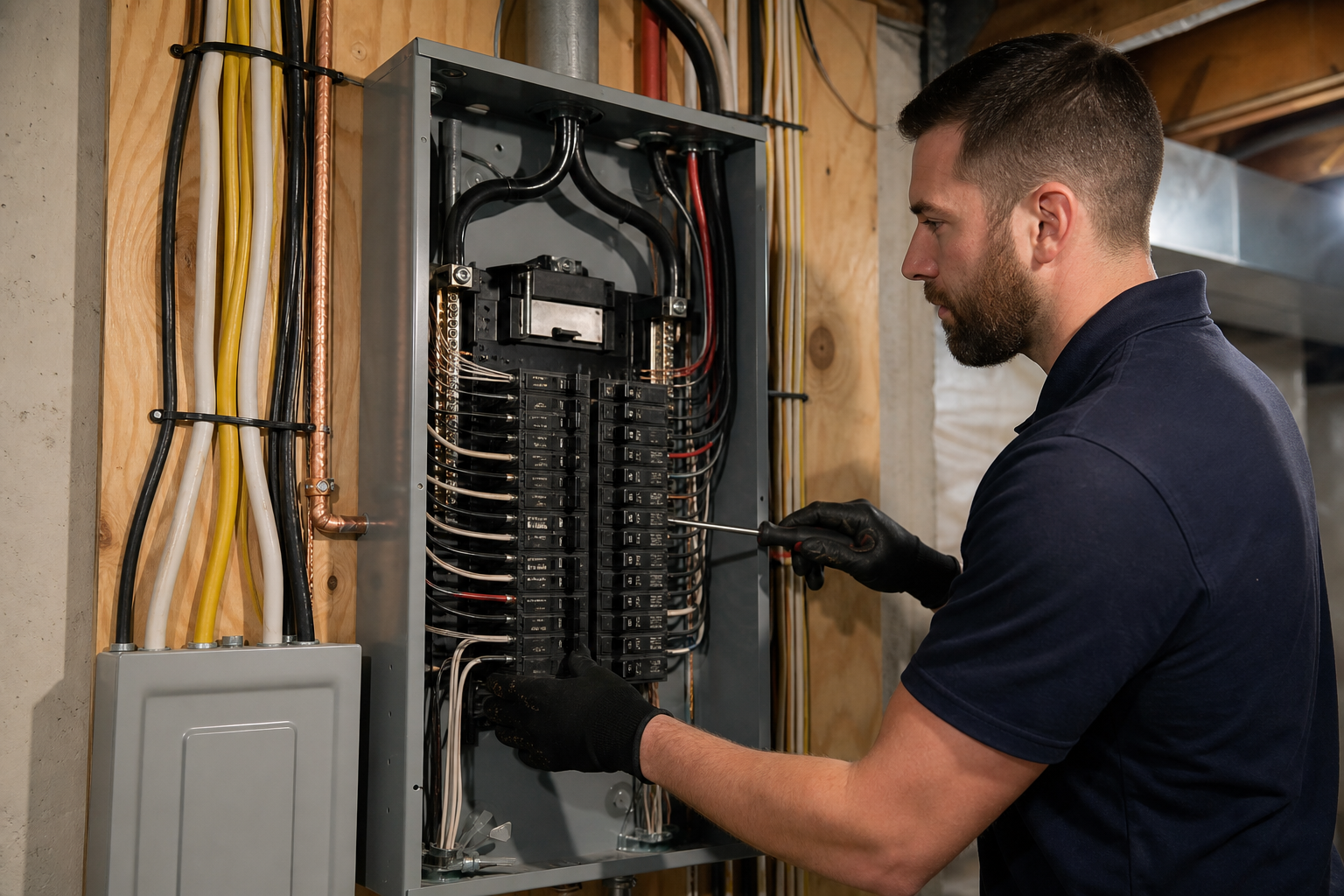
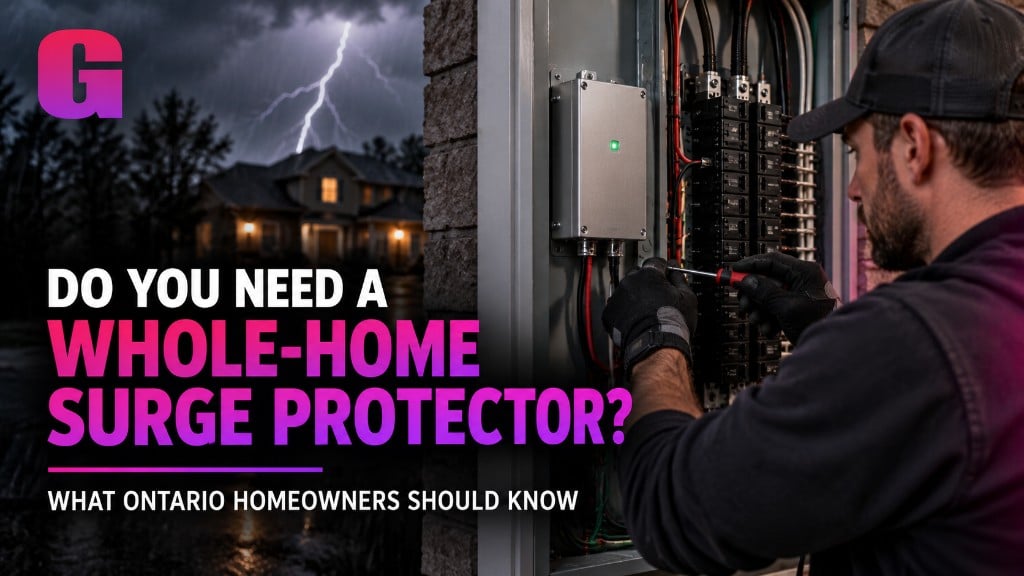
A whole-home surge protective device, commonly called an SPD, is installed at or near the home's electrical panel and provides a layer of surge protection across the electrical system.
The Electrical Safety Authority defines a power surge as an unexpected increase in current or voltage that can damage electrical equipment and create electrical safety problems.
For homeowners in Peterborough, Lindsay, Kawartha Lakes and surrounding areas, whole-home surge protection can be especially worth discussing when upgrading an electrical panel, adding a generator, installing an EV charger, replacing major HVAC equipment or updating an older electrical system.
Thinking about whole-home surge protection?
Call Gravity at 705-344-6835. Residential electrical service. 24/7 live answer across Peterborough, Lindsay and Kawartha Lakes.
What Is a Whole-Home Surge Protector?
A whole-home surge protector is an electrical device designed to reduce the voltage that reaches connected equipment during certain types of electrical surges.
Instead of plugging into one wall outlet, the device connects at the electrical distribution system.
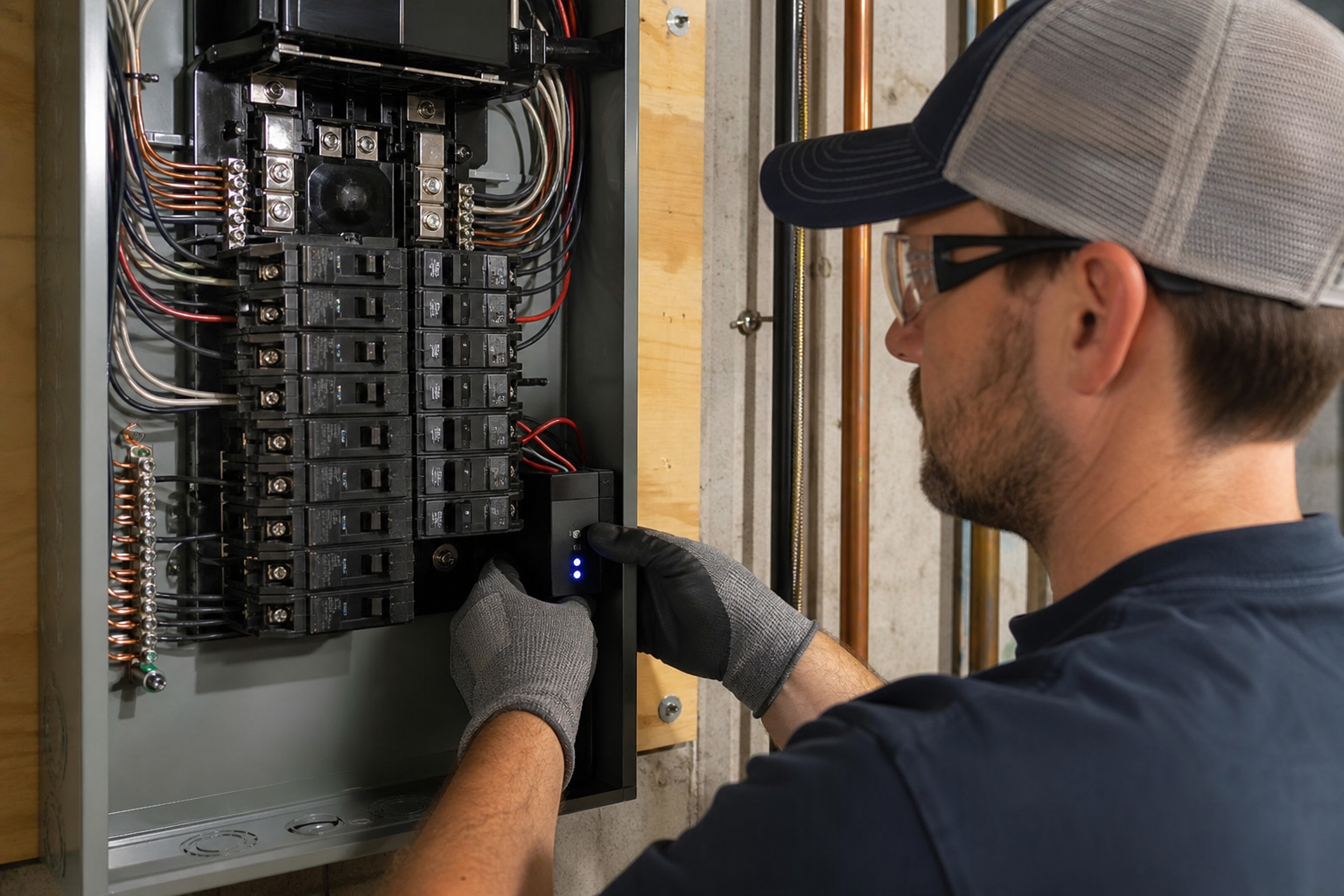
Depending on the equipment and installation, the surge protective device may:
- Mount inside the electrical panel
- Connect beside the panel
- Integrate with compatible breaker equipment
- Be installed as part of a new electrical panel
Eaton's Canadian residential surge-protection documentation describes service-entrance devices that help protect sensitive electronics from surges travelling through the home's electrical conductors. It offers internal, external and breaker-integrated configurations.
Think of it as a first line of defence for electrical surges entering or moving through your home's power system.
It does not mean your house becomes immune to every electrical problem.
We will get into those limitations below.
What Is a Power Surge?
A power surge is a temporary increase in electrical voltage or current.
ESA says these increases can damage equipment designed to operate at specific voltages.
Surges can happen for several reasons.
- Utility switching
- Nearby lightning activity
- Storm-related electrical events
- Power-system disturbances
- Equipment switching inside the home
- Large electrical loads turning on or off
Eaton notes that surges can come from lightning, utility-grid switching and other sources, then travel along conductors connected throughout the house.
That last point matters.
Not every damaging surge looks like a dramatic lightning strike.
Some electrical disturbances happen inside the house.
Do Power Surges Only Happen During Thunderstorms?
Lightning is the source most homeowners think about, but it is only one source.
Electrical surges can also result from switching activity and equipment operating inside or outside the house.
Schneider Electric Canada explains that transient voltage spikes can be generated externally by weather and utility events or internally by equipment inside the home.
That means surge protection can still have value on a sunny Tuesday afternoon.
A thunderstorm is easy to notice.
A short electrical disturbance caused by equipment or utility activity may happen without you knowing it.
What Does a Whole-Home Surge Protector Protect?
A panel-connected surge protective device can provide surge protection to circuits throughout the home.
That is valuable because many expensive devices cannot simply be plugged into a surge strip.
Examples can include:
- Furnace
- Central air conditioner
- Heat pump
- Refrigerator
- Freezer
- Dishwasher
- Washing machine
- Dryer
- Range
- Oven
- Lighting
- Smart-home equipment
- Some water-heating equipment
- Hardwired electronics
Schneider Electric Canada specifically lists HVAC systems, washers, dryers, refrigerators, stoves, ovens and lighting among equipment that whole-home SPDs can protect from applicable surge events.
Modern appliances increasingly contain:
- Electronic control boards
- Displays
- Sensors
- Variable-speed controls
- Communication modules
- Smart-home components
That can make electrical quality a bigger consideration than it was in a house full of simple mechanical appliances.
What About Your Furnace and Air Conditioner?
HVAC equipment is one of the strongest reasons to consider whole-home surge protection.
Modern heating and cooling equipment can contain expensive electronic controls.
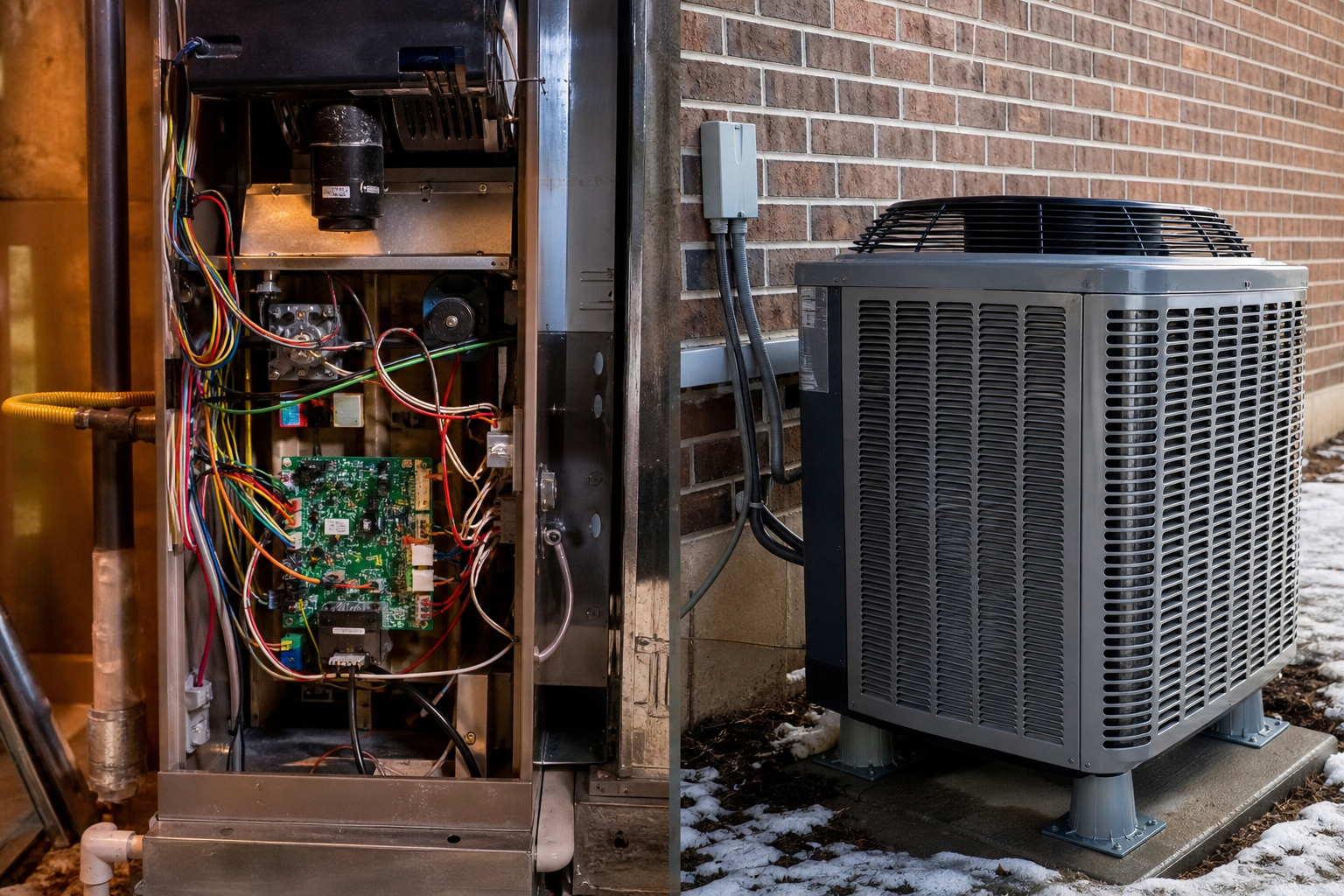
Depending on the system, that may include:
- Furnace control board
- Variable-speed blower controls
- Heat pump electronics
- Outdoor unit control board
- Inverter components
- Communicating thermostat equipment
- AC contactors and controls
- Zoning components
These systems are usually hardwired.
You cannot run your outdoor AC unit through the $30 surge bar sitting behind your television.
Whole-home surge protection gives hardwired HVAC equipment a layer of protection at the electrical distribution system.
Schneider Electric identifies HVAC equipment as one of the categories that whole-home SPDs can protect and notes that plug strips cannot cover this type of permanently connected equipment.
For Gravity customers, this creates a natural time to discuss surge protection when installing:
- New furnace
- Heat pump
- Central AC
- Electrical panel
- Generator
- EV charger
You are already investing in major equipment.
Protecting the electrical side deserves consideration too.
Installing HVAC or electrical upgrades?
Ask Gravity about whole-home surge protection at the same time. Call 705-344-6835.
Is a $20 Surge Bar the Same Thing?
This is one of the biggest misconceptions around whole-home surge protection.
A plug-in surge protector only protects equipment connected directly to that device.
If your television and gaming system are plugged into one, great.
But it does nothing for your:
- Furnace
- AC
- Refrigerator
- Range
- Dishwasher
- Dryer
- Hardwired lighting
It also does nothing for electronics plugged into completely different outlets unless those outlets have their own protection.
Eaton recommends a layered approach: surge suppression at the service entrance plus point-of-use protection for sensitive electronics.
The strongest setup is not necessarily whole-home SPD OR surge strip. It can be whole-home SPD + quality point-of-use protection for sensitive equipment.
Whole-Home Surge Protector vs Power Strip
Here is the easy comparison.
| Feature | Whole-Home Surge Protector | Plug-In Surge Protector |
|---|---|---|
| Installed at electrical system | Yes | No |
| Protects multiple circuits | Yes | No |
| Protects hardwired HVAC | Can help | No |
| Protects refrigerator | Can help | Usually not |
| Protects furnace | Can help | No |
| Protects one computer setup | Yes, as first layer | Yes |
| Installed by electrician | Typically | No |
| Good as layered protection | Yes | Yes |
| Stops power outages | No | No |
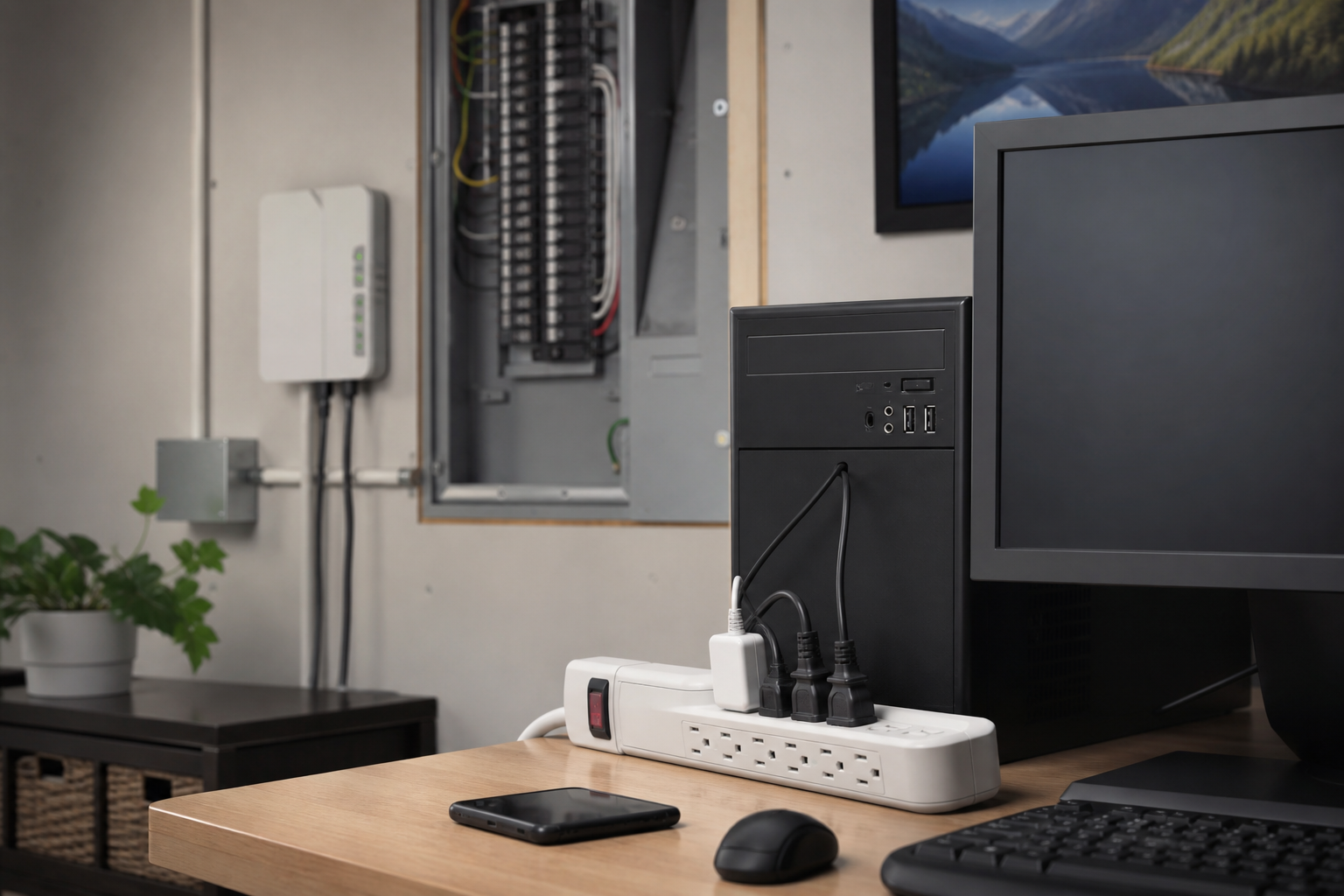
A good plug-in protector still has a place.
It just does a different job.
Does a Whole-Home Surge Protector Stop Lightning Damage?
This needs a clear answer.
No surge protective device can guarantee that your house survives a direct lightning strike without damage.
Whole-home surge protection is designed to deal with electrical transients within the device's rated capabilities.
Schneider Electric states that no SPD can fully protect a structure from a direct lightning strike and recommends a dedicated lightning-protection system for properties requiring direct-strike protection.
A surge protector is not a force field around the house. It is one part of an electrical-protection strategy.
Can a Whole-Home Surge Protector Protect Against Nearby Lightning?
It can help reduce surge energy associated with applicable indirect electrical events.
Nearby lightning can create electrical disturbances that travel through power systems.
Surge protective devices are specifically designed to respond to transient voltage events.
Leviton's connected-equipment warranty documentation, for example, describes the type of power surge its devices are intended to address as including indirect lightning events, while directly excluding direct lightning strikes from the warranty.
- Nearby electrical surge: an SPD may help.
- Lightning directly hits the structure: do not expect a panel SPD alone to handle everything.
Does a Whole-House Surge Protector Prevent Power Outages?
A whole-home surge protector does not create backup power.
It cannot keep your lights on during a blackout.
If you want the home powered during an outage, you need a backup-power solution such as:
- Standby generator
- Portable generator with approved transfer equipment
- Battery backup system
Gravity installs Generac standby systems and other backup-power solutions.
Surge protection and backup power solve different problems.
Surge protection
Helps reduce damaging transient voltage reaching equipment.
Backup power
Provides electricity when utility power disappears.
Some homeowners need one.
What About When Power Comes Back On?
Homeowners often worry about the moment utility power returns after an outage.
The bigger issue is not simply that electricity has returned.
It is the possibility of electrical transients or irregular conditions associated with switching events and system disturbances.
Eaton identifies utility grid switching as one source of surges that can travel through the home's electrical system.
A whole-home SPD provides a layer designed to respond to applicable transient surge events.
It does not regulate every possible voltage problem.
That brings us to another important limitation.
Does a Surge Protector Fix High Voltage?
A surge protective device is designed for transient surge events.
It is not a general voltage regulator.
Schneider Electric Canada states that surge protectors are not intended to protect against certain temporary or sustained overvoltage conditions below the device's maximum continuous operating-voltage limits.
So if your home has:
- Persistent high voltage
- A utility issue
- Neutral problem
- Faulty service equipment
- Repeated electrical abnormalities
you need the actual electrical problem diagnosed.
Do not install a surge protector and assume the underlying fault is fixed.
Does a Whole-Home Surge Protector Stop Breakers From Tripping?
A breaker and a surge protective device have different jobs.
Circuit breakers protect circuits from overcurrent conditions.
A surge protective device addresses transient voltage surges.
If your breaker keeps tripping, possible causes can include:
- Circuit overload
- Short circuit
- Ground fault
- Wiring problem
- Failing equipment
- Breaker issue
Gravity already has separate electrical panel and emergency electrician articles dealing with breaker problems.
A whole-home surge protector is not a cure for an overloaded circuit.
Is a Surge Protector the Same as GFCI Protection?
GFCI protection addresses electrical shock risk under certain ground-fault conditions.
Surge protection deals with transient voltage events.
ESA specifically describes GFCIs as devices intended to protect people from electrical shock.
Is a Surge Protector the Same as AFCI Protection?
AFCIs are designed to address electrical arcing conditions associated with fire risk.
ESA identifies AFCIs as devices that help protect against electrical fire.
A surge protective device does not replace an AFCI.
AFCI does not replace surge protection.
Modern electrical systems use several different safety devices because they address different electrical hazards.
Does a Whole-Home Surge Protector Protect Your EV Charger?
It can provide surge protection to the circuit supplying connected equipment, depending on the system and installation.
EV charging equipment contains electronics and may represent a significant investment.
If you are already having an electrician:
- Install an EV charger
- Perform a load calculation
- Add a circuit
- Upgrade your panel
- Modify service equipment
that is a good time to ask about whole-home surge protection.
Gravity's existing cottage electrical guide already recommends panel-level surge protection for equipment including chargers and other electronics.
What About a Home Generator?
Generators and surge protectors also do different jobs.
A generator keeps selected loads powered during an outage.
A surge protective device handles applicable surge events.
Eaton notes that generator operation can also be associated with power fluctuations, which is another reason surge protection and backup power should be considered as separate parts of the electrical system.
If you are installing a permanent standby generator, ask the electrician how surge protection fits into the complete electrical design.
Gravity handles generator and electrical work under the same company, which makes that conversation much easier.
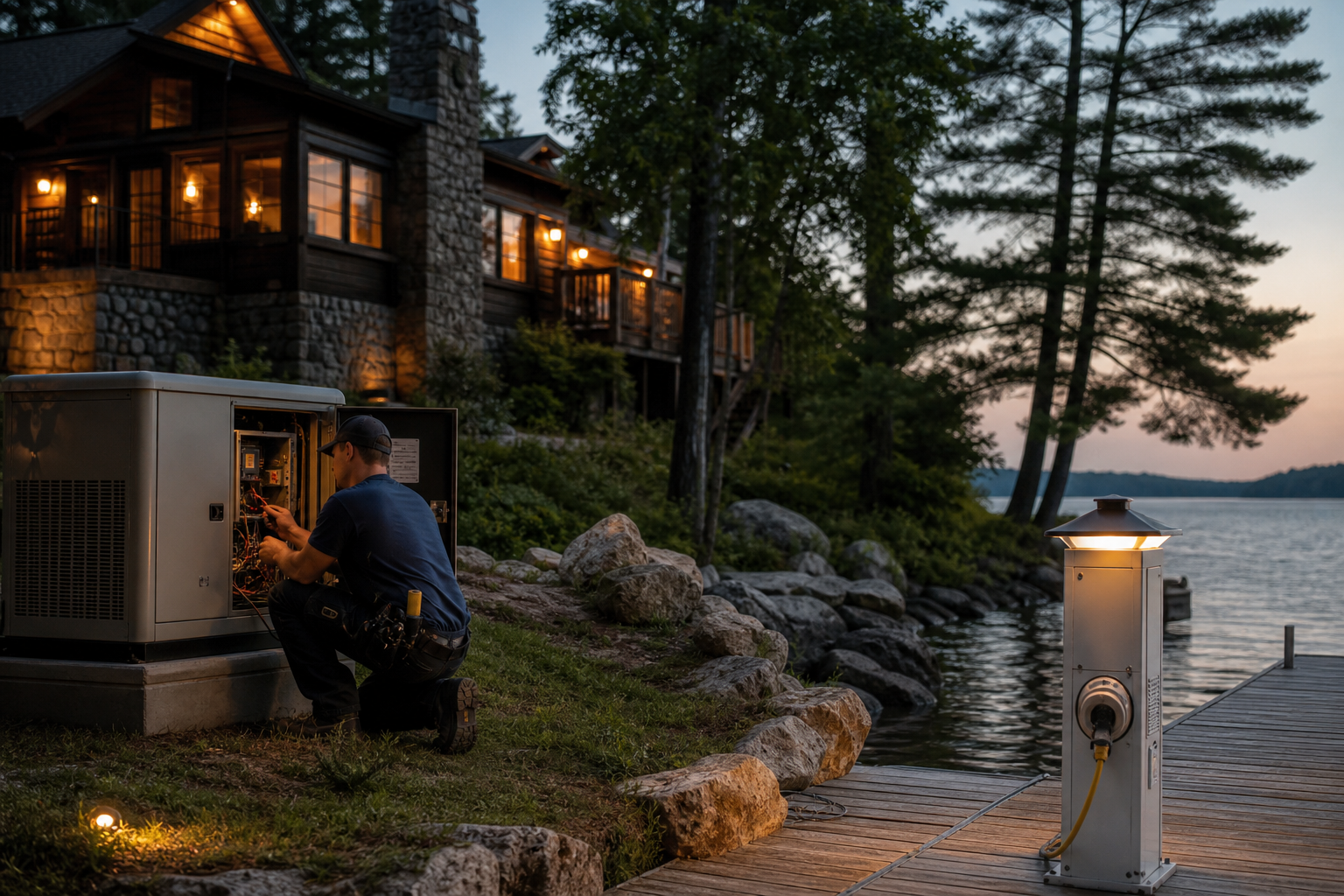
What About Cottages in Kawartha Lakes?
Whole-home surge protection makes a lot of sense to discuss at cottages and rural properties.
Gravity already includes surge protection in its Cottage Electrical Upgrades Kawartha Lakes guide, specifically mentioning protection for pumps, chargers and electronics during storm conditions.
Cottage electrical systems may support equipment such as:
- Well pumps
- Sump pumps
- Refrigerators
- Freezers
- Dock equipment
- Internet equipment
- HVAC
- Heat pumps
- Chargers
- Security systems
- Smart thermostats
Some cottages also sit unattended for long periods.
If an electrical event damages equipment while nobody is there, you may not find out immediately.
Whole-home surge protection becomes one relatively simple component in a larger cottage electrical plan.
Is Whole-Home Surge Protection Worth It for an Older House?
Often, it is worth discussing.
But an older electrical system should be assessed as a complete system.
- Aging panel
- Fuse panel
- Limited panel space
- Electrical damage
- Poor grounding or bonding
- Repeated breaker problems
- Old service equipment
an electrician should address those issues rather than treating a surge protector as a shortcut.
Gravity's existing panel-upgrade content lists whole-home surge protection as an upgrade that pairs well with modern electrical-panel work.
If the panel already needs replacement, adding surge protection during the project may be more practical than treating it as a separate job later.
Is Whole-Home Surge Protection Worth It With a New Electrical Panel?
This is one of the best times to discuss it.
The electrician is already working at the panel.
The new panel can be evaluated for compatible surge-protection options.
Gravity currently recommends considering whole-home surge protection during panel work in its existing electrical-panel guidance.
That does not mean every homeowner needs the same device.
The correct product depends on:
- Panel type
- Electrical service
- Equipment compatibility
- Installation requirements
- Desired protection level
Let the electrician match the SPD to the actual electrical system.
Upgrading your panel?
Ask about adding whole-home surge protection during the project. Call 705-344-6835 for a residential electrical quote.
How Does a Whole-Home Surge Protector Work?
Many residential surge protective devices use components that react when voltage rises above normal levels during a transient event.
Schneider Electric explains that many SPDs use metal oxide varistors, or MOVs, which respond to transient voltage and divert excess energy through the electrical grounding path.
Under normal electrical conditions, the device largely sits there.
When an applicable surge occurs, it responds quickly.
The goal is to reduce the voltage passed downstream to connected equipment.
The device does not make the surge disappear.
It manages surge energy within its designed limits.
Do Whole-Home Surge Protectors Wear Out?
Surge protective components absorb or divert energy during surge events.
Repeated electrical stress can degrade them over time.
Many modern whole-home SPDs include status lights that indicate protection status.
Schneider Electric notes that MOV-based surge devices degrade through repeated surge exposure and recommends paying attention to the device's protection-status indicator.
A surge protector is not something you should install and then forget for 30 years. Check it — especially after a major storm, known electrical event, significant surge or electrical service work. Follow the manufacturer’s inspection and replacement instructions.
How Do I Know If My Surge Protector Is Still Working?
This depends on the model.
Many whole-home SPDs have:
- LED status indicator
- Protection-status lights
- Diagnostic indicators
Eaton's Canadian products, for example, include visible LED indication showing the protective status of the device.
If the indicator changes or goes out, contact an electrician or follow the manufacturer's instructions.
Do not assume the device remains functional simply because your house still has power.
Your electrical service can keep operating even if the surge-protection component needs replacement.
What Does kA Mean on a Whole-Home Surge Protector?
You may see surge protectors advertised using a kA rating.
kA means kiloamps, or thousands of amps.
In this context, manufacturers use surge-current ratings to describe the device's capacity for surge events.
Residential models come with different ratings and designs.
For example, Eaton's current Canadian product lineup includes devices with different surge-current capacities based on model and installation configuration.
Do not buy solely based on the biggest number printed on the package.
The electrician should consider:
- Electrical system
- Panel compatibility
- Device certification
- Manufacturer requirements
- Installation method
- Application
Correct installation matters along with the product rating.
Do You Still Need Surge Strips With Whole-Home Protection?
For sensitive electronics, layered protection can make sense.
Eaton recommends two-stage protection:
- Surge protection at the electrical service.
- Point-of-use protection for sensitive electronics.
That could mean keeping a quality surge protector at:
- Desktop computer
- Home theatre
- Gaming setup
- Networking equipment
- Office workstation
The whole-home SPD tackles surges at the electrical distribution level.
The point-of-use device provides another layer close to the equipment.
What Does Whole-Home Surge Protection NOT Do?
This is important because surge protection gets oversold.
A whole-home surge protector does not:
- Keep your power on during an outage
- Replace a generator
- Fix overloaded circuits
- Fix bad wiring
- Replace breakers
- Replace GFCI protection
- Replace AFCI protection
- Correct a bad neutral
- Fix an undersized electrical service
- Guarantee protection from a direct lightning strike
- Solve every high-voltage condition
- Make damaged electrical equipment safe again
It does one specific job:
It helps limit applicable transient voltage surges reaching connected equipment.
It just needs to be described accurately.
What Should You Do After a Major Power Surge?
ESA recommends checking electrical equipment and electrical-safety devices after a known power surge.
That can include testing:
- GFCIs
- AFCIs
- Smoke alarms
- Carbon monoxide alarms
Follow the manufacturer's test instructions.
ESA notes that visual inspection alone may not tell you if an electronic safety device has been damaged.
Also pay attention to:
- Appliances no longer working
- Electronics behaving strangely
- Breakers tripping
- Burning smell
- Buzzing
- Flickering lights
- Hot electrical equipment
If the electrical system appears damaged, call a Licensed Electrical Contractor.
ESA states that electrical repair work in Ontario must be performed by a Licensed Electrical Contractor who handles the required Notification for the work.
When Should You Call an Electrician After a Storm?
Call quickly if you notice:
- Burning smell
- Smoke
- Sparking
- Buzzing panel
- Hot panel
- Scorch marks
- Repeated breaker trips
- Partial power
- Large voltage changes
- Damaged service mast
- Damaged meter equipment
- Water around electrical equipment
Gravity's existing emergency electrician guide specifically lists storm damage, partial power, hot electrical equipment, buzzing, sparking and repeated breaker trips among problems that need prompt attention.
Electrical problem after a storm?
Call Gravity at 705-344-6835. Licensed residential electrical service with 24/7 live answer.
Who Should Install a Whole-Home Surge Protector?
Panel-connected surge protection is electrical work.
This is not the same as plugging a power bar into a receptacle.
The installer may need to work:
- Inside the electrical panel
- At service equipment
- Around energized electrical components
- With dedicated breaker spaces
- With grounding and bonding components
Use a qualified Licensed Electrical Contractor.
ESA specifically tells Ontario homeowners to hire a Licensed Electrical Contractor for electrical repairs and regulated electrical work.
Gravity provides residential electrical service across Peterborough, Lindsay, Kawartha Lakes and surrounding areas.
Whole-Home Surge Protector Installation in Peterborough
Common upgrades now include:
- Central AC
- Heat pumps
- EV chargers
- Smart appliances
- Home offices
- Finished basements
- Generators
If you are already booking electrical work, ask the electrician to evaluate surge protection at the same time.
The project does not necessarily require a full panel replacement.
The existing panel and electrical system need to be inspected first.
Gravity can check the setup and recommend options based on the actual equipment.
Call 705-344-6835 to request an electrical quote.
Whole-Home Surge Protection in Lindsay and Kawartha Lakes
Surge protection is also worth discussing for homes and cottages around Lindsay and Kawartha Lakes.
Properties may rely on electrical equipment such as:
- Well pumps
- Sump pumps
- Heat pumps
- Furnaces
- Refrigerators
- Freezers
- Dock systems
- Security systems
- EV chargers
- Generator controls
Gravity already recommends panel-level surge protection as part of its Kawartha Lakes cottage electrical planning.
If the property also needs a:
- Generator
- Panel upgrade
- EV charger
- Cottage electrical inspection
ask about surge protection during the same visit.
Frequently Asked Questions About Whole-Home Surge Protectors
Is a whole-home surge protector worth it?
It can be a practical way to add surge protection for circuits and hardwired equipment across the house. It is especially worth discussing if you own expensive HVAC equipment, smart appliances, electronics, a generator, EV charger or other sensitive electrical equipment.
What does a whole-home surge protector do?
It helps limit transient voltage surges travelling through the home's electrical system before they reach connected equipment.
Does a whole-home surge protector protect everything?
It provides broad surge protection across connected circuits, but no SPD can guarantee protection from every electrical event. Direct lightning strikes, sustained voltage problems and other electrical faults may fall outside what the device can handle.
Will a whole-home surge protector stop lightning?
It can help with applicable surge events associated with nearby lightning, but it cannot guarantee protection against a direct strike to the structure.
Do I still need surge strips?
Layered protection can be useful. Eaton recommends service-entrance surge protection plus point-of-use protection for sensitive electronic equipment.
Does a whole-home surge protector protect my furnace?
A properly installed SPD can provide surge protection to the circuit feeding hardwired HVAC equipment. Manufacturers specifically identify HVAC systems as equipment that can benefit from whole-home protection.
Does it protect my air conditioner?
It can provide surge protection for the electrical circuit feeding central AC equipment, subject to the device's ratings and installation.
Does a whole-home surge protector protect appliances?
Whole-home SPDs are designed to help protect appliances and electronics connected to the home's electrical system from applicable transient surge events.
Does surge protection prevent an outage?
No. Surge protection does not create electricity. You need a generator or another backup-power system if you want power during an outage.
Is a surge protector the same as a breaker?
No. Circuit breakers and surge protectors perform different functions. A surge protector does not correct an overloaded circuit or replace normal circuit protection.
Can a surge protector fix flickering lights?
No. Flickering lights can indicate another electrical problem. If flickering affects several rooms or occurs with other symptoms, have the electrical system inspected.
Should I install surge protection when upgrading my panel?
That is a good time to discuss it because the electrician is already working at the electrical distribution system. Gravity recommends considering whole-home surge protection during panel projects.
Does a surge protector last forever?
No. Surge-protection components can degrade as they respond to surge events. Many devices include a status light that should be checked according to manufacturer instructions.
How do I know if my whole-home surge protector has failed?
Check the device's status indicator according to the manufacturer's instructions. If the protection-status light is no longer showing normal operation, contact an electrician.
Can I install a whole-home surge protector myself?
Panel-connected surge protection involves work at the electrical distribution system. Use a qualified Licensed Electrical Contractor rather than treating it as a DIY plug-in accessory.
Who installs whole-home surge protectors in Peterborough?
Gravity provides residential electrical service and whole-home electrical upgrades across Peterborough and surrounding communities. Call 705-344-6835.
Who installs surge protection in Kawartha Lakes?
Gravity provides electrical service throughout Lindsay, Kawartha Lakes and surrounding areas, including panel work, generator systems and cottage electrical upgrades. Call 705-344-6835.
Your House Has More Electronics Than You Think
A whole-home surge protector is easy to ignore because you rarely see it working.
It sits at the electrical system and responds when the right type of surge occurs.
For a modern home packed with electronics, HVAC controls, appliances, computers, smart devices and chargers, adding surge protection can make a lot of sense.
It will not fix bad wiring.
It will not keep the power on.
It will not stop every possible lightning event.
It does give your electrical system another layer of protection against transient surges.
If you are already installing a new panel, generator, EV charger, furnace, heat pump or air conditioner, it is a good time to ask about it.
Want whole-home surge protection?
Call Gravity at 705-344-6835 to request a quote. Residential electrical service for Peterborough, Lindsay, Kawartha Lakes and surrounding areas. Always available. Always reliable. Always answers the phone.
Ready for next steps?
Book service, ask about financing, or browse protection plans — we are always available.