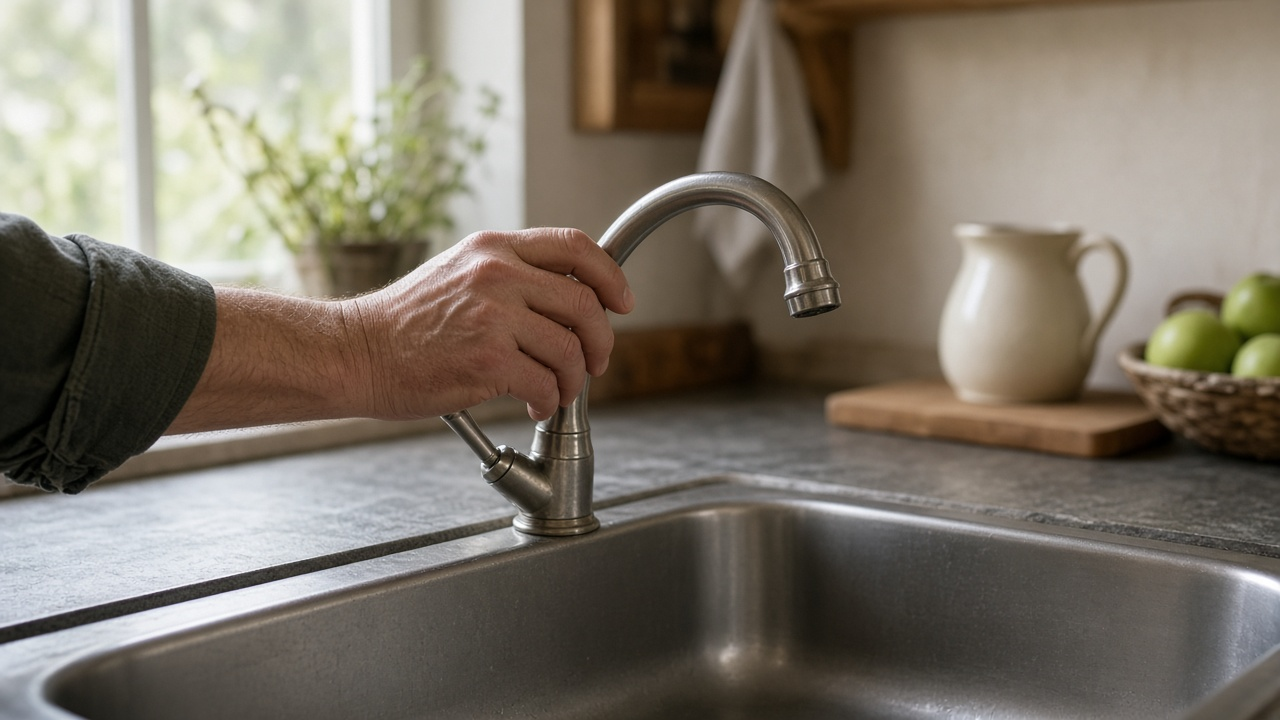
You turn on the kitchen faucet. Nothing. You try another tap. Still nothing.
If your home or cottage uses a private well, no water from the well does not automatically mean the well has run dry.
The problem could be the well pump. It could be the pressure tank. It could be the pressure switch, electrical supply, water line, control equipment, check valve, falling groundwater level, or the well itself.
The symptoms often tell you where to start.
For rural homeowners throughout Kawartha Lakes, Peterborough County, Lindsay, Bobcaygeon, Fenelon Falls, Omemee, Lakefield, Norwood and surrounding cottage-country communities, private wells are a normal part of owning property.
When the system stops working, though, the entire house can lose water — no showers, no toilets refilling, no washing machine, no dishwasher, no water at the kitchen sink. That turns a plumbing problem into an urgent problem very quickly.
No water from your well?
Call The Gravity Group at 705-344-6835. We answer 24/7.
Quick Answer: Why Do I Suddenly Have No Water From My Well?
If your well suddenly stops supplying water, common causes include:
- A failed well pump
- A problem with the pressure tank
- A faulty pressure switch or pump control
- Loss of electrical power to the pump
- A leaking or damaged water line
- A check valve or pump-system problem
- A falling groundwater level or low-yield well
- A frozen water line during winter
Ontario’s guidance for private wells identifies pumping-equipment failures, damaged water lines, electrical faults, falling groundwater levels, sediment problems, pump-selection issues and other system conditions as possible causes of reduced or lost water supply.
Do not immediately assume you need a new well. And do not immediately replace the pump without testing the rest of the system.
How Does a Private Well Water System Work?
Understanding the basic system makes the symptoms easier to understand.
A typical rural residential well system may include:
- A drilled, dug or bored well
- Submersible or jet pump
- Water line from the well
- Check valve or foot valve
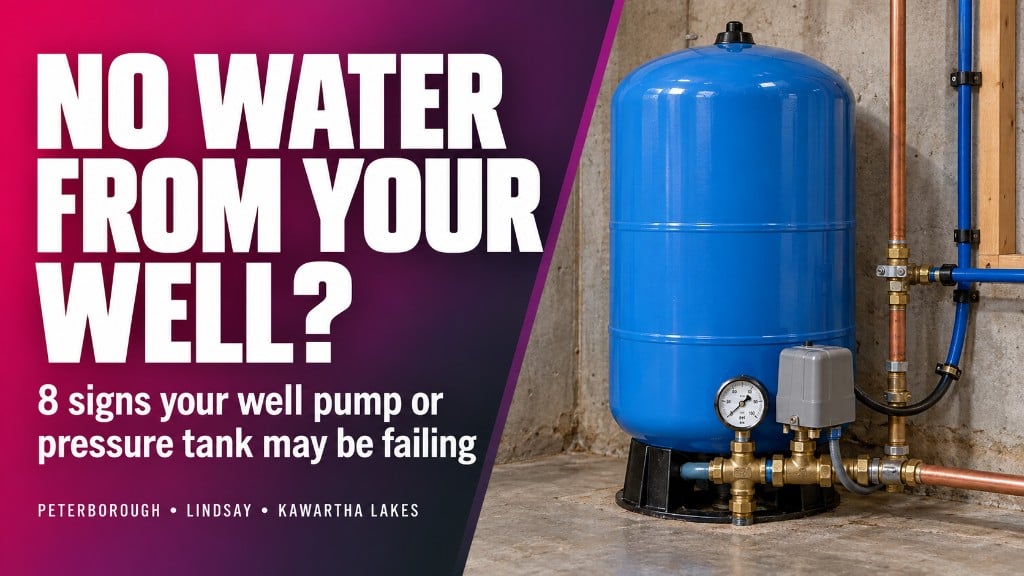
- Pressure tank
- Pressure switch or electronic pump controller
- Electrical controls
- Plumbing distribution system
- Water filtration or treatment equipment
Ontario recognizes several types of well pumps, including jet pumps, submersible pumps, centrifugal pumps and variable-speed constant-pressure systems.
In a conventional residential setup, the pump moves water from the well toward the house. The pressure tank holds water under pressure so the pump does not need to start every time someone briefly opens a faucet. The pressure control tells the pump when system pressure has dropped enough that more water is needed.
The pump starts. Pressure rises. The control eventually shuts the pump off. Then the pressure tank supplies water until pressure drops again.
That cycle should happen automatically. When one component fails, your symptoms can range from slightly weak pressure to no water at all. Gravity provides well systems service across the region.
8 Signs Your Well Pump or Pressure System May Be Failing
1. You Suddenly Have No Water Anywhere in the House
This is the most obvious symptom. Check multiple fixtures — kitchen faucet, bathroom sink, shower, another bathroom, outdoor faucet if appropriate.
If no fixture has water, the problem is probably not a clogged faucet or showerhead. The issue is likely farther back in the water-supply system.
For a private well property, possibilities include well pump failure, electrical problem, pressure switch failure, pump-control problem, broken water line, frozen water line, very low well-water level, pump running dry, or a failed check valve or related component.
Gravity already handles no water calls, well-system problems, pressure tank issues and pump problems across Kawartha Lakes, Lindsay, Peterborough County and surrounding rural areas.
Before assuming the pump is dead, ask yourself: Did the water stop suddenly? Or has pressure been getting worse for weeks?
A sudden complete loss of water can point toward an electrical, pump, switch, pipe or control failure. A gradual decline may suggest pump wear, well-yield problems, sediment, restrictions or another developing issue.
2. Your Water Pressure Suddenly Drops
A well pump does not have to stop completely to have a problem. Sometimes the first symptom is pressure.
You may notice shower pressure is weaker, upstairs faucets barely flow, the washing machine fills slowly, the toilet takes much longer to refill, pressure drops when two fixtures run, water starts strong and quickly becomes weak, or pressure changes noticeably while showering.
If every fixture is affected, the issue may involve the supply system rather than an individual plumbing fixture. On a well property, common possibilities include weakening pump performance, pressure tank problems, pressure switch problems, restricted piping, leaking water line, well capacity, water-treatment restrictions and pump-control issues.
For broader pressure troubleshooting that also covers municipal homes, see low water pressure in the house.
One fixture versus the whole house matters. If only the kitchen faucet has weak pressure, do not blame the well pump first. If every fixture has suddenly become weak, the well system deserves a closer look.
Whole-house pressure drop on a well?
Call Gravity at 705-344-6835 for well pump and pressure system diagnosis.
3. The Well Pump Keeps Turning On and Off
A well pump that starts and stops very frequently may be short cycling. This is different from normal pump operation.
Under normal conditions, your pressure tank helps reduce pump starts. Ontario’s drinking-water design guidance explains that pressure tanks maintain system pressure while reducing frequent pump starts and stops.
If the pump starts every few seconds while someone uses water, something may be wrong. Possible causes include a waterlogged pressure tank, failed pressure tank bladder, incorrect tank air charge, faulty pressure switch, leaking plumbing, check valve issue, improperly sized equipment or a pump-control problem.
Starting a pump repeatedly places additional demand on the pump motor, electrical components, controls, pressure switch and other pump-system parts. Ignoring rapid cycling can turn one failed component into a larger repair.
What does pump short cycling sound like? You may hear a click, the pump starts, a few seconds later another click as it stops — then it starts again. This repeats while water is being used. If that sounds familiar, have the pressure system checked.
4. Your Water Pressure Goes Up and Down
Another classic pressure-system symptom is surging. The shower feels strong, then weak, then strong again. Instead of relatively steady water pressure, you feel noticeable changes every few seconds.
That may point toward pressure tank problems, pressure switch problems, pump-control issues, pump cycling or variable-speed system problems.
A conventional pressure system naturally operates within a pressure range. You may notice some change. Large, frequent swings are different.
If pressure has changed dramatically from what you normally experience, get the system checked rather than simply accepting weaker or inconsistent water.
5. Your Well Pump Runs Constantly
A well pump that never seems to shut off deserves attention. The pump is supposed to build system pressure and eventually stop once the pressure control’s target is reached.
If the pump continues running, the system may be unable to reach the required pressure. Possible reasons include a broken water line, plumbing leak, worn pump, low groundwater level, well cannot replenish quickly enough, pump intake issue, check valve problem, pressure control problem, incorrect equipment selection or major water demand somewhere on the property.
A pump that runs continuously may consume more electricity, overheat, wear prematurely, run without adequate water and eventually fail completely. If your pump normally cycles off but suddenly runs continuously, do not ignore the change.
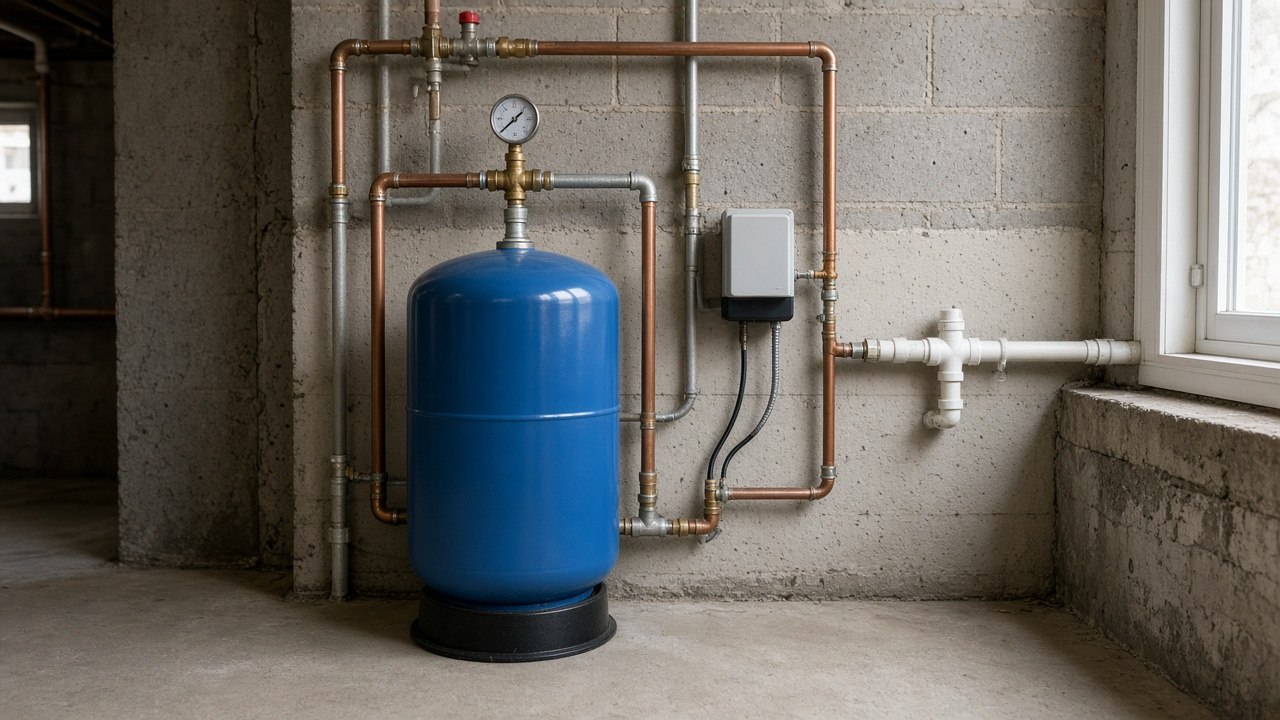
6. The Pressure Tank Is Waterlogged or Failing
Your pressure tank is easy to overlook. You probably walk past it in the basement or mechanical room without thinking about it. But it plays an important role.
The pressure tank helps store pressurized water and reduces how often the well pump needs to start. Many modern pressure tanks use an internal diaphragm or bladder that separates water from compressed air. If that system fails, the tank may lose its ability to maintain the proper pressure reserve.
Signs of a pressure tank problem can include: pump starts every time you open a faucet, pump cycles rapidly, water pressure surges, pressure drops very quickly, pump starts far more often than before, or water delivery becomes inconsistent.
The tank itself is not always the problem. A pressure switch, valve, pump or leak can produce similar symptoms. Test the system first.
7. The Pressure Switch or Pump Control Is Not Working
The pressure switch has a simple but important job. It tells a conventional pump when to start and when to stop based on system pressure.
If that control stops working properly, you may experience no water, a pump that fails to start, a pump that fails to stop, pressure that drops too low, rapid cycling or unpredictable pump operation.
Ontario’s private-well maintenance information specifically identifies a broken pressure switch as one possible pumping-equipment failure. Modern systems may use more sophisticated electronic controls instead of, or in addition to, a traditional pressure switch.
Well systems combine water, electricity and pressurized equipment. That combination deserves respect. If you do not know exactly what you are adjusting, call someone who works with well and pressure systems.
Pressure switch or tank acting up?
Call 705-344-6835. Gravity diagnoses well pumps, pressure tanks and controls across Peterborough, Lindsay and Kawartha Lakes.
8. Your Well Water Supply Has Actually Dropped
Sometimes the pump isn’t the problem. There may simply be less water available in the well.
Groundwater levels can change because of extended dry weather, low precipitation, seasonal groundwater changes, heavy water use, changes in nearby groundwater demand, construction dewatering, quarrying or other activities affecting groundwater, well condition or pump intake position.
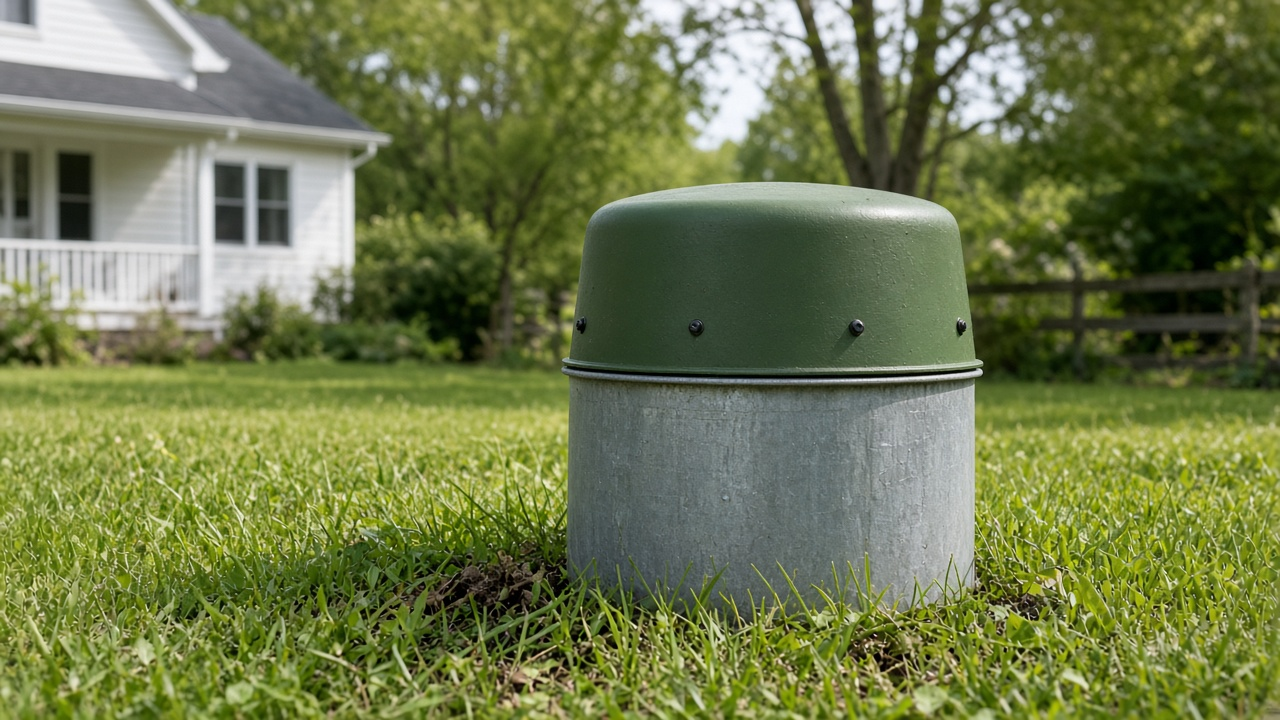
This is why replacing the pump without diagnosing the well can be a mistake.
Did My Well Run Dry?
Possibly. But no water does not automatically mean a dry well. That is one of the biggest misconceptions homeowners have about private wells.
Before reaching that conclusion, a proper diagnosis may need to consider: Is electrical power reaching the pump? Is the pump operating? Is the pressure switch working? Is the pressure tank functioning? Is there a leak? Is a water line broken? Is the line frozen? Is the pump intake submerged? What is the current water level? What is the well’s recovery rate? Has local groundwater changed?
Only after separating equipment problems from water-supply problems can you know what actually happened.
Can a Well Run Out of Water During a Drought?
Yes. A private well depends on groundwater. Groundwater is replenished through precipitation and movement through surrounding soil and rock. During extended dry conditions, some wells can experience reduced yield.
Signs of a declining well supply may include: water pressure fades during extended use, water returns after you stop using it, well performs better in the morning than evening, problems occur during drought, water becomes cloudy or contains sediment, pump runs for extended periods, or water supply becomes unreliable during high-demand activities.
Why Do I Have Water Again After Waiting?
This can be an important clue. If your water disappears during a shower or when doing laundry but returns after an hour, your well may be recovering more slowly than your household is using water.
That pattern can point toward a well-yield or pump-position issue. But pump controls and electrical problems can also be intermittent. Do not assume based on one symptom.
Could a Leak Cause My Well Pump to Run Constantly?
Yes. The pump may be perfectly capable of supplying water, but somewhere between the well and your fixtures, water could be escaping.
A significant leak can cause the pump to run continuously, pressure failing to build, more frequent cycling, higher electricity usage, wet ground outside, water entering a basement or crawlspace, unexpected sump pump operation, or reduced pressure inside the house.
If nobody is using water and your pump keeps running or repeatedly cycling, that deserves investigation.
Could the Well Water Line Be Frozen?
Yes. This matters in Ontario. Private well systems often include underground piping between the well and the house.
Problems can happen when lines are too shallow, soil has shifted, insulation is inadequate, a cottage was shut down incorrectly, plumbing runs through an unheated crawlspace, a seasonal water system was not drained, or extreme cold exposes a vulnerable section.
Gravity services rural and cottage properties where frozen well lines and seasonal plumbing are common concerns. See cottage closing in Ontario for seasonal system prep.
Do not use an open flame to thaw water lines. A frozen pipe may also have split — when it thaws, you can end up with a major leak.
What Can You Safely Check When You Have No Well Water?
You do not need to dismantle the pump system before calling for help. A few observations can make diagnosis faster.
Check multiple faucets
Confirm that the problem affects the entire house.
Look for obvious leaks
Check your basement, utility room, pressure tank area, crawlspace and visible piping. If you see active water damage, shut down the affected plumbing system if you can do so safely and call for service.
Check if the home has electricity
An outage can stop an electric well pump. Rural homes often lose both electricity and water at the same time because the well pump depends on electrical power. Gravity’s generator guidance discusses backup power for well pumps during outages.
Check the electrical panel visually
If the pump breaker has tripped, that may explain why the pump stopped. A breaker that immediately trips again can indicate an electrical or equipment fault. Do not repeatedly reset it.
Listen to the pump system
Is it completely silent, running constantly, starting every few seconds, or making a new or unusual sound? Tell the technician what you hear.
Look at the pressure gauge if your system has one
You do not need to adjust anything. Simply note what the gauge displays.
Need help diagnosing no well water?
Call 705-344-6835. Live answer 24/7 across Peterborough, Lindsay and Kawartha Lakes.
What Should You NOT Do When Your Well Stops Working?
- Don’t repeatedly reset the pump
- Don’t start adjusting the pressure switch
- Don’t open electrical controls
- Don’t assume you need a new pump
- Don’t assume the well is dry
- Don’t keep running a pump that appears to be running dry
When Does a Well Pump Need to Be Replaced?
There is no single age when every well pump fails. Operating life depends on pump type, quality, water conditions, well depth, sizing, installation, electrical conditions, sediment, number of starts, household water use, maintenance and pressure tank condition.
A well pump may deserve replacement when the motor has failed, the pump cannot create adequate pressure, internal components are significantly worn, performance continues declining, repair is not practical, equipment is damaged, the pump is improperly matched to the well, or repeated failures are occurring.
The important part is identifying why the pump failed. If a failed pressure tank caused the pump to short cycle thousands of extra times, replacing the pump without fixing the tank can damage the new pump too.
Why Pump Sizing Matters
More pump is not automatically better. Ontario’s well guidance says pump selection should be based on the well’s characteristics and recommended pumping rate. Installing an oversized pump on a low-yield well does not create more groundwater — it can simply remove water faster than the well can replace it.
Jet Pump vs Submersible Well Pump
Many Ontario private wells use either a jet pump or a submersible pump.
A jet pump is typically located outside the well, often in a basement, utility room or pump house. A submersible pump sits down inside the well and pushes water up through the drop pipe.
The troubleshooting process differs depending on the equipment. That is another reason a professional needs to know what system is installed before replacing parts.
Pressure Tank vs Well Pump: Which One Is Causing the Problem?
Symptoms overlap. This table is a starting point — not a substitute for testing.
| Symptom | Possible Cause |
|---|---|
| No water anywhere | Pump, electrical supply, switch, control, water line, or well supply |
| Pump starts every few seconds | Pressure tank, switch, leak, control issue |
| Pressure rapidly rises and falls | Pressure tank or control problem |
| Pump runs constantly | Leak, weak pump, low well level, control or pressure problem |
| Weak pressure throughout home | Pump, tank, switch, restriction, leak, well supply |
| Water disappears during long use | Well yield, pump performance, system capacity |
| No water during power outage | Electric well pump has no power |
| Water returns after waiting | Well recovery or intermittent equipment problem |
| Problem appears during extreme cold | Frozen line or winter-related system issue |
Could Water Treatment Equipment Cause Low Pressure?
Yes. Rural homes often have sediment filters, iron filters, water softeners, UV systems, carbon filtration or other treatment equipment between the pressure system and the fixtures.
A heavily restricted filter can reduce flow. This is especially important if the pressure gauge looks normal but water flow inside the house is weak — the restriction may occur after the pressure tank rather than at the well itself. See also hard water and water softeners.
Should You Test Your Water After Well Pump Repairs?
It can be appropriate, particularly when work affects the well or circumstances could introduce contamination. Ontario’s well-maintenance guidance recommends disinfection in connection with certain pumping-equipment and water-line repairs.
Ask the qualified contractor what post-repair disinfection and testing applies to your situation. Do not judge drinking-water safety by appearance alone — clear water is not automatically safe water.
Does Well Pump Work Require a Licensed Well Contractor in Ontario?
Ontario regulates work involving water wells under Regulation 903 of the Ontario Water Resources Act. Class 4 — Pump Installation authorizes a technician to install and supervise the installation of pumps in or connected to wells.
The right trade depends on what actually failed — plumbing inside the house, pressure-tank diagnosis, water treatment, electrical work, pump installation, or altering the well itself. A good diagnosis identifies the problem first.
What Happens During a Professional Well-System Diagnosis?
Good diagnosis should answer one basic question: Why isn’t water getting from the well to the fixtures correctly?
Depending on your system and the symptoms, the process may include checking available water pressure, pump operation, pressure tank, pressure switch or controls, power supply, water demand, visible plumbing, water line condition, evidence of leaks, system cycling, pump performance, water treatment equipment and well supply conditions.
No Well Water After a Power Outage
This is common on rural properties. Your well may contain plenty of water — but without electricity, the pump cannot move that water into the house.
The small amount of pressurized water remaining in the pressure tank may give you a limited supply immediately after power goes out. Then the taps stop.
This is why private-well homeowners sometimes consider backup power for the well pump, sump pump, furnace, refrigerator and essential circuits. Gravity provides home generators alongside plumbing and HVAC.
Well Problems at Cottages and Seasonal Properties
Cottage plumbing adds another layer. Seasonal systems may sit unused for months and may include a private well, lake-water intake, jet pump, pressure tank, UV treatment, filtration, water softener, seasonal water lines, crawlspace plumbing and multiple outbuildings.
Spring startup can expose problems that were not obvious when the cottage closed — pump will not build pressure, pump lost prime, water line leaked over winter, pressure tank failed, filter is blocked, valve was left closed, plumbing froze, or water treatment equipment is not operating properly.
Cottage well system not working?
Call 705-344-6835 for rural and cottage well service across Kawartha Lakes and Peterborough County.
Well Pump Problems in Kawartha Lakes
Private wells are especially relevant throughout Kawartha Lakes — rural properties, farms, lake homes, seasonal cottages, waterfront properties and remote residences.
Gravity provides service throughout communities including Lindsay, Bobcaygeon, Fenelon Falls, Omemee, Kirkfield, Cameron, Dunsford, Pontypool and surrounding rural Kawartha Lakes communities.
Well Pump Problems Around Peterborough County
Private wells are also common outside Peterborough’s municipal core. Gravity services communities throughout the region, including areas around Lakefield, Bridgenorth, Ennismore, Norwood, Havelock, Hastings, Millbrook, Keene and surrounding rural properties.
No water? Call Gravity at 705-344-6835
Well pump, pressure tank and rural plumbing service across Peterborough County and Kawartha Lakes.
How Can You Reduce the Risk of Well Pump Problems?
- Pay attention to pump cycling — a pump suddenly starting far more frequently deserves attention
- Watch water pressure — do not ignore a gradual drop in whole-house pressure
- Investigate unusual sounds
- Deal with leaks promptly
- Maintain water treatment equipment and replace filters as required
- Know where your pressure tank, main shutoff, electrical panel and well are located
- Keep your Ontario well record if available
- Have recurring problems investigated early
Frequently Asked Questions About Well Pumps and Pressure Tanks
Why did my well suddenly stop producing water?
A sudden loss of water can result from pump failure, loss of electrical power, pressure-switch failure, pump controls, a broken water line, a frozen pipe, or a drop in available well water. The system needs to be diagnosed before assuming the well itself has failed.
How do I know if my well pump is bad?
Common signs include no water, weak pressure, pump running continuously, unusual pump operation, reduced flow, or failure to build system pressure. Similar symptoms can also come from pressure-tank, control, pipe, or well problems.
How do I know if my pressure tank is failing?
Possible signs include rapid pump cycling, pressure surging, pump starting whenever small amounts of water are used, and pressure dropping unusually quickly.
Why does my well pump keep turning on and off?
Rapid pump cycling can be associated with a failed or waterlogged pressure tank, pressure control problems, leaks, check-valve issues, or other system faults.
Why does my well pump keep running?
The pump may be unable to reach its shutoff pressure because of a leak, weak pump, low well-water level, control issue, water-line problem, or excessive water demand.
Does no water mean my well has gone dry?
No. A dry or low-producing well is one possibility, but pump, pressure tank, electrical, control, pipe, and freezing problems can all cause no-water conditions.
Can a private well run out of water?
Yes. Groundwater availability can decrease because of drought, seasonal conditions, nearby groundwater use, or changes in the aquifer.
Why does my water come back after an hour?
Your well may be recovering after water demand exceeded its production rate. Intermittent pump or control problems can also cause water to disappear and later return.
Can a bad pressure tank damage my well pump?
A pressure tank problem can cause the pump to cycle much more frequently than intended. Excessive starts can add wear to the pump motor and controls.
Can a power outage stop my well water?
Yes. Most residential well pumps rely on electricity. Once the pressure tank’s remaining stored water is used, the house may have no water until power to the pump is restored.
Can a generator run a well pump?
Potentially. The generator and electrical setup need enough capacity for the pump’s operating and startup requirements. The correct setup depends on the pump and your home’s electrical system.
Can my well line freeze in Ontario?
Yes. Improperly protected or seasonal well-water lines can freeze during cold Ontario weather, particularly around cottages, crawlspaces, outbuildings, and vulnerable underground sections.
Should I test my well water after a pump repair?
Depending on the work performed, well disinfection and water testing may be appropriate. Ask your contractor what applies to your situation.
Who can install a well pump in Ontario?
Ontario regulates pump installation connected to wells under Regulation 903. Class 4 well technicians are authorized for pump installation, working within Ontario’s well-contractor licensing system.
Who repairs well pump and pressure problems in Kawartha Lakes?
The Gravity Group services well-system problems, pressure tanks, pump issues, water lines, and rural plumbing throughout Kawartha Lakes, Lindsay, Peterborough County, and surrounding communities. Call 705-344-6835 for service.
No Water From Your Well? Call Gravity
When your home runs on a private well, losing water affects almost everything.
You do not need to guess which component failed. And you do not need to start replacing equipment blindly.
The problem may be the pump. It may be the pressure tank. It may be the pressure switch. It may be a water line, electrical issue, frozen pipe, or the well itself.
Get the system diagnosed and fix the actual problem.
The Gravity Group provides well-system and residential plumbing service throughout Peterborough, Lindsay, Kawartha Lakes, and surrounding rural communities.
Always Available. Always Reliable. Always Answers The Phone.
No water? Call Gravity at 705-344-6835
We answer 24/7 for well pump, pressure tank and rural plumbing emergencies.
Ready for next steps?
Book service, ask about financing, or browse protection plans — we are always available.