If you have low water pressure in your house, the location and timing of the problem can tell you a lot about what is going wrong.
Low pressure at one bathroom faucet may point to a clogged aerator or fixture problem.
Low water pressure throughout the whole house can point to a partially closed valve, plumbing restriction, leak, pressure-system issue or a problem with the municipal water supply.
For rural homeowners across Kawartha Lakes, Peterborough County and surrounding communities, low pressure can also come from the well pump, pressure tank, pressure switch or the well itself.
And if your water pressure suddenly drops to almost nothing, you should pay attention.
Gravity handles low water pressure, no water calls, well systems and pump problems, leaks and water-service issues across Peterborough, Lindsay, Kawartha Lakes and surrounding areas.
Low water pressure?
Call Gravity at 705-344-6835. 24/7 live answer. Residential and commercial plumbing service across Peterborough, Lindsay and Kawartha Lakes.
Why Is My Water Pressure Low?
Your home's plumbing system needs enough pressure to move water through pipes and deliver usable flow at faucets, showers, toilets and appliances.
When something interferes with that supply, you may notice:
- Weak shower pressure
- Faucets that barely flow
- Toilets filling slowly
- Washing machines taking longer to fill
- Pressure dropping when two fixtures run
- A sudden change in pressure
- Water pressure that comes and goes
- Very low pressure upstairs
- Low pressure throughout the entire house
- Complete loss of water
The cause can be very simple.
It can also be a warning of a much larger plumbing problem.
The first thing to figure out is where the pressure problem is happening.
First: Is the Low Water Pressure at One Fixture or Everywhere?
This is one of the fastest ways to narrow down the problem.
Low pressure at one faucet or shower
If every other fixture works normally, the main plumbing supply probably is not the first place to look.
The problem may be inside that specific fixture.
Common causes include:
- Clogged faucet aerator
- Mineral buildup
- Blocked showerhead
- Faulty faucet cartridge
- Partially closed fixture shutoff valve
- Damaged supply line
Low pressure throughout the entire house
If every faucet and shower suddenly feels weak, the issue may be farther upstream.
Possible causes include:
- Main shutoff valve problem
- Water-service issue
- Hidden leak
- Pressure regulator problem
- Restricted piping
- Municipal supply issue
- Well pump problem
- Pressure tank problem
- Pressure switch problem
Low pressure only when several fixtures run
If the shower works well until someone turns on the kitchen faucet, your system may have a flow or supply-capacity problem.
That could involve restricted piping, aging plumbing, pressure-system settings, well-system capacity, plumbing design or a partially closed valve.
The pattern matters. Before calling a plumber, take 60 seconds and test several fixtures. That information can make diagnosis much faster.
1. Your Faucet Aerator or Showerhead Is Clogged
If the low water pressure is only happening at one fixture, start with the fixture itself.
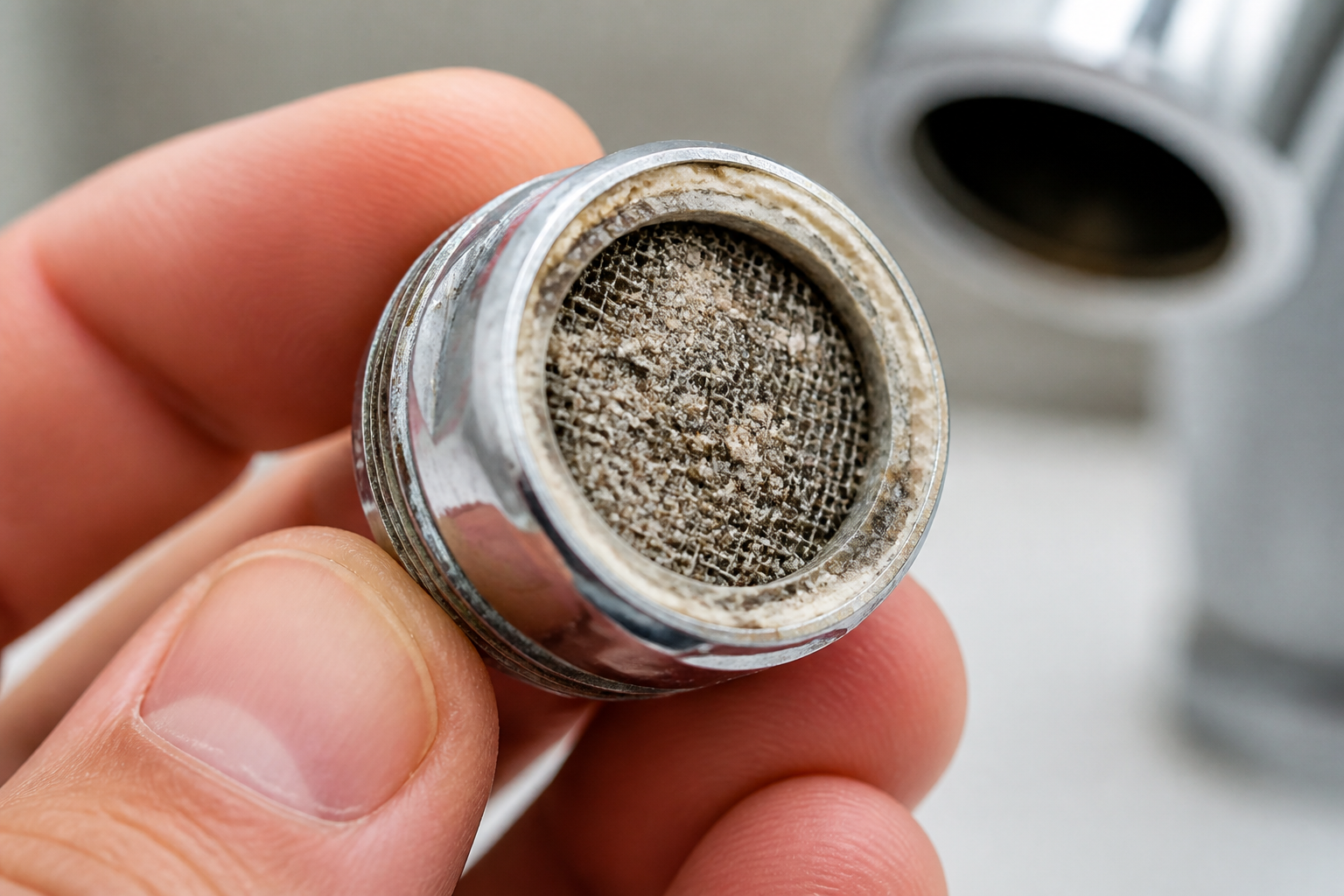
Most faucets have a small aerator at the end of the spout. That aerator controls the water stream and can catch sediment, mineral deposits, small debris and scale.
As those openings become restricted, the faucet can appear to have a major pressure problem even though pressure everywhere else in the house is normal.
Showerheads can develop the same problem.
Quick test
Turn on another fixture nearby. If the bathroom sink has weak flow but the bathtub, kitchen and other faucets are normal, the issue is likely local to that sink.
You can remove and inspect an accessible aerator if you are comfortable doing so. If you see visible debris or scale, cleaning or replacing the aerator may restore normal flow.
If removing the aerator does not fix the problem, the faucet cartridge, supply valve or supply line may need attention.
2. A Shutoff Valve Is Partially Closed
Your plumbing system contains several valves. Some control individual fixtures. Others control the whole house.
If one is not fully open, it can restrict water flow. This sometimes happens after plumbing repairs, renovations, water-meter work, appliance replacement, seasonal cottage opening or closing, or an emergency water shutoff.
Fixture shutoff valve
If one sink or toilet has poor flow, check the valve supplying that fixture.
Main water shutoff valve
If the whole house has weak pressure and work was recently performed, the main valve may not have been completely reopened.
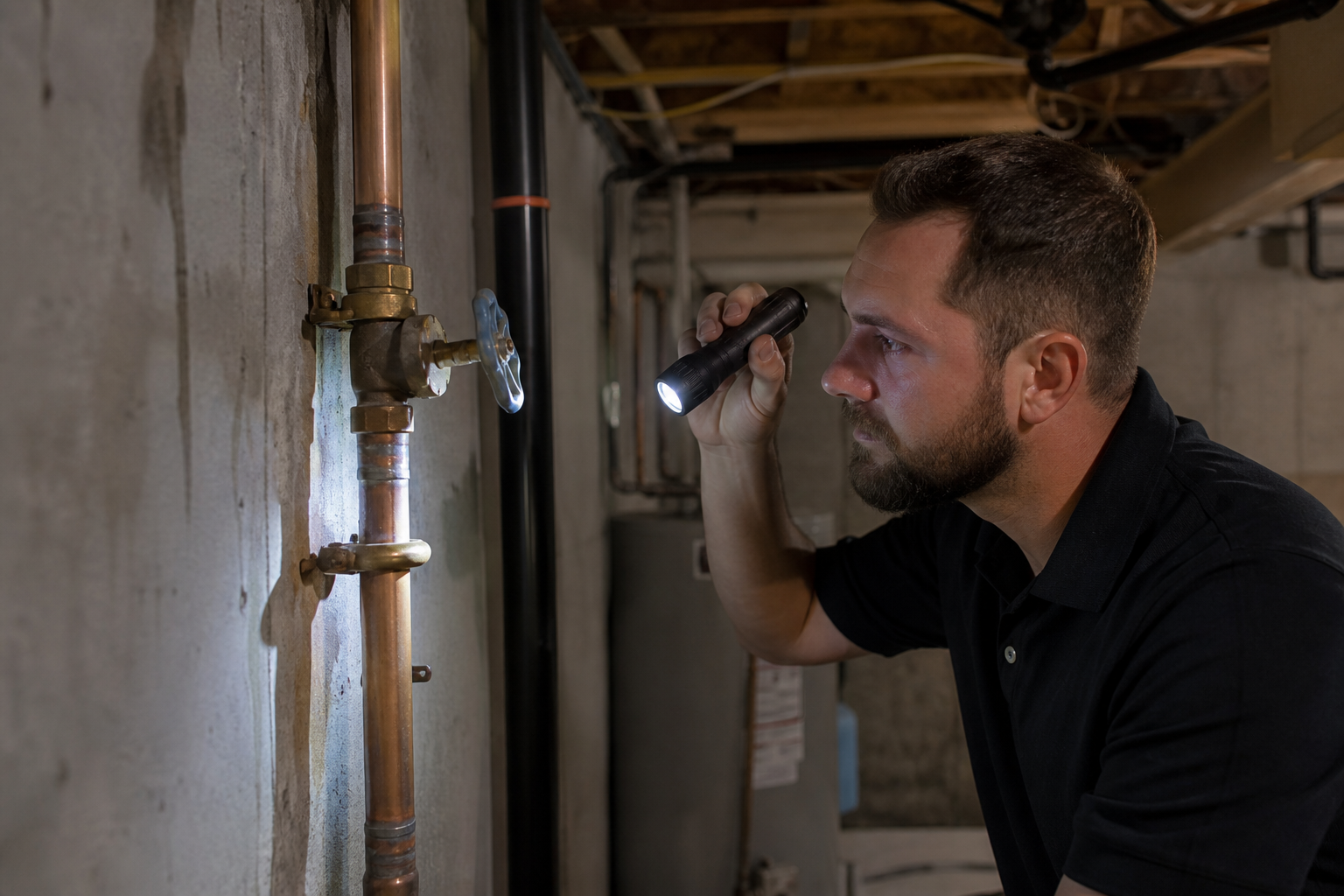
Do not force an old valve that feels seized or damaged. Older plumbing valves can fail when disturbed. If you are unsure about the valve or see corrosion or leakage, call a plumber.
3. Your Faucet Cartridge May Be Restricted or Failing
Modern faucets use cartridges and other internal components to control flow and temperature. Debris or mineral buildup can restrict these passages.
That can create a strange situation where:
- Cold water pressure is normal but hot pressure is weak
- Hot pressure is normal but cold pressure is weak
- One faucet has low pressure but the rest of the house does not
- Water flow changes when the handle moves
This is different from a whole-home pressure problem. A plumber can isolate the issue and repair or replace the affected faucet component without chasing problems throughout the rest of the house.
4. You May Have a Hidden Plumbing Leak
A significant leak can reduce the amount of water available to your fixtures. The larger the leak, the more noticeable the pressure drop may become.
Low pressure combined with other warning signs should get your attention. Watch for:
- Unexpected water sounds
- Wet drywall
- Damp ceilings
- Water stains
- Wet basement areas
- Unexplained puddles
- A constantly running water meter
- Sudden increase in water use
- Soft or wet ground near the home
- Water entering the basement
- Sudden low pressure throughout the house
A leak may occur inside the house. It can also happen underground between the municipal connection or well system and your house.
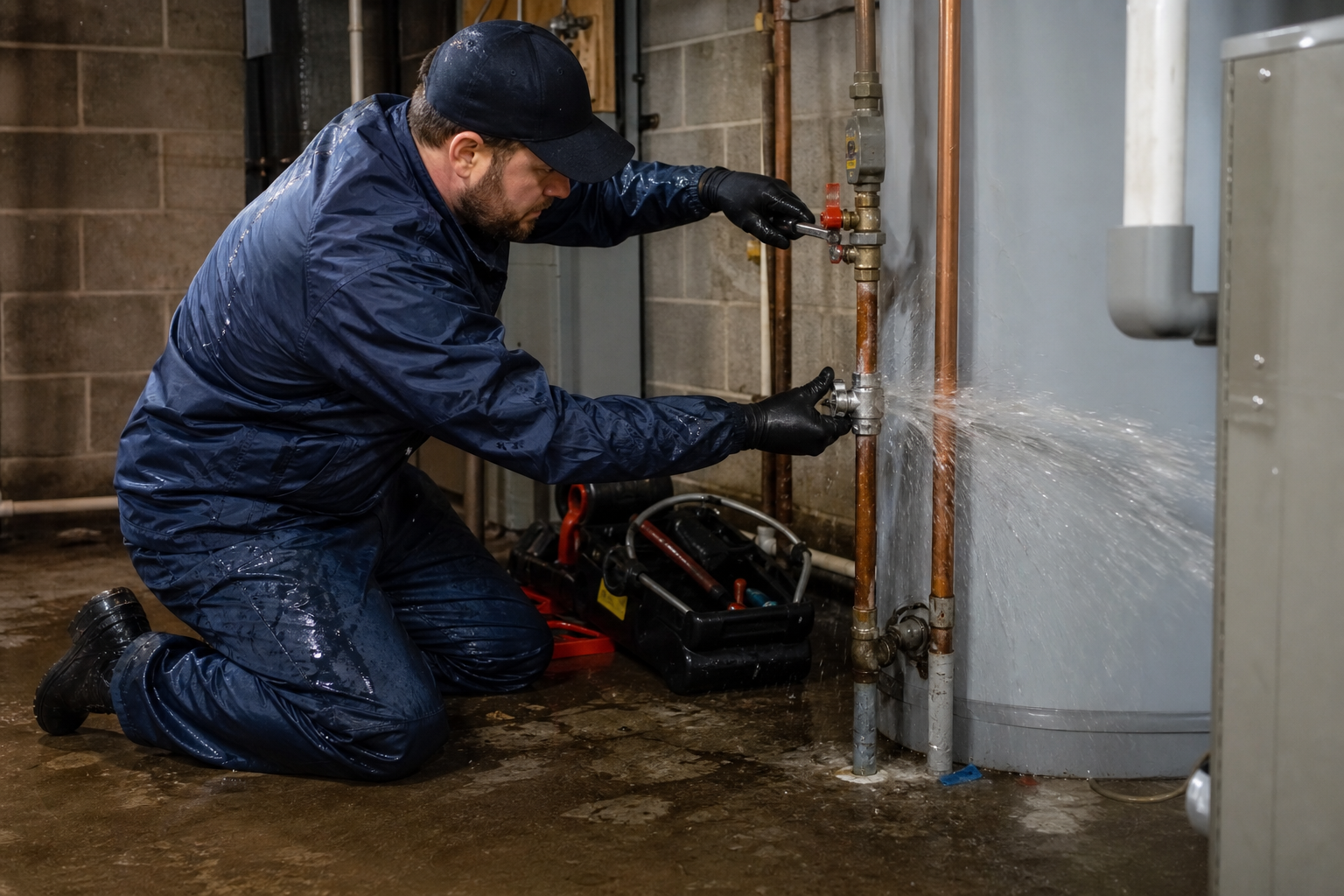
Gravity handles urgent water-service issues, leaks and broken water lines throughout its service area. If you are dealing with an active water main break or burst pipe, treat that as an emergency — not a slow DIY project.
Sudden low pressure with water where it should not be?
Do not keep using fixtures and hope it clears up. Call Gravity at 705-344-6835 for urgent leak and water-service help.
5. Your Water Pressure Regulator May Be Failing
Some plumbing systems use a pressure-reducing valve or regulator to control incoming water pressure. The regulator reduces higher incoming pressure to a level appropriate for the home's plumbing system.
If the regulator develops a problem, you may notice low water pressure throughout the house, pressure that suddenly changed, pressure that varies, pressure becoming unusually high, or changes affecting both hot and cold water.
This is usually not a fixture problem because multiple fixtures are affected. If a pressure regulator is suspected, a plumber can test the incoming pressure and determine what the system is actually receiving.
Do not start adjusting plumbing controls randomly. Too much pressure can create a different set of problems for pipes, fixtures and appliances.
6. Older Pipes May Be Restricting Water Flow
Some older homes have piping that has become restricted over time. The inside diameter of a pipe can become smaller because of corrosion, mineral accumulation or deterioration.
The pipe may still carry water. It just cannot move the same amount that it once did.
This can create symptoms such as consistently weak pressure, poor flow upstairs, major pressure loss when several fixtures run, old plumbing with repeated problems, or pressure that has slowly become worse over years.
This tends to feel different from a sudden leak or municipal interruption. The change is often gradual.
Older Peterborough homes can have plumbing systems that have been altered several times over decades. A house may contain a mix of old and newer plumbing. Adding a new bathroom or appliance to an already restricted system can make the problem more obvious.
A plumber can inspect the plumbing layout and determine where the restriction is happening.
7. Your Municipal Water Supply May Be Experiencing a Temporary Pressure Problem
Not every water-pressure problem starts inside your house. If your neighbours also have low pressure, the municipal water system may be the cause.
The City of Peterborough lists low water pressure and water-main breaks among the issues handled by Water Services. The City also notes that hydrant testing can temporarily reduce water pressure in nearby homes. Pressure should return after the testing is completed.
Before calling a plumber, ask:
- Did the pressure change suddenly?
- Are all fixtures affected?
- Are neighbouring homes experiencing the same thing?
- Is there municipal work happening nearby?
- Did you receive a water-service notice?
- Is there an obvious water-main problem outside?
If several homes are affected, contact the municipality. If your neighbours have normal pressure and only your house has low water pressure, the problem is much more likely to be on your property. That is when it makes sense to call Gravity.
8. Your Well Pump May Be Having Trouble
For rural homeowners, low water pressure from a well needs a different diagnostic process. Your home is not receiving pressurized water from a municipal distribution network. The well system has to create and maintain that pressure.
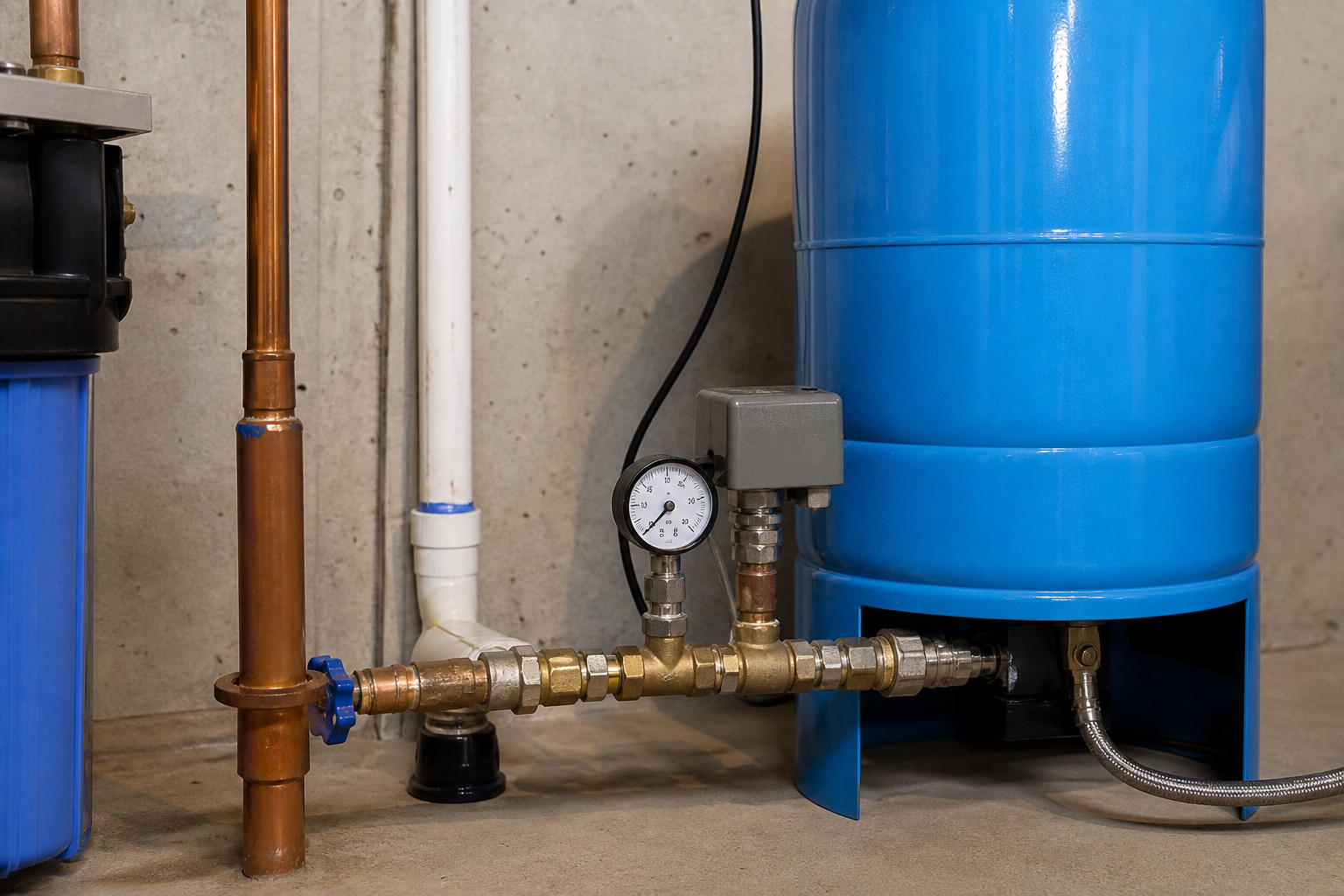
Common components can include the well pump, pressure tank, pressure switch, check valve, water lines, controls and the well itself.
A problem with any part of this system can create weak water pressure, pressure that surges, pump cycling frequently, water cutting in and out, pressure dropping during showers, very low flow or complete loss of water.
Ontario's guidance for private wells notes that common jet and submersible pumping systems use pressure tanks to maintain pressure. The province also recommends having pump and pressure systems checked when water-supply problems occur because pump condition, pressure equipment and water-line leaks can affect the supply delivered to the home.
Gravity regularly handles well systems and pump problems in Kawartha Lakes, Lindsay, Peterborough County and surrounding rural areas.
9. Your Well Pressure Tank or Pressure Switch May Be the Problem
If you are on a private well, do not immediately assume the well has gone dry. The problem may be the equipment that controls pressure inside the house.
What does a pressure tank do?
The pressure tank stores water under pressure. This reduces the need for the well pump to switch on every single time someone opens a faucet.
Ontario's well guidance identifies pressure tanks as part of common residential pumping systems used to maintain system pressure.
Signs of a pressure tank problem
You may notice pressure rising and falling noticeably, the pump switching on and off frequently, weak pressure, short bursts of normal pressure followed by poor flow, or the pump running differently than usual.
What does the pressure switch do?
The pressure switch tells the pump when to start and stop based on system pressure. If it stops operating correctly, water pressure can become unreliable or disappear.
Because well systems combine electricity, water and pressurized equipment, diagnosis is best left to someone familiar with pump systems. Do not keep resetting controls without knowing why pressure dropped.
Well pump or pressure tank acting up?
Call Gravity at 705-344-6835 for well and pump service across Lindsay, Kawartha Lakes and rural Peterborough County.
Why Does My Water Pressure Drop When I Use Two Faucets?
This is a common complaint. One shower feels fine. Then someone starts the washing machine and the shower pressure drops.
A small change can be normal. A major drop deserves investigation.
Possible causes include restricted supply piping, undersized plumbing, older corroded pipes, a partially closed valve, a pressure regulator issue, well pump capacity, a pressure tank problem or high simultaneous water demand.
This symptom is especially useful diagnostically. Your plumbing system can supply enough flow for one fixture but struggles when demand increases. If the problem is getting worse, have it inspected.
Why Is My Shower Pressure Low but My Faucets Are Fine?
If only the shower has low pressure, start at the shower.
Possible causes include a blocked showerhead, mineral buildup, a shower cartridge problem, a mixing valve issue or a local piping restriction.
Remove the showerhead if it is designed for easy removal and compare flow. If pressure from the shower arm is strong but the showerhead is weak, the head itself is likely restricted. If flow remains poor with the showerhead removed, the restriction is farther back in the system.
Why Is My Hot Water Pressure Low but Cold Water Pressure Is Fine?
This points toward the hot-water side of the plumbing system.
Possible causes can include a water heater valve issue, hot-water piping restriction, a fixture cartridge problem, sediment or debris, or a problem affecting the hot water tank or hot-water distribution system.
Test several fixtures. Low hot pressure at one faucet may be the fixture. Low hot pressure everywhere may be closer to the water heater or hot-water piping system.
Gravity services and replaces water-heating systems as well as residential plumbing, making this an issue that can be diagnosed from both sides of the system.
Why Is My Water Pressure Suddenly Low?
A sudden drop in water pressure deserves more attention than pressure that has slowly declined over several years.
Possible causes include a water-main issue, major leak, valve moved or failed, municipal work, well-pump failure, pressure-switch problem, pressure-regulator failure, or frozen or damaged piping.
Start by checking several fixtures. Then find out if neighbours are having the same problem. If they are not, the issue is probably related to your property.
If the pressure is dropping quickly, water is appearing somewhere, or you are close to losing water entirely, call for plumbing service. Gravity treats no water, low pressure and active leaks as urgent plumbing problems and offers 24/7 live answering.
Why Is My Water Pressure Low Upstairs?
Gravity has many customers in multi-storey homes where the complaint is: “The downstairs pressure seems okay, but the upstairs shower is terrible.”
There are several possible explanations. The problem may involve overall pressure entering the home, restricted piping, fixture problems, plumbing design, simultaneous demand, older pipes or pressure-regulation issues.
Do not automatically install a booster pump. First find out why the pressure is low. Adding equipment without diagnosing the restriction can hide the actual problem.
How Can I Check Low Water Pressure Myself?
You can do a few simple checks before calling.
1. Test multiple fixtures
Try the kitchen faucet, bathroom faucet, shower and tub. Determine if the problem affects one fixture or everything.
2. Compare hot and cold water
This helps identify if the issue affects the whole supply or one side of the plumbing.
3. Ask a neighbour
If you are on municipal water, find out if nearby properties also have low pressure.
4. Check accessible valves
Look for an obviously partially closed fixture valve. Do not force old or seized valves.
5. Inspect faucet aerators
A clogged aerator is an easy problem to identify.
6. Look for leaks
Check the basement, mechanical room, under sinks, around toilets, around the water heater, ceilings beneath bathrooms and visible piping.
7. Listen
If you hear water moving when no fixtures are running, there may be a leak.
8. If you have a well, pay attention to the pump
Listen for rapid cycling, constant running, unusual noises or a pump failing to start.
If none of those checks explains the issue, stop guessing. Get the pressure tested.
When Is Low Water Pressure an Emergency?
Not every weak shower needs an emergency plumber. Some situations do.
Call quickly if low pressure happens alongside:
- Complete loss of water
- Active leak
- Burst pipe
- Water entering the house
- Suspected broken service line
- Well pump failure
- Pump running continuously
- Sudden pressure collapse
- Water damage
- No water during freezing weather
Need help now?
Gravity answers the phone 24 hours a day, 7 days a week and prioritizes urgent calls including no water and active leaks. Call 705-344-6835.
Can Low Water Pressure Mean a Water Main Is Broken?
It can. A damaged water service or water main can cause a sudden pressure drop. But low pressure by itself does not prove that a water main has failed.
Look for other signs: sudden pressure change, water appearing outdoors, wet or washed-out ground, unusual water sounds, multiple affected properties, a municipal notice, or complete loss of water.
Gravity has separate information covering broken water mains and no-water emergencies, so homeowners dealing with an active service-line problem should treat that as a different issue from long-term low pressure.
Low Water Pressure on a Private Well: What Should You Do?
If you live in Kawartha Lakes or rural Peterborough County, your well system deserves special attention.
Do not keep resetting controls or cycling equipment without knowing why pressure has dropped.
Ontario recommends checking the pump and pressure system when a well property experiences water-supply problems. The province also recommends checking distribution lines for leaks or clogging and using qualified well professionals for system modifications.
Start by noting: Did pressure drop suddenly? Does the pump run? Does it cycle rapidly? Does pressure recover after you stop using water? Have you lost water completely? Has the problem happened before? Have nearby wells experienced supply problems?
That information helps separate a plumbing-pressure issue from a larger well-supply problem.
Can a Plumber Increase My Water Pressure?
Sometimes. But the first goal is not simply to increase pressure. It is to identify why your existing pressure is poor.
A plumber may find a clogged fixture, bad valve, leak, regulator problem, restricted piping, well equipment problem, pressure-tank issue or pump problem.
The right repair depends on the cause. Installing new equipment without diagnosing the system first can waste money.
Low Water Pressure vs Low Water Flow: Are They the Same Thing?
People use the terms interchangeably, but they describe slightly different things.
Pressure describes the force pushing water through your plumbing. Flow describes how much water moves through the system over a period of time.
A restriction can make a fixture feel like it has “low pressure” because not enough water is reaching it.
For homeowners, the practical question remains the same: Why am I not getting the water performance I used to get? A plumber can test the system and isolate the reason.
Low Water Pressure in Peterborough
If you live on municipal water in Peterborough, first determine if the issue affects your property alone or multiple houses.
The City of Peterborough lists low water pressure among the Water Services issues residents can report. Temporary municipal work such as hydrant testing can also create short-term pressure changes.
If neighbours have normal pressure but your entire house does not, call Gravity. The problem may be inside your plumbing system or on the service supplying your property.
Low Water Pressure in Lindsay and Kawartha Lakes
Homes around Lindsay and Kawartha Lakes include a mix of municipal-water properties and rural homes using private wells. That changes the diagnostic process.
On a municipal system, the problem may involve a fixture, valve, pipe, regulator, leak or municipal supply.
On a well system, you also need to consider the well pump, pressure tank, pressure switch, well supply and water line.
Gravity's Lindsay team services Kawartha Lakes and surrounding rural and residential communities, including urgent no-water and well-pump problems.
How Gravity Diagnoses Low Water Pressure
The goal is to find the restriction or supply problem instead of replacing random plumbing parts.
Depending on the symptoms, a technician may examine which fixtures are affected, hot vs cold pressure, the main water supply, shutoff valves, visible plumbing, signs of leakage, pressure-control equipment, the well pump, pressure tank, pressure switch and water lines.
The repair then targets the actual problem. That could mean fixing one fixture. It could mean repairing a leak. It could mean servicing a well-pressure system. It depends on what the testing finds.
Frequently Asked Questions About Low Water Pressure
Why is my water pressure suddenly low?
A sudden pressure drop can result from a municipal water issue, leak, valve problem, pressure regulator failure or well-system problem. Check several fixtures and find out if neighbouring homes are affected.
Why do I have low water pressure in the whole house?
Whole-house low pressure points toward something affecting the main supply rather than one fixture. Possible causes include a valve, regulator, leak, piping restriction, municipal problem or well equipment.
Why is only one faucet losing pressure?
A clogged aerator, damaged cartridge, supply valve or local restriction is more likely when every other fixture works normally.
Why is my shower pressure so low?
Start with the showerhead. Mineral or sediment buildup can restrict flow. If flow remains low after checking the showerhead, the cartridge, valve or supply piping may need inspection.
Why does my water pressure drop when someone flushes the toilet?
Your plumbing system may be struggling to supply multiple fixtures simultaneously. Restricted pipes, overall supply pressure, well-system capacity or plumbing design can contribute.
Can a water leak cause low pressure?
Yes. A significant leak can reduce the water available to your fixtures. Sudden low pressure combined with signs of water damage should be investigated promptly.
Can a bad pressure tank cause low water pressure?
Yes. On a private well system, the pressure tank helps maintain water pressure. Pressure that surges, drops or causes rapid pump cycling can indicate a tank or related system problem.
Can a bad well pump cause low pressure?
Yes. Pump condition can directly affect the amount of water delivered from a well. Ontario recommends inspecting pump and pressure equipment when a private well has water-supply problems.
Why is my hot water pressure low but cold water is normal?
The problem may be on the hot-water side of the plumbing, including a fixture, valve, water heater or hot-water piping restriction.
Can the City cause temporary low water pressure?
Yes. Municipal work can temporarily change water pressure. Peterborough specifically notes that hydrant testing may result in short-term pressure loss.
Should I call the City or a plumber for low water pressure?
If several nearby homes are affected, contact your municipal water provider. If only your property has the problem, call a plumber.
Who fixes low water pressure in Peterborough?
Gravity provides plumbing service for low water pressure, leaks, no-water problems and other water-supply issues across Peterborough and surrounding communities. Call 705-344-6835.
Who fixes low water pressure on wells in Kawartha Lakes?
Gravity services well and pump problems across Lindsay, Kawartha Lakes, Peterborough County and surrounding rural communities. Call 705-344-6835 for service.
Stop Putting Up With Low Water Pressure
Low water pressure is not something you have to accept as part of living in an older house or rural property.
Sometimes the problem is a $10 aerator. Sometimes it is a valve. Sometimes it is a leak, restricted pipe, pressure regulator, well pump or pressure tank.
The important part is finding the actual cause.
If your pressure has changed, keeps getting worse or has dropped throughout the whole house, have it checked.
And if the water stops completely, Gravity answers the phone 24/7.
Low water pressure? No water?
Call Gravity at 705-344-6835. 24/7 plumbing service for Peterborough, Lindsay, Kawartha Lakes and surrounding areas. Always available. Always reliable. Always answers the phone.
Ready for next steps?
Book service, ask about financing, or browse protection plans — we are always available.