If your furnace keeps turning on and off, it may be short cycling. Instead of completing a normal heating cycle, the furnace starts, runs briefly, shuts down, and starts again soon after.
Sometimes the cause is simple — a dirty furnace filter or a blocked air vent.
Other times, repeated cycling points to a thermostat problem, an overheating furnace, a flame sensor issue, a failed safety control, vent blockage, a blower problem, or a furnace that was improperly sized for the home.
For homeowners in Peterborough, Lindsay, Kawartha Lakes and surrounding Ontario communities, short cycling often becomes much more noticeable once temperatures drop and the heating system starts running regularly.
A furnace that repeatedly starts and stops before your home reaches the thermostat setting should not be ignored.
Short cycling can affect comfort, increase energy use, put extra wear on furnace components, and in some cases signal a problem that needs professional inspection.
The Gravity Group provides furnace repair, maintenance, installation and 24/7 heating service across Peterborough, Lindsay, Kawartha Lakes and surrounding communities.
Furnace giving you trouble now?
Call The Gravity Group at 705-344-6835. We answer 24/7.
Quick Answer: Why Does My Furnace Keep Turning On and Off?
A furnace that keeps turning on and off is often experiencing furnace short cycling.
Common causes include:
- A dirty or clogged furnace filter
- Closed or blocked supply and return vents
- Thermostat problems
- A dirty or faulty flame sensor
- Furnace overheating or a limit switch problem
- Ignition or combustion problems
- Blocked furnace intake or exhaust vents
- Blower motor or airflow problems
- An oversized furnace
A furnace running more often during extremely cold Ontario weather does not automatically mean something is wrong. The bigger warning sign is a furnace that repeatedly turns on, runs only briefly, and shuts off before the house reaches the thermostat setting.
Furnace manufacturers including Carrier and Trane identify restricted airflow, thermostat problems, oversized equipment, safety-control issues, flame-sensing problems and overheating as common causes of short cycling.
What Is Furnace Short Cycling?
Furnace short cycling describes a heating system that repeatedly starts and stops without completing a normal heating cycle.
You might hear a click. The furnace starts. The burners ignite. Warm air begins coming from the vents. Then the furnace shuts down. A few minutes later, it starts again.
If that pattern keeps repeating, something may be interrupting the heating cycle.
Carrier describes furnace short cycling as repeated cycles that may last less than roughly five to ten minutes. Trane notes that a typical furnace heating cycle generally lasts at least several minutes. Actual cycle length varies based on the furnace, thermostat, outdoor temperature, home construction, equipment staging, heat loss and heating demand.
That is why you should not diagnose short cycling based on a stopwatch alone.
Look at the pattern.
If your thermostat is set to 21°C, the house is 18°C, and the furnace repeatedly starts and shuts down without bringing the home close to 21°C, that deserves attention.
Is It Normal for a Furnace to Turn On and Off?
Yes. Every conventional furnace turns on and off as part of normal operation.
Your thermostat detects that the indoor temperature has dropped below its setting and calls for heat. The furnace starts. Once the thermostat reaches its target temperature, the heating cycle ends. Later, as your home loses heat, the process starts again.
That is normal cycling.
Normal furnace operation may look like this
- Your house drops below the thermostat setting
- The furnace starts
- The system runs long enough to warm the home
- The furnace shuts off
- It remains off until the indoor temperature drops again
Short cycling may look like this
- The furnace starts
- It shuts off a few minutes later
- The thermostat has not reached its setting
- The furnace starts again
- It shuts off again
- This pattern repeats
Very cold outdoor temperatures can also change how often your furnace runs. During a Peterborough or Kawartha Lakes cold snap, your heating system has to replace heat escaping through walls, windows, doors, ceilings and other parts of the building. More frequent operation does not automatically indicate a mechanical failure.
What matters is how the furnace operates — not only how often it runs.
Not sure if it is normal cycling or a problem?
Gravity can inspect your furnace and explain what we find. Call 705-344-6835.
9 Reasons Your Furnace Keeps Turning On and Off
1. Your Furnace Filter Is Dirty or Clogged
Start here. A dirty furnace filter is one of the most common — and simplest — potential causes of furnace short cycling.
Your furnace needs airflow. Return air enters the HVAC system, passes through the filter, moves across the furnace heat exchanger, then travels through your ductwork to the rooms in your house.
When a heavily clogged filter restricts airflow, the furnace may have trouble moving enough air across the heat exchanger. Heat builds up. The furnace can overheat. A safety control may shut the burners down. After the furnace cools, it may start again — then overheat again. That creates a repeated on-off cycle.
Natural Resources Canada recommends regularly inspecting, cleaning or changing heating and cooling system filters, and notes that dirty filters can increase energy costs and cause system damage.
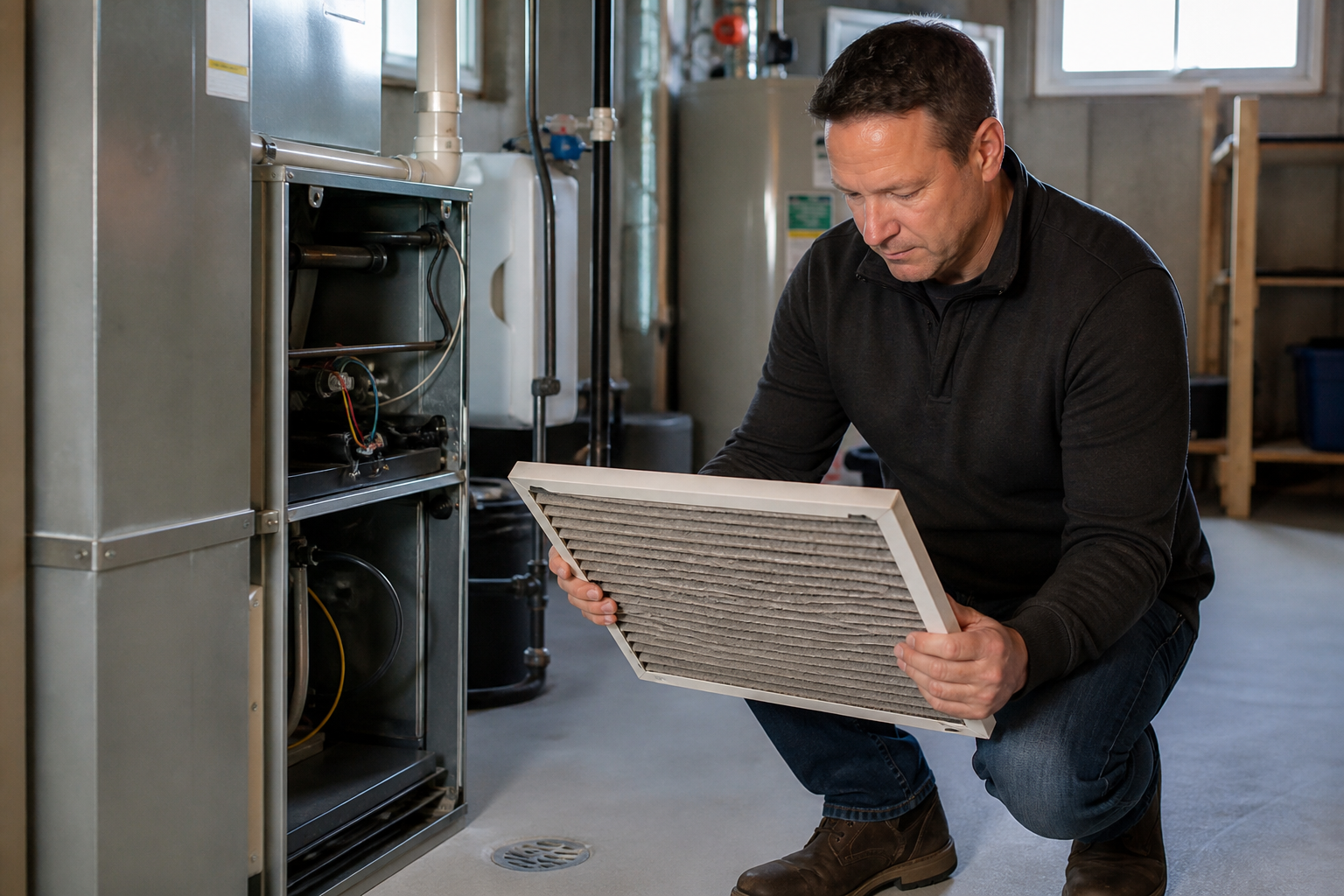
Signs a dirty filter may be contributing:
- Weak airflow from the registers
- Rooms taking longer to warm up
- Furnace shutting down before reaching temperature
- More dust than usual around the house
- A visibly dirty or grey filter
- Furnace running hotter than normal
- Heating bills increasing
What you can safely do: Check the filter. If it is clearly dirty and your furnace manufacturer allows homeowner filter replacement, replace it with the correct size and type.
Do not automatically install the densest filter you can find. A filter with excessive airflow resistance can also create problems if your furnace and duct system were not designed for it. Follow the furnace manufacturer’s filter specifications, or ask an HVAC technician which filter fits your system.
If replacing the filter does not stop the short cycling, there is likely another problem. For more pre-season filter and airflow tips, see how to prepare your furnace for winter in Ontario.
2. Your Supply Registers or Return Vents Are Blocked
Your furnace filter is only one part of the airflow system. Your furnace also relies on air moving freely through supply ductwork, supply registers, return ducts and return-air grilles.
Homeowners sometimes close vents in unused bedrooms thinking it will save money. Furniture gets pushed against return grilles. Area rugs cover floor vents. Renovations change airflow. Dust and debris build up. Ductwork can also become damaged, restricted or improperly balanced.
Carrier specifically recommends checking that supply and return vents remain open and unobstructed when diagnosing furnace cycling and heating problems.
Restricted airflow can cause the same basic issue as a clogged filter: the furnace creates heat faster than the system can move that heat away. Temperature inside the furnace rises. A safety control shuts the furnace down.
Walk through the home and check that:
- Supply registers are open
- Return-air grilles are not covered
- Furniture is not blocking vents
- Rugs are not covering floor registers
- Large items have not been placed in front of return grilles
If everything is open and airflow still seems weak, the issue may be inside the furnace or duct system. Gravity can inspect your heating system and help determine why certain areas are not heating properly.
3. Your Thermostat May Be Causing the Furnace to Short Cycle
The furnace only knows when your home needs heat because the thermostat tells it. If the thermostat sends incorrect information, the furnace can operate incorrectly even when the furnace itself is capable of heating normally.
Possible thermostat problems include weak batteries, faulty wiring, a failing thermostat, incorrect programming, poor thermostat placement, temperature sensor problems and smart thermostat configuration issues.
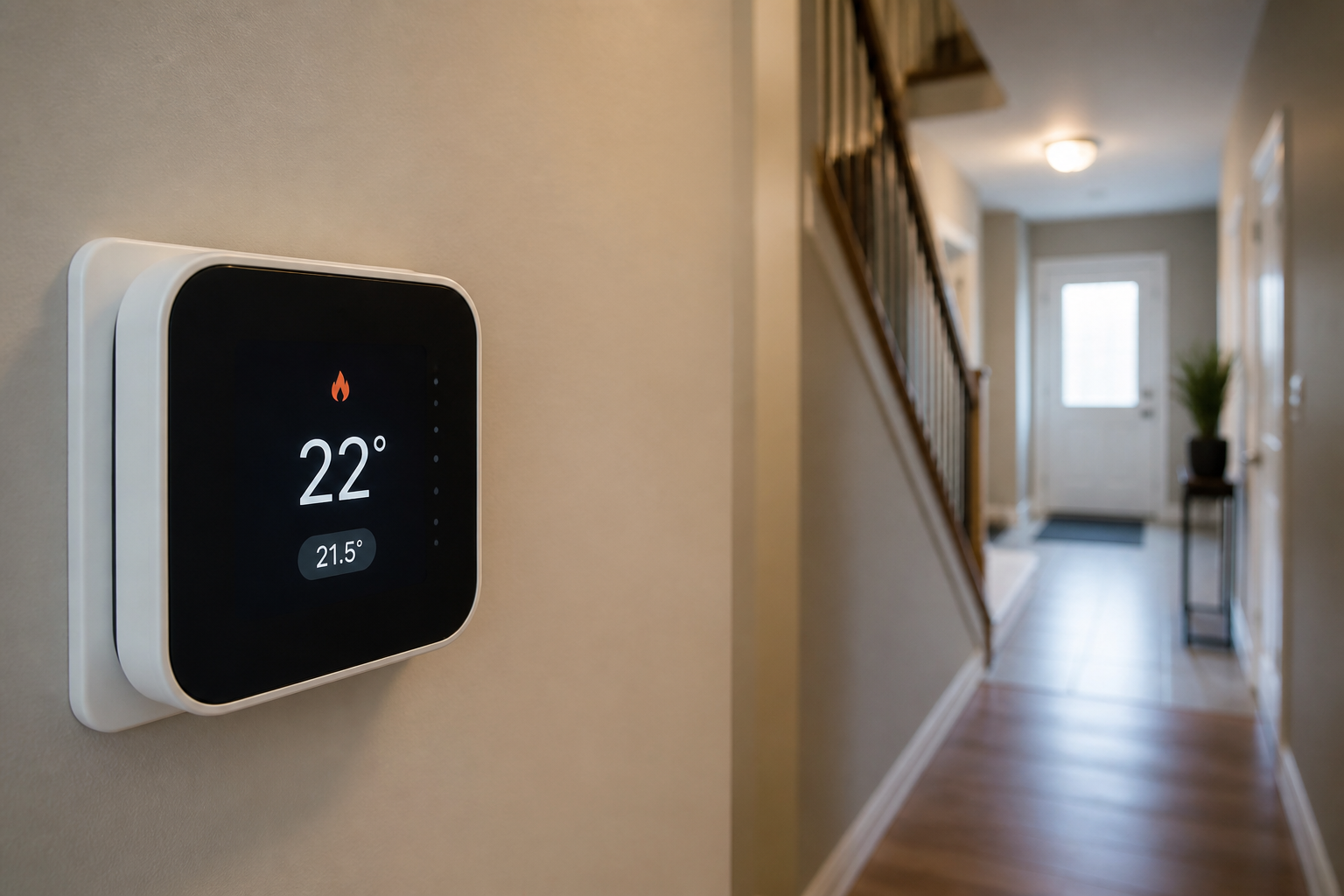
Thermostat location matters. Imagine a thermostat installed beside a supply register. The furnace starts. Warm air reaches the thermostat quickly. The thermostat thinks the whole house has reached the target temperature and tells the furnace to shut down. A few minutes later, that area cools and the furnace starts again — while the rest of the house may still feel cold.
Direct sunlight, fireplaces, kitchens, exterior drafts and other temperature influences can create similar problems. Carrier and Trane both identify thermostat malfunction or poor thermostat placement as potential causes of furnace short cycling.
Before calling for service, check that:
- The thermostat is set to HEAT
- The desired temperature is above the current room temperature
- Batteries are not weak
- Programming has not changed unexpectedly
- The thermostat is not being heated by direct sunlight or another heat source
Do not start opening the furnace or changing thermostat wiring unless you know exactly what you are working with.
Thermostat checked — still short cycling?
Call Gravity at 705-344-6835 for furnace diagnosis across Peterborough, Lindsay and Kawartha Lakes.
4. The Flame Sensor Is Dirty or Failing
This problem often produces a very specific symptom. Your furnace starts. The ignition sequence begins. The burners light. Then, only a few seconds later, the burners shut off. The furnace tries again.
That can indicate a flame-sensing problem.
Modern gas furnaces use a flame sensor to confirm that the burner flame is actually present. This is a safety function. If the furnace opens the gas valve but cannot confirm a proper flame, the control system does not simply continue supplying fuel — it shuts the burners down.
Carrier notes that a dirty or failing flame sensor can cause a furnace to ignite and then shut down within seconds.
Common signs of a flame sensor problem:
- Burners ignite and quickly shut off
- Furnace repeatedly attempts ignition
- Furnace enters a lockout condition
- Control board displays or flashes a fault code
- Little or no heat reaches the house
Different furnace brands use different diagnostic codes. Your furnace manual may explain what a flashing LED means, but a fault code still needs to be interpreted in context.
A flame-sensing fault does not automatically mean the flame sensor itself needs replacement. Wiring, grounding, ignition, gas supply, combustion, venting or furnace control problems can create similar symptoms. This is a good point to call a qualified furnace technician rather than replacing parts based on a guess.
5. The Furnace Is Overheating or the High-Limit Switch Is Activating
Modern furnaces contain safety controls designed to stop operation when temperatures move outside safe limits. One of these components is the high-limit switch.
If the furnace gets too hot, the control can shut down the burners. This helps protect the equipment. After temperatures drop, the furnace may attempt another heating cycle. If the underlying overheating problem remains, the same thing happens again.
The result looks like: start → heat → overheat → shut down → cool → restart.
Possible causes of furnace overheating include a dirty furnace filter, restricted return airflow, closed supply registers, blower problems, dirty blower components, duct restrictions, internal furnace problems or incorrect equipment setup. A faulty limit switch itself can also create improper shutdown behaviour.
Trane identifies abrupt shutdowns and short cycling as possible symptoms of furnace limit-switch problems and advises against bypassing the safety control.
A safety switch is not an inconvenience that should be disconnected. It exists because the furnace is detecting — or believes it is detecting — a condition outside its intended operating range. The correct repair is to find out why the furnace is reaching that condition.
6. There Is an Ignition, Burner, Gas or Combustion Problem
A gas furnace goes through a specific sequence before sending heat through your home. Although designs vary, the process generally includes a call for heat, draft verification, ignition, gas flow, burner ignition, flame verification, blower operation and ongoing safety monitoring.
If part of that sequence fails, the furnace may shut down. Possible problems include a failed igniter, burner contamination, gas valve problems, pressure-switch problems, flame-sensing problems, control board faults and combustion problems.
Trane identifies igniters, flame sensors, pressure switches, limit switches and blower components among common furnace repair items.
A furnace that tries repeatedly to ignite needs attention. You might hear the furnace start, then stop, then start again. You may also hear clicking without sustained burner operation.
Do not repeatedly reset a gas furnace hoping the problem disappears. If the basic filter and thermostat checks do not solve it, book a furnace inspection. If you have no heat at all, see what to do when your furnace has no heat.
Leave the building and follow your gas utility’s emergency instructions. Do not attempt to diagnose a suspected gas leak yourself.
7. Your Furnace Intake or Exhaust Vent Is Blocked
High-efficiency furnaces commonly vent through pipes that terminate outside the home. Ontario winters can create a very local problem: snow and ice.
Heavy snow can cover low-mounted furnace exhaust or intake pipes. Ice can form around the vent. Debris or other obstructions can also affect venting.
TSSA specifically warns Ontario homeowners to keep fuel-burning appliance vents free from snow and ice. Blocked exhaust vents can create serious safety concerns, including carbon monoxide risk.
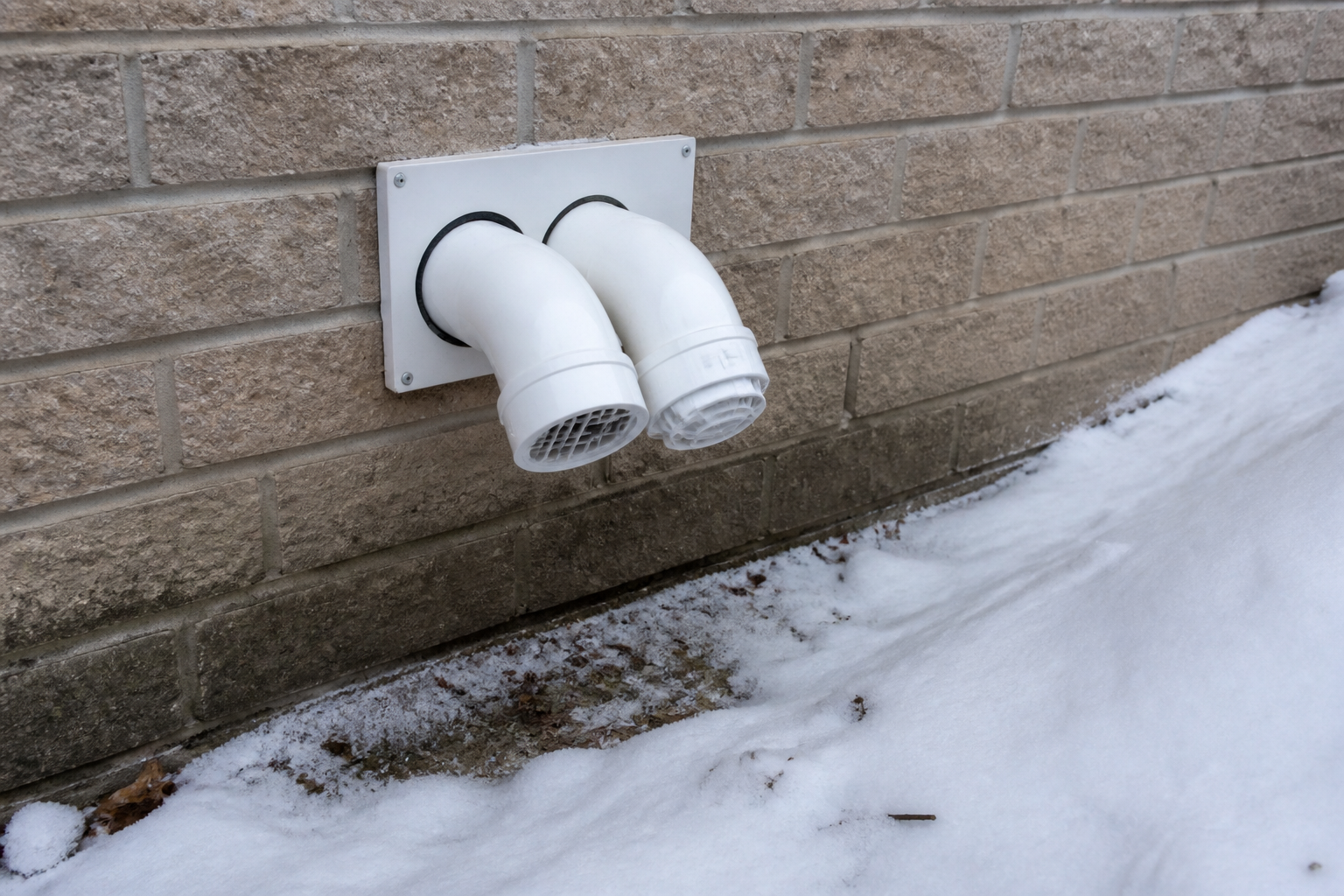
After clearing your driveway, take a look around the outside of your house. Know where your furnace intake and exhaust terminate. Keep the surrounding area clear. Be careful when operating a snowblower around sidewall vents.
Do not modify, disconnect, extend or alter furnace venting yourself. If you suspect an internal venting, pressure-switch, condensate or combustion-air problem, call an HVAC professional.
8. Your Furnace Blower or Airflow System Has a Mechanical Problem
Your furnace can produce heat, but it also needs to move that heat through the house. That is the blower’s job. A blower problem can interfere with airflow across the heat exchanger and cause the furnace to operate incorrectly.
Possible issues include a failing blower motor, blower wheel problems, motor-control problems, electrical issues, dirty internal components, duct restrictions and incorrect blower settings. Carrier identifies blower problems as one possible cause of weak or uneven furnace airflow.
Signs that point toward a blower problem:
- Very little air coming from registers
- Furnace burners operating but poor heat distribution
- Unusual humming or mechanical noise
- Blower starting inconsistently
- Furnace overheating
- Some rooms remaining cold
- Furnace repeatedly shutting itself down
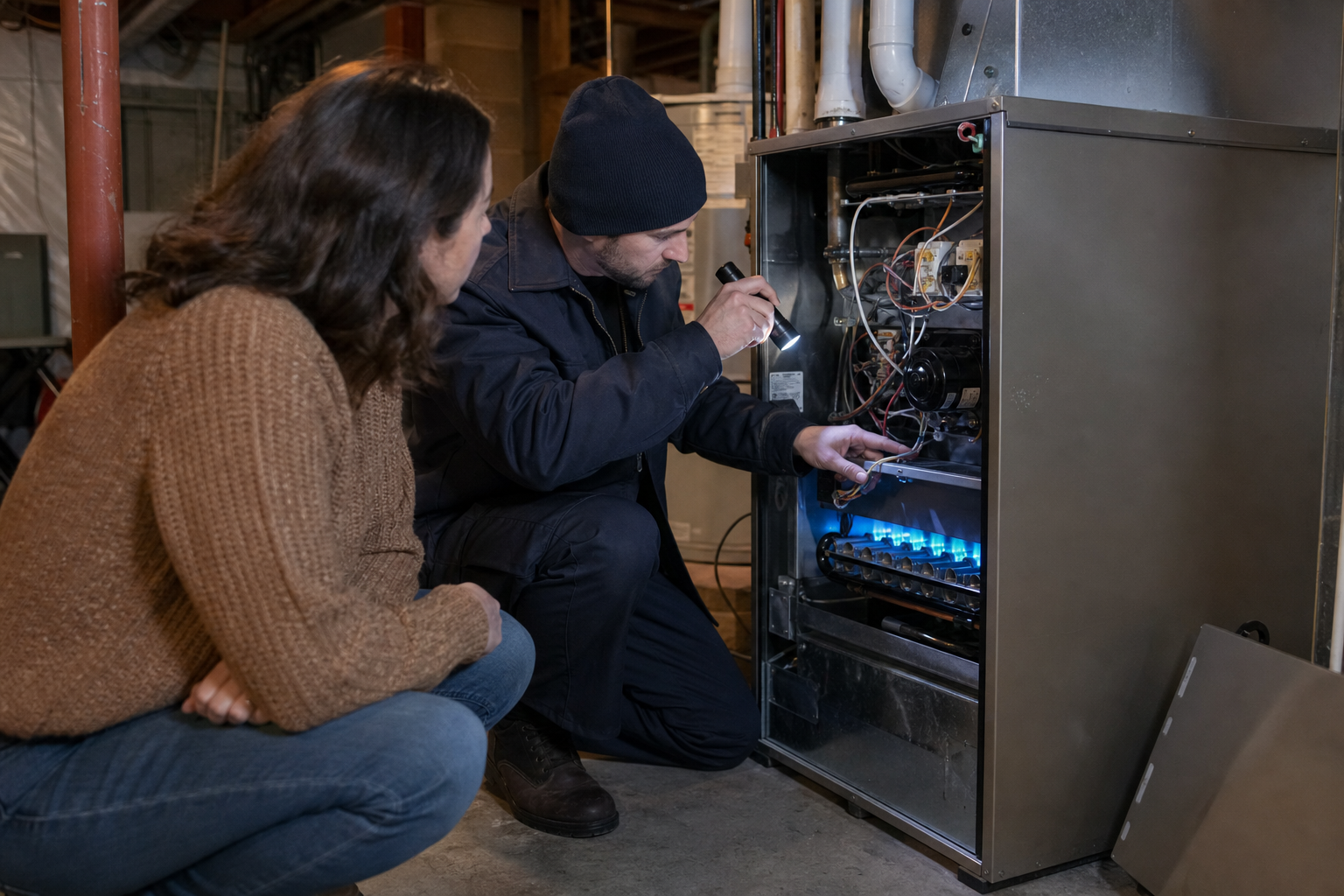
A technician can test blower operation, airflow, electrical components, temperature rise, duct conditions and furnace controls to determine what is actually causing the shutdown.
Weak airflow or unusual furnace noises?
Book furnace repair with Gravity. Call 705-344-6835 — live answer 24/7.
9. Your Furnace May Be Too Large for Your Home
Bigger is not always better with HVAC equipment. A furnace should be matched to the heating requirements of the house.
If the furnace produces far more heat than the home needs, it can raise the temperature around the thermostat very quickly. The thermostat becomes satisfied. The furnace shuts off. The house cools. The furnace starts again. That can create frequent short heating cycles.
Both Carrier and Trane identify oversized furnaces as a cause of short cycling.
How does an oversized furnace happen? A previous contractor may have selected equipment based mainly on the size of the old furnace. The original furnace may have been oversized. The home’s insulation, windows, air sealing or building envelope may have changed. An addition or renovation may have changed the heating load.
Correct furnace sizing requires more than looking at square metres. A heating professional should consider the building’s actual heat loss and other relevant system conditions.
The Gravity Group installs furnaces based on the home’s heating needs rather than simply installing the largest unit available. If you are weighing repair against a new system, read should you buy a new air conditioner or furnace and gas furnace or heat pump: which is best.
What Happens If You Ignore Furnace Short Cycling?
A furnace that short cycles is doing far more starting and stopping than intended. That matters because startup places demand on components.
Repeated short cycles may contribute to:
- Increased furnace wear
- Reduced comfort
- Uneven indoor temperatures
- Higher heating costs
- Ignition component wear
- Blower and motor wear
- Increased service calls
- Larger failures if the underlying problem gets worse
It may also prevent the furnace from operating as efficiently as designed. Natural Resources Canada uses Annual Fuel Utilization Efficiency (AFUE) as the standard measure for comparing furnace fuel efficiency. Actual household energy use also depends on the building, equipment condition, controls, weather, occupant behaviour and how the system operates.
A high-efficiency furnace still cannot perform properly if airflow is restricted or components are malfunctioning.
Can Furnace Short Cycling Be Dangerous?
Short cycling itself describes an operating symptom. The cause behind it determines the level of concern.
A thermostat problem is different from a combustion or venting problem. A dirty filter is different from a damaged heat exchanger. That is why repeated furnace shutdowns should not automatically be dismissed as an annoyance.
Fuel-burning equipment also creates carbon monoxide when combustion is incomplete. Ontario’s Technical Standards and Safety Authority states that fuel-burning appliances should be installed, serviced and maintained by properly qualified professionals, and Ontario’s current rules require carbon monoxide alarms in homes containing fuel-burning appliances.
If your carbon monoxide alarm sounds
- Get everyone out of the home immediately
- Call 9-1-1 or local emergency services from outside
- Do not remain inside trying to determine which appliance caused the alarm
Ontario’s carbon monoxide guidance specifically tells residents to leave the building and call emergency services when a CO alarm activates.
What Can I Check Myself If My Furnace Keeps Turning On and Off?
There are a few basic checks homeowners can make without taking apart the furnace.
Check the thermostat
- It is set to HEAT
- The temperature setting is correct
- Batteries are good
- Programming is correct
Check the furnace filter
If it is visibly clogged, replace it with the correct filter for your system.
Check the vents
Make sure supply registers and return grilles are open and unobstructed.
Check the outdoor furnace vents
Look for snow, ice or obvious external obstruction around the termination. Do not dismantle furnace venting.
Check your CO alarms
Confirm that your alarms are working and meet current Ontario requirements. As of January 1, 2026, Ontario’s updated Fire Code expanded carbon monoxide alarm requirements in existing homes. Homes containing fuel-burning appliances generally require alarms adjacent to sleeping areas and on every storey.
If these basic checks do not solve the problem, stop troubleshooting and book service.
Basic checks done — still cycling?
Call 705-344-6835 for furnace repair. Gravity answers 24/7 across Peterborough, Lindsay and Kawartha Lakes.
When Should You Call for Furnace Repair?
Call an HVAC technician when:
- The furnace repeatedly shuts off before reaching temperature
- Burners ignite and shut off within seconds
- The furnace repeatedly attempts ignition
- Airflow from the vents is weak
- The furnace overheats
- A furnace fault code keeps returning
- You hear banging, grinding or unusual ignition noises
- The blower is not working properly
- The furnace has stopped producing reliable heat
- The problem returns after replacing the filter
- You suspect a venting or combustion issue
- You are uncomfortable with what the furnace is doing
And if your furnace stops producing heat during an Ontario winter, waiting until the next business day may not make sense.
The Gravity Group provides 24/7 furnace and heating service across Peterborough, Lindsay, Kawartha Lakes and surrounding communities.
Need furnace repair now?
Call 705-344-6835. A live dispatcher answers 24/7.
Furnace Repair or Furnace Replacement?
Short cycling does not automatically mean you need a new furnace. Many causes can be repaired. A thermostat can be replaced. A blower component can be repaired. A flame-sensing problem can be diagnosed. Airflow problems can often be corrected.
But replacement becomes more reasonable when short cycling is one problem among several. Consider the bigger picture:
Furnace age
An older furnace with repeated mechanical problems may be approaching the point where continued repairs stop making financial sense.
Repair frequency
One repair is different from several repairs over two heating seasons. Keep track of what you have spent.
Equipment condition
A technician should look beyond the immediate fault and assess the overall condition of the furnace.
Heat exchanger condition
Heat exchanger problems deserve particular attention. Major heat exchanger damage can significantly change the repair-versus-replacement decision.
Furnace sizing
If the furnace has short cycled since installation and is significantly oversized for the house, replacing components may never correct the underlying sizing problem.
Comfort
A heating system should maintain reasonable indoor comfort without constant breakdowns or severe room-to-room temperature differences.
The goal should not be to sell a furnace every time something breaks. The goal should be to identify the actual problem and give you enough information to choose between repair and replacement.
How Can You Help Prevent Furnace Short Cycling?
You cannot prevent every furnace failure, but basic maintenance can reduce several common problems.
Replace or clean filters as required
Follow the furnace and filter manufacturer’s recommendations. Check the filter more frequently if your home has pets, renovation dust, high furnace usage, heavy indoor dust, or indoor air quality equipment that changes filter requirements.
Keep supply and return vents clear
Do not use furniture or rugs to cover return grilles.
Keep outdoor furnace vents clear
Snow and ice accumulation is particularly important for Ontario homeowners. TSSA advises residents to keep furnace exhaust outlets and other fuel-burning appliance vents free from snow and ice.
Book regular furnace maintenance
Natural Resources Canada recommends professional heating-system maintenance that includes checking system controls, gas connections, gas pressure, burner combustion, the heat exchanger and other components related to safe and efficient operation.
A furnace inspection can sometimes catch developing problems before they turn into a no-heat call on the coldest night of the year. Ask about Gravity’s current furnace inspection offers when you book.
Why Furnace Problems Show Up During Ontario Cold Snaps
A marginal furnace problem may go unnoticed during mild weather. Then January arrives. The furnace runs longer. Heating demand increases. The home loses heat faster. Components cycle more often. Airflow problems become harder to ignore.
A system that seemed fine during a 5°C November afternoon may behave very differently during sustained sub-zero weather.
That does not mean cold weather itself caused the mechanical problem. It often exposes an existing issue because the furnace is operating under greater demand. That is one reason furnace maintenance before heavy heating season can be useful.
Furnace Short Cycling in Peterborough, Lindsay and Kawartha Lakes
Heating systems in this part of Ontario deal with long heating seasons, freezing temperatures, heavy snowfall, ice and large swings in outdoor temperature. Those conditions make reliable furnace operation important.
The Gravity Group provides furnace repair and heating service across:
- Lindsay
- Kawartha Lakes
- Lakefield
- Omemee
- Bobcaygeon
- Fenelon Falls
- Ennismore
- Bridgenorth
- Surrounding communities
If your furnace is constantly starting and stopping, do not spend days guessing at the cause. Start with the filter, thermostat, vents and obvious outdoor vent blockage. If the problem continues, get the furnace inspected.
Call The Gravity Group for furnace service
Call 705-344-6835. We answer 24/7.
Frequently Asked Questions About Furnace Short Cycling
Why does my furnace turn on and off every few minutes?
A furnace that turns on and off every few minutes may be short cycling. Common causes include restricted airflow, a dirty furnace filter, blocked vents, thermostat problems, flame-sensing issues, overheating, safety-control problems or an oversized furnace.
Why does my furnace turn on and then shut off after a few seconds?
If the burners ignite and then shut off within a few seconds, a flame-sensing, ignition, gas, combustion or control problem may be involved. A dirty or faulty flame sensor is one common cause, but it should not be assumed without proper diagnosis.
Can a dirty furnace filter cause short cycling?
Yes. A badly clogged filter can restrict airflow through the furnace. The furnace may overheat and activate a safety control that shuts the burners down. Replacing a dirty filter may solve the problem if airflow restriction is the cause.
Can a thermostat make a furnace turn on and off repeatedly?
Yes. A malfunctioning thermostat, weak batteries, wiring problems, incorrect programming or poor thermostat placement can cause abnormal furnace cycling.
Why does my furnace shut off before reaching the thermostat temperature?
Possible causes include furnace overheating, restricted airflow, a dirty filter, flame-sensing problems, a faulty safety control, blower problems or another mechanical fault. If the furnace repeatedly shuts down before reaching the thermostat setting, book an inspection.
Can closed vents cause furnace short cycling?
They can contribute to airflow problems. Closing too many supply registers or blocking return-air grilles can reduce airflow through the HVAC system and may cause overheating or poor furnace performance.
Can snow cause my furnace to shut off?
Snow can create problems if it blocks the outdoor combustion-air intake or exhaust vent on a furnace. TSSA advises Ontario homeowners to keep furnace and other fuel-burning appliance vents clear of snow and ice.
Is it safe to keep running a furnace that is short cycling?
It depends on the cause, but persistent short cycling should not be ignored. Repeated shutdowns may indicate overheating, airflow problems, ignition faults, safety-control problems, venting issues or other furnace defects.
How do I stop my furnace from short cycling?
Start by checking the thermostat, furnace filter, open supply registers, return-air grilles and outdoor vent termination. If the furnace continues short cycling, have a qualified HVAC technician diagnose the cause.
Does furnace short cycling increase heating costs?
It can. Repeated starting and stopping can reduce operating efficiency and prevent the furnace from completing normal heating cycles. The exact effect depends on the furnace and the cause of the short cycling.
Does short cycling mean I need a new furnace?
No. Many cases of short cycling can be repaired. Replacement may make more sense if the furnace is older, has significant damage, requires repeated repairs or was improperly sized for the home.
Who should I call for furnace repair in Peterborough or Kawartha Lakes?
The Gravity Group provides furnace repair, maintenance, installation and emergency heating service throughout Peterborough, Lindsay, Kawartha Lakes and surrounding areas. Call 705-344-6835 for 24/7 service.
Furnace Keeps Turning On and Off? Call Gravity
A furnace should heat your home without making you wonder every few minutes if it is going to shut down again.
If your furnace keeps turning on and off, start with the simple checks: filter, thermostat, vents, and obvious snow around the exterior furnace vent. If it keeps happening, call someone who can properly diagnose it.
The Gravity Group handles furnace repair, maintenance, replacement and emergency heating calls across Peterborough, Lindsay, Kawartha Lakes and surrounding communities.
Always available. Always reliable. Always answers the phone.
Call 705-344-6835 for 24/7 furnace service
Furnace short cycling, no heat, or winter heating trouble — Gravity is ready to help.
Ready for next steps?
Book service, ask about financing, or browse protection plans — we are always available.