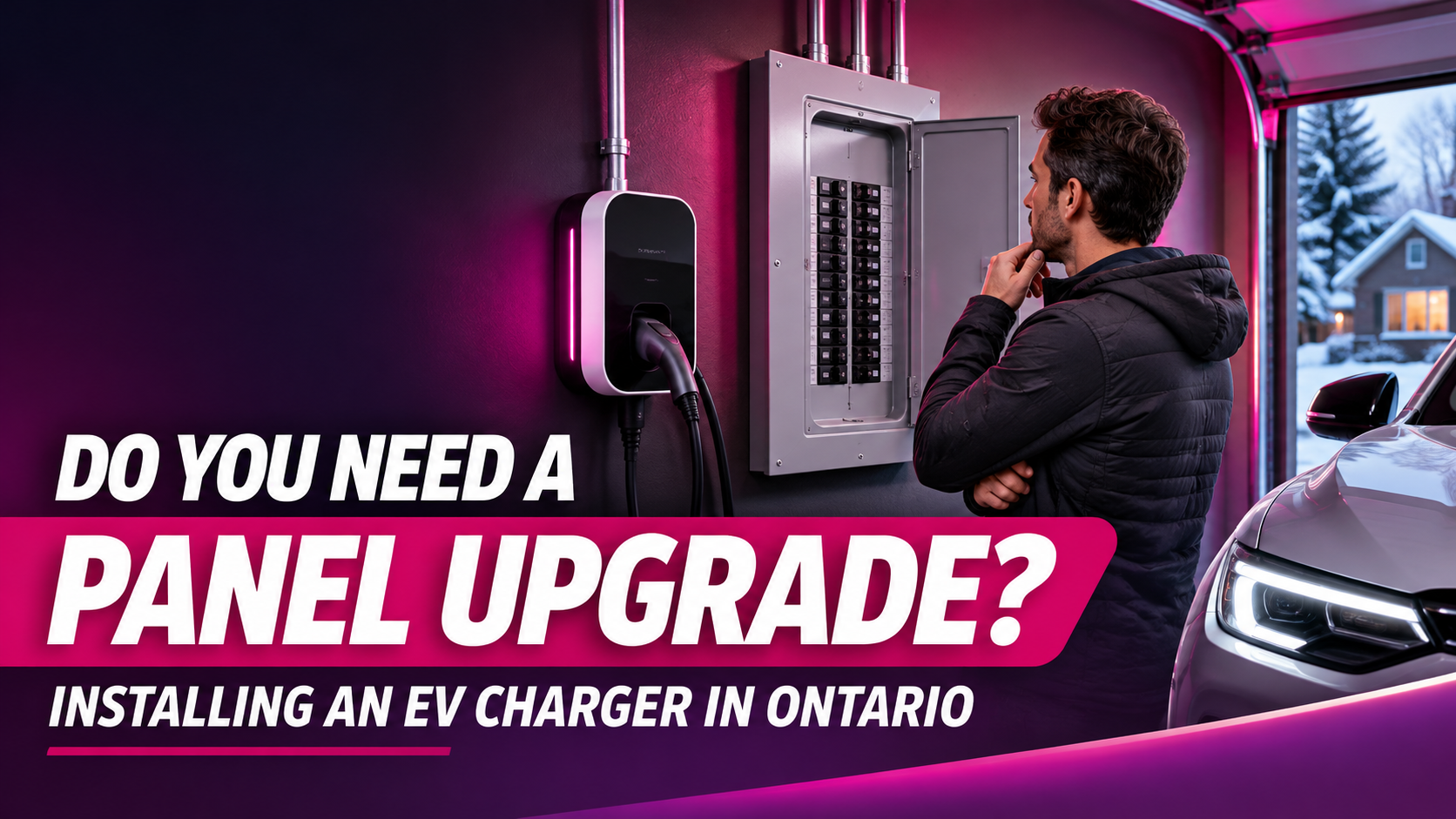
You bought an electric vehicle — or you're about to. Now you're looking at a Level 2 home charger and wondering: do I need to upgrade my electrical panel too? Not necessarily.
A 100 amp electrical service can sometimes support an EV charger. A 200 amp service can provide more available electrical capacity, but the number printed on the main breaker does not tell the entire story.
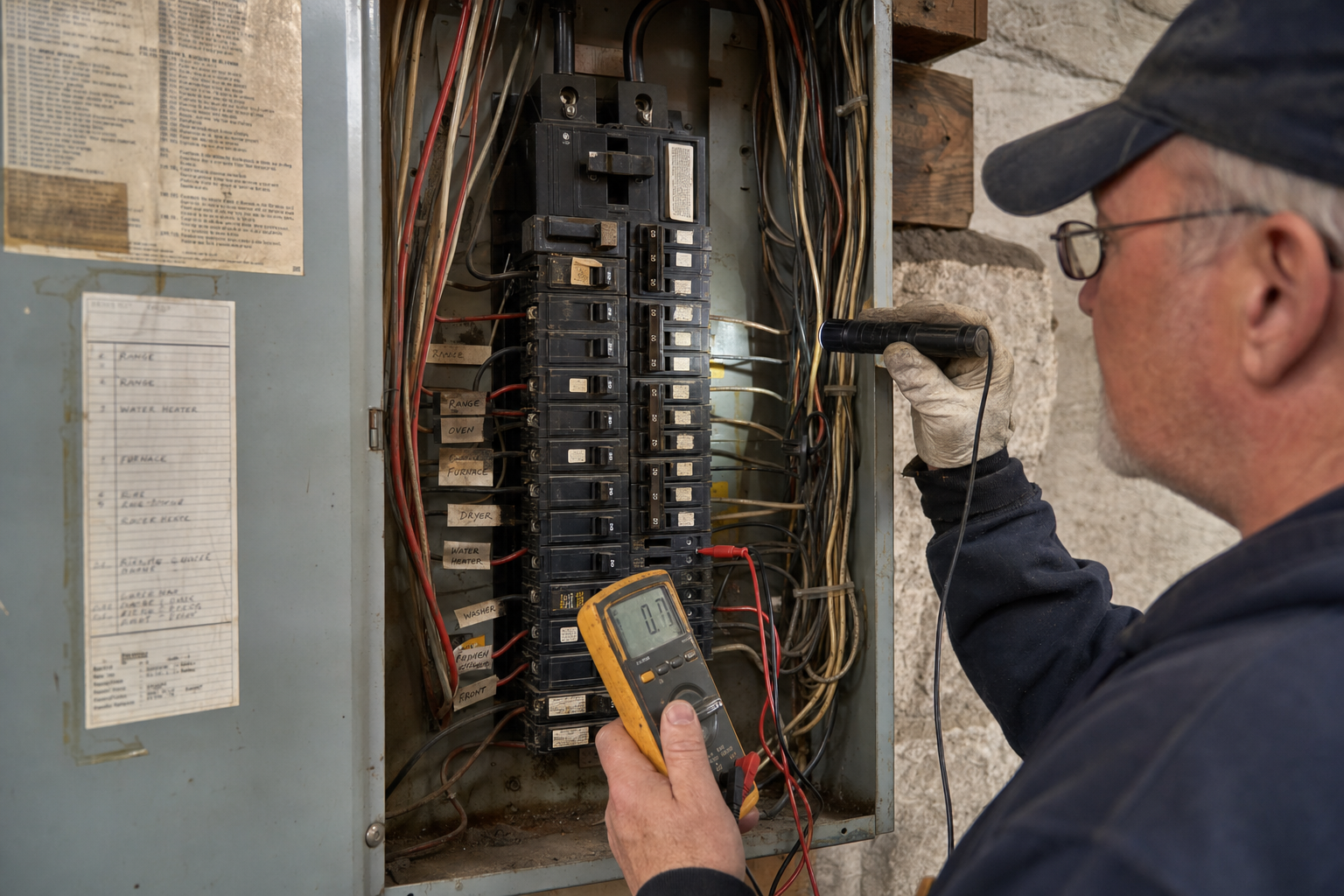
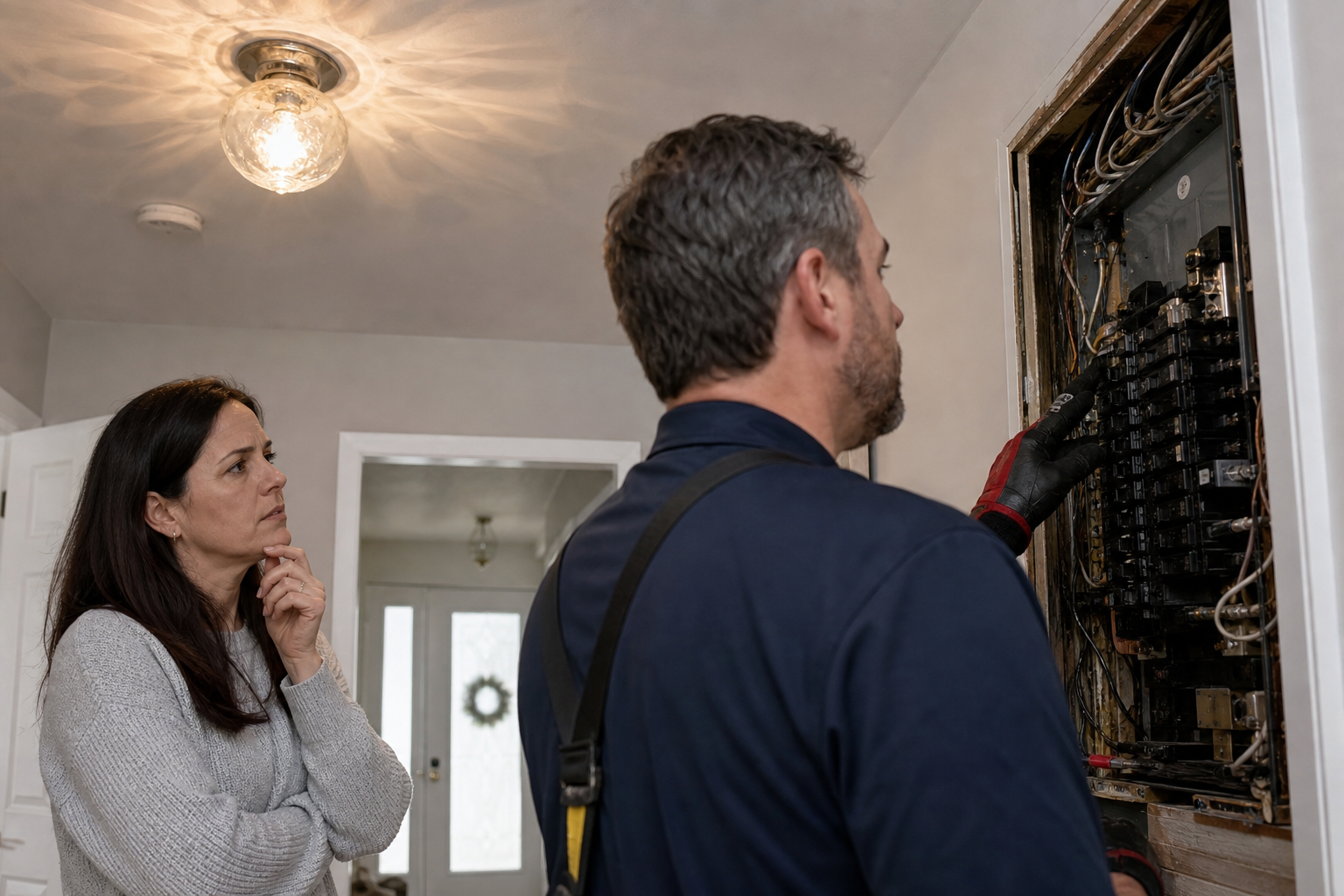
Before recommending an EV charger panel upgrade, a licensed electrical contractor should calculate the existing electrical load of the house, look at the charger you want to install, and determine if the current service has enough capacity. If it doesn't, there may still be alternatives to immediately upgrading from 100 A to 200 A.
Ontario's current electrical rules allow approved energy management systems to monitor household electrical demand and control EV charging so the charger does not overload the service. That means the real answer is: you need a load calculation before you need a panel upgrade.
The Gravity Group installs EV chargers, performs residential electrical upgrades, and provides panel and service work throughout Peterborough, Lindsay, Kawartha Lakes, and surrounding communities. EV charger installation is listed directly among Gravity's residential electrical services.
Planning an EV charger installation?
Call The Gravity Group at 705-344-6835 or request a quote. We answer the phone 24/7.
Quick Answer: Do I Need 200 Amp Service for an EV Charger?
No. A 200 amp service is not automatically required for a home EV charger. A licensed electrical contractor needs to determine:
- Your existing service size
- Your calculated household electrical load
- The output of the EV charger
- The required branch circuit
- Other major electrical loads
- Available panel space
- The condition of the existing panel
- Future electrical upgrades you are planning
A 100 A home may have enough capacity for a charger. Another 100 A home may already be close to its available capacity because it has:
- Electric heating
- Electric water heater
- Central air conditioning or heat pump
- Electric range
- Clothes dryer
- Hot tub
- Pool equipment
- Secondary suite
- Other large electrical loads
The Electrical Safety Authority specifically advises contractors to check panel and service capacity before installing EV charging equipment. ESA states that contractors can use a Code load calculation or permitted historical demand information to determine capacity. If the service cannot support the additional load, a service upgrade or energy management system may be considered.
Don't start with “Do I have 100 amps or 200 amps?” Start with “How much electrical capacity does my house actually have available?”
Level 1 vs Level 2 EV Charging
Before talking about panel upgrades, it helps to understand what kind of charger you're installing.
Level 1 EV Charging
Level 1 charging uses a standard 120 V household supply. Natural Resources Canada states that Level 1 charging generally provides about 3 to 8 km of driving range per hour of charging, depending on the vehicle and conditions.
Level 1 can make sense when:
- You drive relatively little
- Your vehicle has a smaller battery
- You own a plug-in hybrid
- The car sits parked for long periods
- Faster charging is not important
The drawback is speed. For a larger EV battery, recovering a substantial amount of driving range can take many hours.
What Is a Level 2 EV Charger?
Level 2 charging uses a 208 V or 240 V electrical supply. This is similar to the voltage used by many:
- Electric ranges
- Clothes dryers
- Air conditioners
- Heat pumps
- Other larger household equipment
Natural Resources Canada reports that Level 2 chargers can provide substantially faster charging than Level 1 and may require a dedicated circuit ranging from approximately 20 A to 100 A depending on the equipment.
For many homeowners, Level 2 makes home EV ownership much easier. You arrive home, plug the vehicle in, charge overnight, and leave in the morning. Natural Resources Canada reports that more than 80% of EV owners charge at home.
| Level 1 | Level 2 | |
|---|---|---|
| Supply | Standard 120 V household supply | 208 V or 240 V supply |
| Charging speed | About 3 to 8 km of range per hour (NRCan) | Substantially faster than Level 1 |
| Circuit | Standard household circuit | Dedicated circuit, roughly 20 A to 100 A depending on equipment |
| Good fit for | Low mileage, plug-in hybrids, cars parked for long periods | Most daily EV drivers charging overnight at home |
Does Every Level 2 Charger Need a 50 Amp Circuit?
No. Level 2 chargers come in different output levels. You might see chargers configured around:
- 16 A
- 24 A
- 32 A
- 40 A
- 48 A
- Higher outputs on suitable systems
The charger's maximum output, circuit rating, wiring, breaker, installation method, and vehicle capability all need to work together. A higher-rated charger does not automatically mean your car will charge faster.
Your vehicle has its own onboard charging limit. For example, if your EV can only accept a certain AC charging rate, installing a much larger charger may provide little immediate benefit. A licensed electrician should check the following before selecting the final installation:
- Charger specifications
- Vehicle charging capability
- Circuit requirements
- Service capacity
Why Does an EV Charger Affect My Electrical Service?
A Level 2 EV charger can represent a substantial new electrical load. Think about what may already be operating in your house:
- Oven
- Dryer
- Air conditioner
- Heat pump
- Electric water heater
- Hot tub
- Pool pump
- Electric heating
- Dishwasher
- Other household equipment
Then add an EV charger. The problem is not simply that the panel contains another breaker. The question is how much electrical demand the home's service is expected to carry.
Ontario's current electrical rules specifically account for EV supply equipment when calculating dwelling service loads. ESA updated these requirements in the 2024 Ontario Electrical Safety Code, which took effect May 1, 2025.
What Is an Electrical Load Calculation?
An electrical load calculation estimates the demand placed on the home's electrical service based on the requirements of the Ontario Electrical Safety Code. It considers major loads rather than simply adding the numbers printed on every breaker. Depending on the house, that can include:
- Floor area
- Electric range
- Dryer
- Heating
- Air conditioning
- Heat pump
- Electric water heating
- EV charger
- Other significant electrical equipment
ESA publishes detailed guidance on calculated residential electrical loads under Section 8 of the Ontario Electrical Safety Code. The electrician then compares the calculated demand with the electrical service capacity. This tells you if adding the charger is acceptable or if another solution is needed.
Why You Can't Judge Capacity by Looking for an Empty Breaker Space
This is important. An electrical panel can have empty breaker spaces and insufficient service capacity. It can also have very few empty spaces but adequate service capacity. Panel space and electrical capacity are separate issues.
For example, your panel may physically have room for a two-pole EV breaker. That does not automatically mean the service can handle the additional demand. Conversely, a panel may need modification or replacement because it lacks physical space even though the overall electrical service has enough capacity. An electrician needs to look at both.
Can I Install an EV Charger on a 100 Amp Service?
Sometimes. This is one of the most common questions Gravity gets around EV charging and electrical upgrades.
Gravity's existing panel-upgrade guidance already makes the same point: some homes can add an EV charger without upgrading the panel by using an appropriate charging rate or load-management solution, but the decision needs to be confirmed through calculations.
| 100 A home A | 100 A home B | |
|---|---|---|
| Heating | Gas heating | Electric baseboard heat |
| Water heating | Gas water heater | Electric water heater |
| Cooking | Gas range | Electric range |
| Other loads | Limited other electrical loads | Dryer, heat pump, hot tub |
| Capacity picture | Often more room for a charger | May already be close to its limit |
Same main breaker. Very different electrical demand.
When Might a 200 Amp Upgrade Make Sense?
A 200 A service upgrade may make sense when your existing service does not have enough capacity and you plan to electrify more of the home. For example, you may be adding:
- EV charger
- Heat pump
- Electric water heater
- Induction range
- Hot tub
- Pool equipment
- Home addition
- Secondary suite
- Workshop
- Future second EV charger
In that case, increasing service capacity can be a longer-term electrical upgrade rather than solving only the immediate EV charger problem. Gravity's current panel guidance specifically identifies EV chargers, heat pumps, hot tubs, and other larger electrical loads as reasons homeowners may need to investigate a 200 A service upgrade.
Does a 200 Amp Panel Mean I Have 200 Amp Electrical Service?
Not always. Homeowners often use panel upgrade and service upgrade interchangeably. They are related but not identical.
Electrical panel
The panel is the distribution equipment containing your breakers.
Electrical service
The service includes the capacity of the electrical supply feeding the house and associated equipment. A house might need changes involving:
- Panel
- Meter base
- Service conductors
- Utility connection
- Grounding and bonding
- Other service equipment
Installing a panel labelled 200 A does not magically increase the capacity of every part of the electrical service. The electrician needs to assess the entire service. Gravity's existing 200 A service guide notes that the utility-side conductors and other equipment also need to support the proposed service capacity.
Not sure what your service can handle?
Gravity can complete a load assessment before you buy a charger. Call 705-344-6835 — always available, always answers the phone.
Can Load Management Avoid a Panel Upgrade?
Sometimes, yes. This is one of the most useful developments in residential EV charging. An Energy Management System, or EMS, monitors electrical demand and controls the EV charger based on available capacity.
Ontario's 2025 ESA EV charging bulletin states that approved energy management systems can monitor electrical loads and automatically control EV charging. When configured in accordance with the Code, the EMS can reduce, stop, or manage charging so the service is not overloaded.
In practical terms, it works like this:
- Your dryer starts, your range is operating, and your air conditioner is running.
- The EMS sees that household demand is high.
- It reduces or temporarily pauses EV charging.
- Later, the house uses less power.
- The charger resumes or increases output.
The car still charges. The house stays within its electrical limits.
What Is EVEMS?
You may also hear the term EVEMS, meaning Electric Vehicle Energy Management System. Ontario's updated electrical rules now use broader energy-management provisions that can control EV supply equipment along with other loads. Homeowners may hear these products described as:
- EV energy management
- Load management
- Load shedding
- Smart EV load control
- Dynamic load management
The product and installation need to meet Ontario electrical requirements. An energy management system is not simply a Wi-Fi smart plug.
Does Load Management Make Charging Slower?
It can during periods of high household demand. That's the tradeoff. Instead of spending money immediately on a full electrical-service upgrade, the charger may reduce its power temporarily when your home is already using a lot of electricity.
For many homeowners, that has little practical effect. Your EV may sit in the driveway for 8, 10 or 12 hours overnight. If charging pauses for part of that period while other major loads operate, you may still wake up with the battery level you need. The right decision depends on:
- Daily driving distance
- Vehicle battery
- Charger output
- Existing electrical capacity
- Future upgrades
Can I Simply Turn Down the Amperage on My EV Charger?
Potentially, but this needs to be configured correctly. Many modern EV chargers allow the maximum charging current to be adjusted.
ESA's current EV charging bulletin permits adjustable charging settings for qualifying fixed-in-place equipment when the manufacturer's requirements and Code conditions are met. The bulletin also calls for appropriate marking and restricted access to the setting when the charger is configured below its maximum rating.
That means buying a 48 A charger and casually turning it down in an app is not the same as having the electrical installation properly designed and commissioned for a lower setting. Have the electrician configure the system correctly.
Does an EV Charger Need a Dedicated Circuit in Ontario?
Generally, yes. ESA's May 2025 EV charging bulletin states that Ontario Electrical Safety Code Rule 86-300 requires EV supply equipment to be supplied by a separate branch circuit, with an exception involving an approved energy management system arrangement. That circuit needs to be properly designed for:
- Charger rating
- Breaker
- Conductor size
- Wiring method
- Installation environment
- Distance
- Voltage
- Manufacturer requirements
Do not treat an EV charger like an ordinary appliance you can plug into whichever circuit happens to be nearby.
Do I Need an ESA Permit for an EV Charger in Ontario?
Yes. Ontario tells homeowners to obtain an Electrical Safety Authority permit before EV charger installation begins and to use a Licensed Electrical Contractor working in accordance with the Ontario Electrical Safety Code. The contractor typically handles the ESA notification and inspection process as part of the job.
ESA has actively warned Ontario homeowners about unpermitted EV charger work. During a Toronto safety initiative, ESA reported finding hundreds of installations where electrical work had been performed without the required ESA permit.
This is not paperwork for the sake of paperwork. An EV charger can operate at a substantial electrical load for hours at a time. You want the circuit installed correctly.
Who Can Install an EV Charger in Ontario?
For a Level 2 charger requiring electrical installation, use a Licensed Electrical Contractor. Ontario's EV charging guidance states that home and business charger installations need to be completed by licensed electrical contractors in accordance with the Ontario Electrical Safety Code.
Natural Resources Canada also recommends hiring a licensed electrician for Level 2 charger work because these chargers generally use a 240 V supply and the electrician needs to assess home electrical capacity and permitting requirements.
Gravity provides licensed residential electrical services including EV charger installation, panel upgrades, troubleshooting, generator work, and service upgrades.
Does the EV Charger Need to Be Approved for Canada?
Yes. Do not buy a random charger online simply because the connector fits your vehicle. Ontario states that EV charging equipment must be certified for use in Canada by a recognized certification organization. ESA has also warned homeowners to check for recognized Canadian approval marks before installing charging equipment.
Look for accepted certification markings rather than trusting:
- Product reviews
- Marketplace descriptions
- Seller claims
- Low price
Electrical equipment connected to your house needs proper approval.
Want it done right — with the ESA permit?
Gravity's licensed electricians handle the charger circuit, ESA notification and inspection. Call 705-344-6835.
Hardwired EV Charger vs Plug-In Charger
Home Level 2 chargers are commonly installed in one of two ways.
Hardwired charger
The charger connects directly to the electrical circuit. There is no plug between the charger and the branch circuit. Potential advantages:
- Fewer connection points
- Clean permanent installation
- Suitable for many higher-output chargers
- No receptacle required
Plug-in charger
The charger plugs into a suitable 240 V receptacle. Common configurations can include receptacles such as NEMA 14-50 or 6-50, depending on the charger.
ESA's current bulletin states that a 50 A 14-50R or 6-50R receptacle used for cord-connected EV equipment requires a 50 A overcurrent device under the applicable Ontario rule. The right option depends on the charger and installation.
Is Hardwired Better Than a NEMA 14-50 Outlet?
It depends on how you plan to use the charger.
| Hardwired | Receptacle (plug-in) | |
|---|---|---|
| Good fit when | Charger will remain permanently installed | Charger is designed for cord connection |
| Charging output | Higher charging output is required | Output suits the receptacle and circuit |
| Location | Outdoor installation is planned | Installation conditions support it |
| Other | You want fewer plug-and-receptacle connections | You want some flexibility |
Do not install an ordinary low-quality receptacle and assume it is suitable for repeated EV charging. The equipment needs to meet the applicable Code requirements and be installed for the load.
Can I Use My Dryer Outlet to Charge an EV?
Don't assume you can. A dryer circuit was installed for a dryer. An EV charger has its own electrical requirements. Potential issues include:
- Circuit rating
- Receptacle type
- Wiring
- Existing load
- Switching between appliances
- Equipment certification
- Code compliance
An approved energy-management setup may allow certain shared-load configurations, but it needs to be properly designed. Do not repeatedly unplug your dryer and EV charger or use improvised splitters without confirming the equipment and installation are approved for the purpose.
Can I Use an Extension Cord for EV Charging?
This is a bad shortcut. ESA has specifically raised concerns about unsafe charging arrangements involving extension cords. For Level 2 charging, get the electrical supply where the vehicle actually parks. That may mean running a new circuit to:
- Garage
- Carport
- Exterior wall
- Detached garage
- Parking pad
The installation can then be designed for that location.
No extension cords, splitters or improvised adapters between the charger and the house wiring. Bring a properly designed circuit to where the vehicle parks.
Can an EV Charger Be Installed Outside?
Yes, if the equipment is approved and rated for outdoor installation. Natural Resources Canada specifically recommends checking the charger's outdoor rating when the parking space is exposed to weather. Outdoor installations also need to account for:
- Snow
- Rain
- Ice
- Physical damage
- Vehicle impact
- Cable management
- Mounting surface
- Wiring method
ESA's current EV charging bulletin includes specific requirements around protecting charging equipment from mechanical damage where vehicles could strike it. That matters in driveways and parking areas.
How Far Can the EV Charger Be From My Electrical Panel?
There is no one distance that applies to every home. The electrician needs to look at:
- Charger location
- Panel location
- Conductor requirements
- Route through the building
- Finished walls
- Basement access
- Attic access
- Garage construction
- Outdoor routing
A charger mounted beside the electrical panel can be a relatively simple installation. A charger located across a finished house and inside a detached garage is a different project.
Longer distances generally mean more material, more labour and more routing work. This is one reason EV charger installation prices vary so much.
Can I Install an EV Charger in a Detached Garage?
Yes, but the electrician needs to assess how the garage is supplied. A detached garage may have:
- Existing feeder
- Small subpanel
- Limited electrical capacity
- No 240 V supply
- Underground wiring
The existing garage circuit may have been designed only for lights, a garage-door opener and a few receptacles. Adding EV charging can require:
- Larger feeder
- Subpanel work
- New underground wiring
- Load management
- Other electrical upgrades
The fact that the garage already has electricity does not mean it can automatically support a Level 2 charger.
Can I Install Two EV Chargers at Home?
Yes, but two EVs can substantially change the load calculation. You may have several options:
- Two full-capacity circuits
- Load sharing between chargers
- Energy management
- Service upgrade
- Lower charging rates
ESA's current guidance specifically recognizes systems where multiple EV chargers communicate and share electrical capacity. For many two-EV households, smart load sharing can make more sense than assuming both vehicles need maximum charging output at the exact same time.
Do I Need the Fastest Home Charger Available?
Usually not. Think about how far you actually drive. Natural Resources Canada states that the average Canadian drives roughly 20,000 km per year, or about 55 km per day.
If your EV sits parked at home for 10 hours every night, you may not need the highest charging rate your vehicle can possibly accept. A properly chosen lower-output charger may:
- Meet your daily driving needs
- Reduce installation demands
- Work with your existing service
- Reduce the chance of needing a service upgrade
Faster is useful. Faster is not automatically necessary.
Does a Bigger EV Charger Always Charge Faster?
No. Three things matter:
- Charger output — how much AC power the EVSE can provide.
- Vehicle onboard charger — how much AC charging power the car can accept.
- Available electrical capacity — how much the home's electrical system can safely supply.
The lowest limit in that chain controls the actual charging rate. If the car only accepts 32 A AC charging, installing a charger capable of much higher output will not make that vehicle accept power beyond its onboard limit. Check the vehicle specifications before sizing the installation.
Should I Upgrade to 200 Amp Service Before Buying an EV?
Not automatically. Get an electrical assessment first. You may find one of these four options fits your home:
| Option | What happens | Service upgrade? |
|---|---|---|
| 1. Existing service has capacity | Install the charger. | No |
| 2. Existing service supports a lower charging rate | Install an appropriately configured charger. | No |
| 3. Use energy management | Install a compatible load-management system and keep the existing service. | No |
| 4. Upgrade the electrical service | Increase capacity to support the EV charger plus other planned electrical loads. | Yes |
The right choice depends on the house.
When Is a 200 Amp Upgrade the Better Long-Term Decision?
Sometimes avoiding a service upgrade today simply delays it. Suppose you're planning all of the following over the next few years:
- EV charger
- Second EV
- Heat pump
- Electric water heater
- Induction range
- Hot tub
- Finished basement
- Secondary suite
In that case, installing a load-management device for one charger may solve today's problem but not your future electrical needs. A 200 A upgrade may give you more flexibility. This is why Gravity's panel guidance looks at the complete home rather than only the immediate breaker you want to add.
Should I Upgrade My Panel While Installing an EV Charger?
A charger installation is a good time to inspect an older panel. That does not mean every old panel needs replacement. But ask the electrician to check:
- Panel condition
- Corrosion
- Available breaker spaces
- Service capacity
- Breaker compatibility
- Signs of overheating
- Previous modifications
- Grounding and bonding
- Existing major loads
A panel upgrade may make sense if the current equipment is:
- Damaged
- Overcrowded
- Obsolete
- Lacking capacity
- Already due for replacement
Do not replace a serviceable panel solely because you purchased an EV.
What About a 60 Amp or Smaller Electrical Service?
Older homes and cottages can have smaller electrical services. Adding a Level 2 EV charger can be much more challenging on these systems. The property may need:
- Full service upgrade
- Panel replacement
- Load management
- Lower-output charging
- Significant electrical work
This is particularly relevant in older Peterborough homes, rural properties, seasonal cottages, older lake homes and detached garages. Get the service assessed before purchasing a charger based only on maximum output.
Older home, cottage or small service?
Gravity assesses the whole electrical service before recommending a charger, energy management or an upgrade. Call 705-344-6835.
EV Charging at a Cottage
EV charging can be very useful at a cottage. You arrive Friday, plug in, and the vehicle charges while you spend the weekend at the lake. But cottage electrical systems vary widely. The property may also run:
- Well pump
- Septic equipment
- Electric water heater
- Baseboard heaters
- Heat pump
- Hot tub
- Sauna
- Dock equipment
- Electric range
Gravity's Kawartha Lakes cottage electrical guide specifically notes that EV charging does not necessarily require an overload or service upgrade when the system is properly calculated and load management is used where appropriate.
EV Charger Installation in Peterborough
| Newer home | Older home | |
|---|---|---|
| Service | 200 A service | 100 A service |
| Panel | Available panel space | Older panel with limited breaker space |
| Route | Garage beside the panel | Finished basement |
| Parking | Attached garage | Detached garage |
Same charger. Different electrical project. Gravity provides residential EV charger installation and panel work throughout Peterborough and surrounding areas.
EV Charger Installation in Lindsay and Kawartha Lakes
Lindsay and Kawartha Lakes create their own installation situations. Properties can include:
- In-town homes
- Farms
- Rural houses
- Lake properties
- Seasonal cottages
- Detached workshops
- Long driveways
- Detached garages
Electrical loads can also be different because rural homes may rely heavily on electricity for:
- Well pumps
- Water treatment
- Heating
- Heat pumps
- Hot water
- Shop equipment
A load calculation becomes even more useful when several major systems share the same electrical service. Gravity provides EV charger installation, panel upgrades, and residential electrical service throughout Lindsay and Kawartha Lakes.
Should You Add Whole-Home Surge Protection With an EV Charger?
It is worth discussing. An EV charger contains electronic components, and so do many other modern home systems. If an electrician is already working at your electrical panel, that can be a practical time to discuss whole-home surge protection.
Gravity's current surge-protection guide specifically identifies EV charger installation and panel upgrades as good times to consider panel-level surge protection. A surge protector does not make the home immune to every electrical event. It adds another layer of protection.
Can I Charge My EV During Off-Peak Electricity Hours?
Yes, if your vehicle or charger supports scheduled charging. Many modern chargers let you choose when charging begins. Natural Resources Canada recommends looking at time-of-use electricity pricing and notes that smart chargers can schedule charging during lower-cost periods where available.
A typical setup: you arrive home at 18:00 and plug in. The vehicle waits, and charging begins later when your selected electricity period starts. You do not have to walk back outside to plug the car in again.
Do Smart EV Chargers Save Electricity?
The charger itself does not change how much energy your battery requires to regain the same amount of charge. But smart features can help manage:
- Charging schedule
- Electricity pricing periods
- Charging current
- Energy monitoring
ENERGY STAR certified chargers also use less power while sitting idle than standard models. Natural Resources Canada reports approximately 40% lower standby energy use for certified models on average. Standby consumption is small compared with vehicle charging, but it matters over the life of equipment that remains powered continuously.
What Should I Know Before Buying an EV Charger?
Before clicking “Buy,” check these things:
- Vehicle compatibility — what connector does your vehicle use, and does an adapter apply?
- Maximum AC charging rate — how much Level 2 power can the vehicle actually accept?
- Indoor or outdoor installation — is the charger approved for your mounting location?
- Cable length — will it comfortably reach the vehicle's charging port?
- Hardwired or plug-in — which installation method does the manufacturer support?
- Smart charging — do you want scheduling, Wi-Fi, usage monitoring or load sharing?
- Canadian approval — confirm accepted certification.
- Electrical capacity — talk to an electrician before selecting output solely based on the charger's marketing.
What Happens During a Professional EV Charger Assessment?
A good site assessment should look at more than the garage wall. The electrician may check:
- Main service rating
- Electrical panel
- Existing breakers
- Major household loads
- Charger specifications
- Parking location
- Wiring route
- Distance
- Garage construction
- Outdoor exposure
- Future electrical plans
Then the electrician can determine the appropriate path:
- Standard charger circuit
- Lower configured charging output
- Energy management
- Panel replacement
- Service upgrade
That gives you actual options rather than automatically quoting the biggest project.
How Much Does EV Charger Installation Cost in Ontario?
There is no one useful price because the electrical work can be completely different from house to house. Cost depends on:
- Charger
- Charging output
- Circuit size
- Panel location
- Parking location
- Wire distance
- Finished walls
- Basement or attic access
- Indoor vs outdoor installation
- Panel space
- Service capacity
- Load-management equipment
- Panel upgrade
- Service upgrade
A charger mounted two metres from a modern 200 A panel is a different job from running a new supply to a detached garage. Get the electrical system assessed first.
Does an EV Charger Increase Home Value?
An installed charger can be attractive to EV-driving buyers, but there is no reliable dollar amount that applies to every home. The better reason to install one is because you need convenient home charging.
If resale matters, documentation helps. Keep:
- Charger manual
- ESA inspection documentation
- Electrical invoice
- Equipment information
A documented professional installation is far better than an undocumented circuit added by a previous owner.
Can an EV Charger Overload My Electrical Panel?
A properly designed and installed charger should not overload the service. That is why the load calculation matters.
Ontario's current rules give contractors several tools for managing EV charging loads, including energy management systems that control charging based on available electrical capacity. The risk comes from treating a substantial new electrical load like a simple plug-in accessory.
Frequently Asked Questions About EV Chargers and Panel Upgrades
Do I need a panel upgrade for an EV charger?
Not automatically. A licensed electrical contractor should perform a load calculation and assess your existing service. Some homes have enough capacity already, while others can use lower charging output or energy management instead of a service upgrade.
Can I install an EV charger with 100 amp service?
Yes, in some homes. Your existing household load determines how much capacity remains. A 100 A service is not automatically too small.
Do I need 200 amp service for a Level 2 charger?
No. Many Level 2 charger installations can work without 200 A service. Load calculations and equipment selection determine the actual requirement.
What is EV load management?
EV load management monitors electrical demand and controls charger output so the home's service remains within safe limits. Ontario electrical rules recognize approved energy management systems for this purpose.
Can load management avoid a 200 amp upgrade?
It can in some installations. The system may reduce or pause EV charging while other large household loads are operating.
Does a Level 2 charger need a dedicated circuit?
Ontario's EV charging rules generally require EV supply equipment to use a separate branch circuit, with specific allowances for installations using qualifying energy management systems.
Does an EV charger need an ESA permit in Ontario?
Yes. Ontario directs homeowners to obtain an ESA permit before EV charger installation and to use a Licensed Electrical Contractor.
Can I install my own Level 2 EV charger?
Ontario directs homeowners to have charger installations completed by a Licensed Electrical Contractor in compliance with the Ontario Electrical Safety Code.
Can I use a dryer outlet for EV charging?
Do not assume an existing dryer circuit is suitable. Charger rating, wiring, receptacle, circuit loading, and the existing appliance all need to be considered.
Is a 40 amp EV charger enough?
For many drivers, yes. The required rate depends on daily driving, vehicle battery size, how long the car sits parked, and the vehicle's onboard charging limit.
Is a 48 amp charger much better than a 40 amp charger?
It can charge faster when the vehicle accepts the higher rate, but the difference may not matter for someone charging overnight. Higher output can also require more electrical capacity.
Should I buy the charger before calling an electrician?
You can research models, but talking to an electrician first can prevent buying equipment that does not fit your home's electrical capacity or installation location.
Does an outdoor EV charger need special equipment?
Yes. The charger must be approved for the environment, and the installation needs to address weather exposure and physical protection.
Can I install an EV charger in a detached garage?
Yes, but the electrician needs to confirm that the garage feeder or electrical service can support the charger.
Can two EVs share one electrical service?
Yes. Depending on capacity, chargers can sometimes use load sharing or energy management to divide available power between vehicles.
Should I upgrade my panel at the same time as an EV charger?
Only if the panel or service needs it or the upgrade makes sense for future electrical loads. Do not assume an EV automatically requires a panel replacement.
Can an EV charger work with a heat pump and hot tub on the same service?
Potentially. The electrician needs to calculate the total electrical demand. Energy management or a service upgrade may be required depending on the house.
Is a 200 amp upgrade worth it if I plan to electrify my home?
It may be if you are planning several large electrical loads such as EV charging, heat pumps, electric hot water, a second EV, or a hot tub. Get the planned loads assessed together.
Who installs EV chargers in Peterborough and Kawartha Lakes?
The Gravity Group provides EV charger installation, panel upgrades, service upgrades, and residential electrical work throughout Peterborough, Lindsay, Kawartha Lakes, and surrounding communities. Call 705-344-6835 to book an assessment.
Installing an EV Charger? Start With the Electrical Load.
Buying the EV is the fun part. Charging it at home should be straightforward too. But don't assume that a Level 2 charger automatically means ripping out your existing electrical panel and upgrading the house to 200 amps.
Start with the numbers. Check the service, calculate the load, and look at your actual driving needs. Then choose the charger and electrical setup that fits the home.
For some homeowners, that's a standard dedicated circuit. For others, it's energy management. For homes preparing for several new electrical loads, a 200 A service upgrade may make better long-term sense.
The Gravity Group provides the following throughout Peterborough, Lindsay, Kawartha Lakes, and surrounding communities:
- EV charger installation
- Electrical load assessments
- Panel upgrades
- 200 A service upgrades
- Energy-management solutions
- Whole-home surge protection
- Residential electrical repairs
Ready for home EV charging?
Call Gravity at 705-344-6835 or request a quote. Always Available. Always Reliable. Always Answers The Phone.
Ready for next steps?
Book service, ask about financing, or browse protection plans — we are always available.