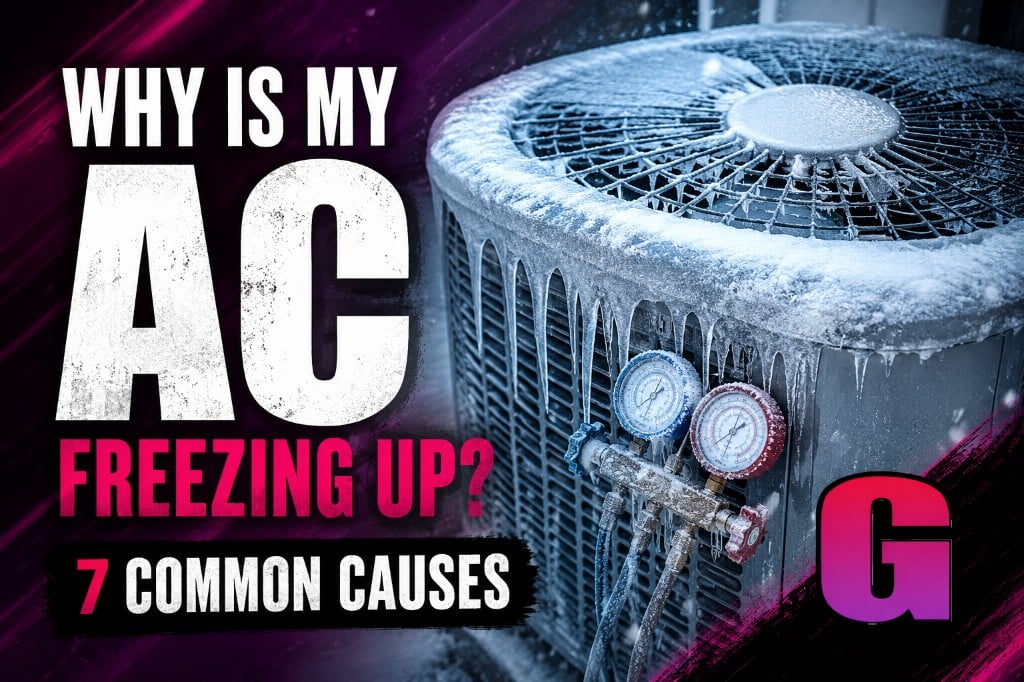
If your air conditioner is freezing up, that ice is not a sign that your AC is producing extra-cold air. It usually means something is wrong.
Need help with this?
Talk to a live Gravity dispatcher 24/7 — or explore the matching service page.
A frozen AC coil can cause weak airflow, warm rooms, higher hydro use, water around your furnace or air handler, and eventually a complete cooling breakdown.
For homeowners in Peterborough, Lindsay, Kawartha Lakes and surrounding areas, this problem often shows up during the hottest stretches of summer — exactly when you need your air conditioning the most.
The good news is that some causes are simple. Others need an HVAC technician. The important part is knowing the difference and not continuing to run an air conditioner that is covered in ice.
AC frozen or not cooling?
Call Gravity at 705-344-6835. We answer the phone 24/7 across Peterborough, Lindsay and Kawartha Lakes.
Why Does an Air Conditioner Freeze Up?
Your air conditioner does not create cold air in the way a furnace creates heat. Instead, the system moves heat from inside your house to the outdoors.
Ice on an air conditioner is a stop sign — not a cooling feature. Shut cooling off, let the coil thaw, then call 705-344-6835 if it freezes again. Same-day HVAC repair is available across Peterborough, Lindsay and Kawartha Lakes.
Inside your HVAC system is an evaporator coil. Refrigerant moves through this coil while your blower pushes warm indoor air across it. The refrigerant absorbs heat from that air.
During normal operation, moisture in the air can condense on the cold evaporator coil. That water should drain away through the condensate system.
Problems start when the evaporator coil becomes too cold. If there is not enough warm air moving across the coil, or refrigerant pressure drops because of a system problem, moisture can begin freezing instead of draining away.
A small layer of frost can eventually turn into a thick block of ice. Once that happens, airflow drops even further. The AC may continue running while your house gets warmer.
Restricted airflow, dirty filters, contaminated coils and low refrigerant are among the most common causes of a frozen evaporator coil. Running the system while the coil remains frozen can lead to further equipment damage.
- Restricted airflow → colder coil
- Colder coil → ice buildup
- Ice buildup → even less airflow
- Less airflow → more ice — and weaker cooling
7 Common Reasons Your AC Is Freezing Up
1. Your Air Filter Is Dirty or Clogged
Start here. A dirty furnace or AC filter is one of the simplest causes of restricted HVAC airflow.
Your system needs a steady flow of indoor air passing across the evaporator coil. When the filter becomes packed with dust, pet hair, dirt, pollen, construction debris or household particles, the blower has a harder time pulling enough air through the system.
Less warm air reaches the evaporator coil. The coil gets colder. Moisture freezes. Eventually, you may see ice on the refrigerant lines or around the evaporator coil cabinet.
Signs your filter may be contributing
If the filter is dirty, replace it with the correct filter specified for your HVAC system. Do not automatically install the thickest or highest-rated filter you can find — some filters create too much airflow resistance for systems that were not designed for them.
If your air conditioner keeps freezing up after replacing the filter, there is likely another problem.
- Weak airflow from supply vents
- AC running longer than usual
- Rooms taking longer to cool
- Ice around the indoor coil or refrigerant line
2. Supply Vents or Return Air Vents Are Blocked
Your HVAC system depends on circulation. Supply vents push conditioned air into rooms. Return vents pull air back toward the HVAC equipment. Blocking either side of that cycle can reduce system airflow.
Homeowners sometimes close vents in unused bedrooms thinking it will force additional cold air into other rooms. That strategy can create problems. Your system was designed to move a certain amount of air. Closing several vents can change the pressure inside the duct system and reduce proper airflow across the evaporator coil.
Furniture can also block return registers without you realizing it.
Open your supply vents and keep return-air pathways clear. If airflow still feels weak throughout the house, the restriction may be deeper inside the HVAC system.
- Furniture over return vents
- Boxes placed against return grilles
- Renovation materials blocking vents
Weak airflow and ice on the unit?
A technician can diagnose whether the issue is filters, ducts, the blower, or refrigerant — before the freeze-up damages more of the system.
3. The Evaporator Coil Is Dirty
A dirty filter restricts airflow before air reaches the coil. A dirty evaporator coil creates problems directly at the coil.
Over time, dust and debris can accumulate on the evaporator coil surface. That buildup acts like insulation. Instead of warm household air transferring heat efficiently into the refrigerant, the layer of dirt reduces heat transfer. The coil can then become excessively cold — and ice begins forming.
Once the ice starts, the problem can quickly get worse.
Signs of a dirty evaporator coil
Evaporator coils are usually located inside the indoor HVAC cabinet and are not as accessible as a basic air filter. Professional coil cleaning may be needed if there is substantial buildup.
- Weak airflow and poor cooling
- Ice on the refrigerant line
- Water near the indoor HVAC equipment after the ice melts
- Musty smells from the vents
Do not scrape ice or dirt away with tools. The coil and refrigerant tubing can be damaged easily.
4. Your AC Has Low Refrigerant
A frozen AC does not always mean an airflow problem. It can also indicate a refrigerant issue.
Refrigerant moves through your air-conditioning system in a closed circuit. It should not normally disappear through regular operation. When refrigerant levels become low, there may be a leak or another system issue that needs to be diagnosed.
Low refrigerant changes the pressure inside the system. That can cause the evaporator coil temperature to drop too far, allowing condensation on the coil to freeze.
Ice buildup, poor cooling, longer operating cycles and short cycling can accompany refrigerant problems. Refrigerant diagnosis should be handled by a qualified HVAC technician.
Signs you could have a refrigerant problem
Adding refrigerant without finding the reason it became low does not address the underlying problem. A technician needs to inspect the system, diagnose the cause and determine the proper repair.
- AC running but the house is not cooling
- Frozen evaporator coil or ice on copper refrigerant lines
- Long cooling cycles or the system running almost constantly
- Hissing or unusual sounds
- Cooling performance gradually getting worse
5. Your Blower Motor or Fan Is Not Moving Enough Air
Your evaporator coil may be perfectly clean. Your filter may also be clean. But the coil can still freeze if the blower cannot move enough air.
The blower is responsible for circulating air through your ductwork and across the evaporator coil.
One clue is unusually weak airflow from multiple vents throughout the house. You may also hear the AC operating while very little air comes through the registers.
This type of problem generally requires HVAC diagnosis. Running the system with inadequate blower airflow can cause the coil to freeze repeatedly.
- Blower motor failure or motor capacitor problems
- Fan-control issues or damaged blower components
- Dirt buildup on the blower wheel
- Incorrect blower speed or electrical problems
6. Your Ductwork Is Restricting Airflow
Sometimes the AC itself is not the only issue. The duct system matters too.
Your furnace and air conditioner rely on the ductwork to move large volumes of air throughout the house. Damaged, blocked, poorly designed or heavily restricted ductwork can reduce the amount of air reaching the evaporator coil.
This becomes especially noticeable when certain parts of the house receive strong airflow while others receive almost none.
Gravity already covers uneven upstairs temperatures separately, so homeowners dealing mainly with a hot second floor should also review our guide on why your house gets so hot upstairs in summer. But when poor airflow appears alongside visible ice on your HVAC equipment, the duct system may be part of a broader frozen-coil problem.
- Collapsed duct sections or closed dampers
- Poorly sized ducts or blocked return ducts
- Renovations that changed the original airflow design
7. A Thermostat, Control or Mechanical Problem
Air conditioners depend on several components working together. The thermostat calls for cooling. The indoor blower moves air. The evaporator coil absorbs heat. The outdoor unit releases it. Electrical and control components tell everything when to start and stop.
A failure anywhere in that sequence can create abnormal operating conditions.
If your AC runs almost constantly but never reaches the thermostat temperature, do not simply keep lowering the thermostat. That will not fix the problem — and it can make an already struggling system run longer.
- Faulty thermostat readings or improper system settings
- Fan-control or relay problems
- Electrical faults or mechanical component failure
What Are the Signs of a Frozen AC Coil?
You do not always need to see the evaporator coil itself. Several symptoms can point toward an air conditioner freezing up.
1. Ice on the copper refrigerant line
Look near the indoor HVAC equipment. If the insulated or exposed refrigerant line has visible frost or ice, your evaporator coil may also be frozen.
2. Very little air coming from the vents
Your blower may be running while airflow feels unusually weak. Ice can block air from moving through the evaporator coil.
3. Your AC is running but the house is getting warmer
This is one of the biggest clues. The equipment sounds like it is operating, but your indoor temperature continues climbing — classic AC running but not cooling behavior.
4. Water appears around the furnace or air handler
When a frozen coil begins thawing, a substantial amount of water can be released. If that water overwhelms the drain pan or condensate system, you may see water around the equipment. Frozen evaporator coils are one recognized cause of AC water leakage after the ice melts.
5. Your AC runs constantly
A frozen system may struggle to remove heat while continuing to receive a call for cooling from the thermostat. That can create very long cooling cycles — and a high hydro bill when cooling season peaks.
Seeing ice, weak air, or warm rooms?
Shut cooling off now, then call Gravity. We diagnose frozen AC coils and get cooling restored across Peterborough, Lindsay and Kawartha Lakes.
What Should You Do When Your Air Conditioner Freezes Up?
Do not keep running the AC hoping the ice will disappear. Turn the cooling function off. Continuing to operate an air conditioner with a frozen evaporator coil can place additional strain on the system and contribute to equipment damage.
Step 2: Let the ice melt naturally
Give the system time to thaw. Depending on the amount of ice, this can take several hours. Some systems allow you to switch the thermostat from COOL to OFF while setting the indoor fan to ON. Moving room-temperature air through the system can help the coil thaw.
Hair dryers, heat guns, space heaters, torches, or boiling water. Rapid heating can damage HVAC components. Allow a frozen coil to thaw naturally rather than applying direct heat.
Step 3: Check the air filter
If it is visibly clogged, replace it. Use the proper filter size and type for your system.
Check that supply registers and return grilles are open and unobstructed.
Melting ice means water. Check the area around the furnace or air handler while the system thaws.
Step 6: Restart only after it has thawed
Once the ice is completely gone and basic airflow restrictions have been corrected, the system can be tested. If it freezes again, shut it down and call an HVAC technician. Repeated freezing means the actual cause still needs attention.
Can a Dirty Air Filter Really Cause an AC to Freeze?
Yes. A severely clogged filter can reduce airflow across the evaporator coil enough for the coil temperature to fall below freezing. This is one reason regular filter replacement matters.
Your HVAC filter does much more than keep visible dust out of the house. It also helps protect system components and maintain proper airflow.
How frequently your filter needs replacement depends on filter type, pets, household dust, renovations, occupancy and system runtime. Instead of relying only on a calendar, inspect the filter regularly during heavy AC season.
Will a Frozen AC Fix Itself?
The ice may melt. The problem that caused it may still be there. This distinction matters.
Turning off the system might thaw the evaporator coil. But thawing does not repair refrigerant leaks, blower motor problems, dirty evaporator coils, electrical faults, damaged ductwork or control problems.
If a dirty filter was the sole cause and you replace it, the problem may stop. If the AC freezes again, get the system inspected. Repeatedly thawing and restarting a malfunctioning air conditioner is not a repair strategy.
Can You Run an Air Conditioner With Ice on It?
No. Shut the cooling system down. The system is already telling you something is wrong.
Operating with a frozen evaporator coil restricts airflow and can put unnecessary strain on major components, including the compressor. A service call is usually much cheaper than turning a smaller problem into major equipment damage.
How Can You Prevent Your AC From Freezing Again?
A few basic habits can reduce the chances of another frozen AC coil.
If your system is aging or struggling every summer, it may also be time to review when should you replace your HVAC — especially if repairs keep stacking up.
- Check your filter regularly — do not wait until it is completely packed with dust.
- Keep vents open. Your HVAC system needs airflow. Avoid closing large numbers of supply registers.
- Keep return grilles clear. Do not place furniture directly against them.
- Schedule AC maintenance so a technician can inspect refrigerant performance, evaporator coil condition, condenser condition, blower operation, electrical components, drainage and thermostat operation.
- Pay attention when cooling performance changes. Weak airflow, longer cycles and declining cooling are worth investigating before the AC completely stops.
Frozen AC Repair in Peterborough, Lindsay & Kawartha Lakes
Ontario summers can put a lot of demand on residential cooling systems. When your air conditioner starts freezing up during a hot stretch, continuing to run it can make the situation worse.
Gravity provides residential HVAC service across Peterborough, Lindsay, Kawartha Lakes and surrounding communities, with 24/7 emergency support available. Our residential HVAC options also include repair, maintenance, Financeit financing and Gravity Shield protection plans for homeowners.
- Covered in ice or freezing repeatedly
- Running but not cooling, or not blowing cold air
- Blowing weak air or leaking water
- Running constantly or making unusual noises
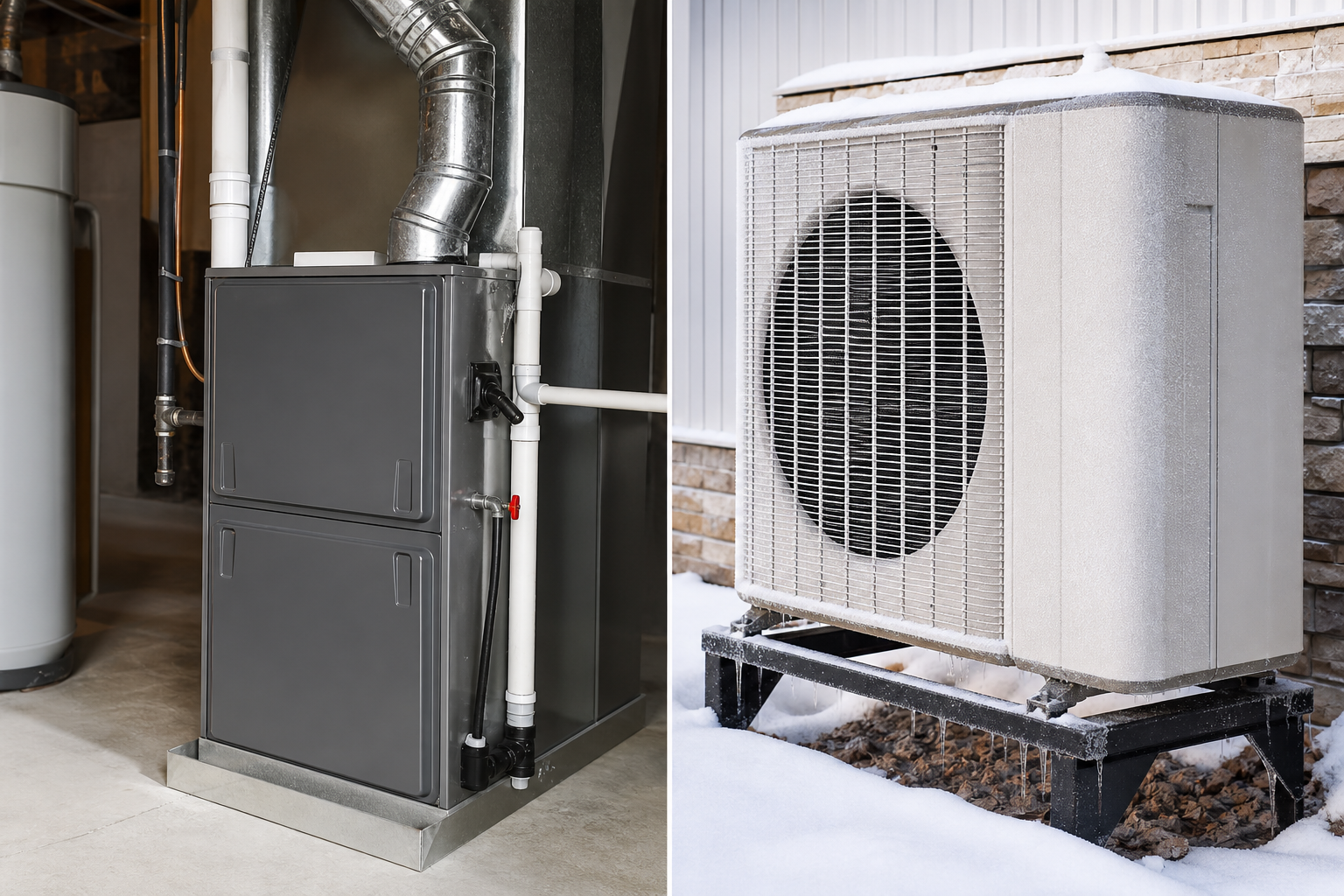
Heat pumps freeze in winter for related — but different — reasons. See heat pump icing up in winter: what’s normal and what’s a problem.
Frequently Asked Questions About Frozen Air Conditioners
Why is my AC unit freezing up in the summer?
The most common causes involve restricted airflow or refrigerant problems. Dirty filters, blocked vents, dirty evaporator coils, blower issues and low refrigerant can all contribute to a frozen AC coil.
Why is there ice on my AC pipe?
Ice on the refrigerant line can indicate that the evaporator coil is getting too cold. Airflow restrictions or low refrigerant are common causes.
Should I turn my AC off if it is frozen?
Yes. Turn off the cooling function and allow the system to thaw. Running an AC with a frozen evaporator coil can cause additional problems.
How long does a frozen AC take to thaw?
The amount of time varies based on how much ice has formed and indoor conditions. A heavily frozen system can take several hours to thaw completely. Thawing commonly takes roughly one to four hours, with heavier freezing potentially requiring longer.
Can I use a hair dryer to thaw my frozen AC?
No. Let the system thaw naturally. Direct heat can damage HVAC components.
Can low refrigerant make an air conditioner freeze?
Yes. Low refrigerant pressure can cause the evaporator coil temperature to fall too low, which can lead to ice formation. Low refrigerant may indicate a leak and should be diagnosed by an HVAC technician.
Can a clogged filter make an air conditioner stop cooling?
Yes. A heavily restricted air filter reduces airflow. That can hurt cooling performance and contribute to evaporator coil freezing.
Why does my AC freeze up again after I turn it back on?
Repeated freezing usually means the underlying problem has not been fixed. Possible causes include low refrigerant, a dirty coil, poor airflow, blower problems or another mechanical fault.
Is a frozen AC an emergency?
It depends on the situation, but you should shut down cooling when the system freezes. If temperatures inside the home are becoming unsafe, the unit repeatedly freezes, water is damaging the home or the equipment will not operate properly, contact an HVAC technician.
Who repairs frozen air conditioners in Peterborough and Kawartha Lakes?
Gravity provides HVAC service for homeowners in Peterborough, Lindsay, Kawartha Lakes and surrounding areas. For AC problems or urgent cooling service, call 705-344-6835.
Your AC Should Blow Cold Air. It Shouldn’t Be Covered in Ice.
An air conditioner freezing up is a warning sign. Sometimes the fix starts with something simple, such as replacing a badly clogged filter. Other times, ice points toward refrigerant loss, restricted airflow, a dirty evaporator coil, a blower problem or another HVAC failure.
Either way, do not ignore it. Turn off the cooling system. Let the ice thaw. Check the basic airflow items you can safely inspect. If the system freezes again, get the cause diagnosed before continuing to run it.
AC frozen? House getting hotter?
Call Gravity at 705-344-6835. 24/7 HVAC service across Peterborough, Lindsay, Kawartha Lakes and surrounding areas.
Ready for next steps?
Book service, ask about financing, or browse protection plans — we are always available.